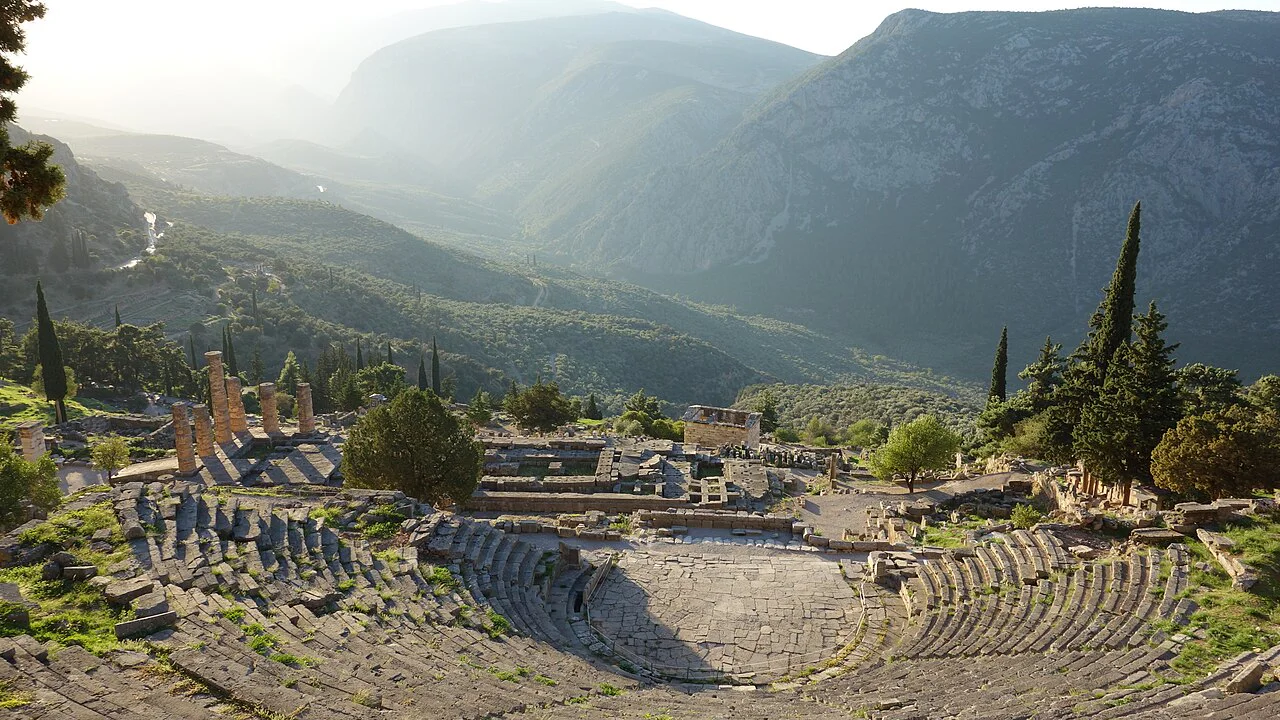
Stanza · Audio guide
Αρχαιολογικός Χώρος Δελφών Audio Guide
A place to remember. A story to take with you.
The Archaeological Site of Delphi is a UNESCO World Heritage site and the location of the famous ancient Greek oracle. It features the remains of major monuments, including the Temple of Apollo and the…
Download Stanza, then search for “Αρχαιολογικός Χώρος Δελφών”.
About the tour
One guide. Your kind of visit.
The Archaeological Site of Delphi is a UNESCO World Heritage site and the location of the famous ancient Greek oracle. It features the remains of major monuments, including the Temple of Apollo and the ancient theater.
Ready when you are.
- 01Get the free Stanza app.
iOS & Android
- 02Find your guide.
“Αρχαιολογικός Χώρος Δελφών”
- 03Download before you go.
Works offline
Audio guide / 43 narrated stops
Inside the guide
Get to know a few of the stories before you go. Open a stop to read more.
01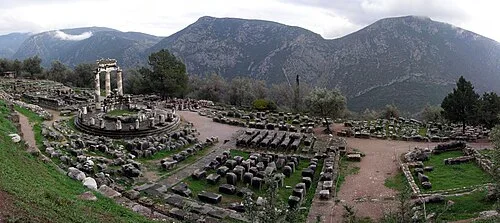 Sanctuary of Athena Pronaia (Marmaria)
Sanctuary of Athena Pronaia
Delphi sits about six hundred metres up the southern slopes of Mount Parnassus, in central Greece. The sanctuary of Apollo here was home to the Pythia, one of the most important oracles of the Greek world. Between the sixth and fourth centuries BCE it grew into a meeting place for Greeks from many cities. The site was laid out in two parts. Pilgrims arriving from the east reached the lower precinct first, in an area called Marmaria. There they honoured Athena Pronaia, a title that means roughly 'the one before' the temple of Apollo. Only after that did they climb the slope to Apollo's sanctuary. Across the lower site, the round tholos stands out, with three of its columns set back up. Around it lie the foundations of other temples, scattered across the ground.
Photo: Luarvick · CC BY-SA 3.0
02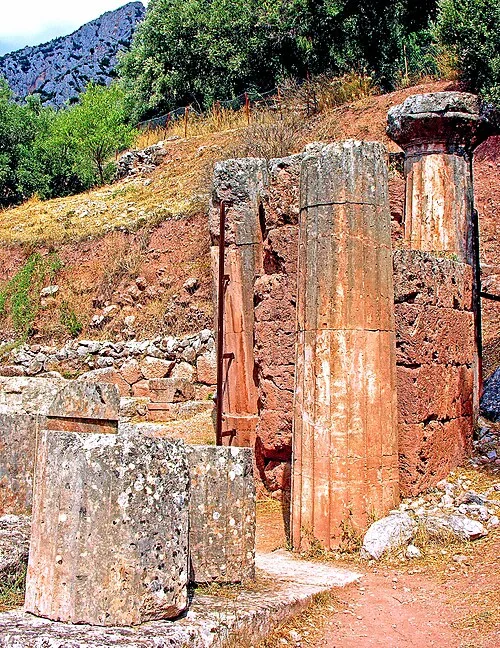 Temple of Athena Pronaia
Built of limestone in the fourth century BCE, this Doric temple was the third one raised on this spot. The two earlier temples were built of porous stone, in the seventh and sixth centuries BCE. The first of them was probably the earliest Doric temple, and twelve of its columns have been preserved. Its successor, from about 510 BCE, was probably part of a building programme by the Alcmaeonids, a powerful aristocratic family. Falling rock from the cliffs above has struck these buildings. In 1905 a rockfall destroyed columns of one of these temples that were still standing. Only the foundations of the limestone temple survive, but its plan has been restored in full. It had six columns across the front. Some scholars think it may have been dedicated to Artemis, following the travel writer Pausanias, though the traditional view keeps it for Athena.
Dennis G. Jarvis · CC BY-SA 2.0
03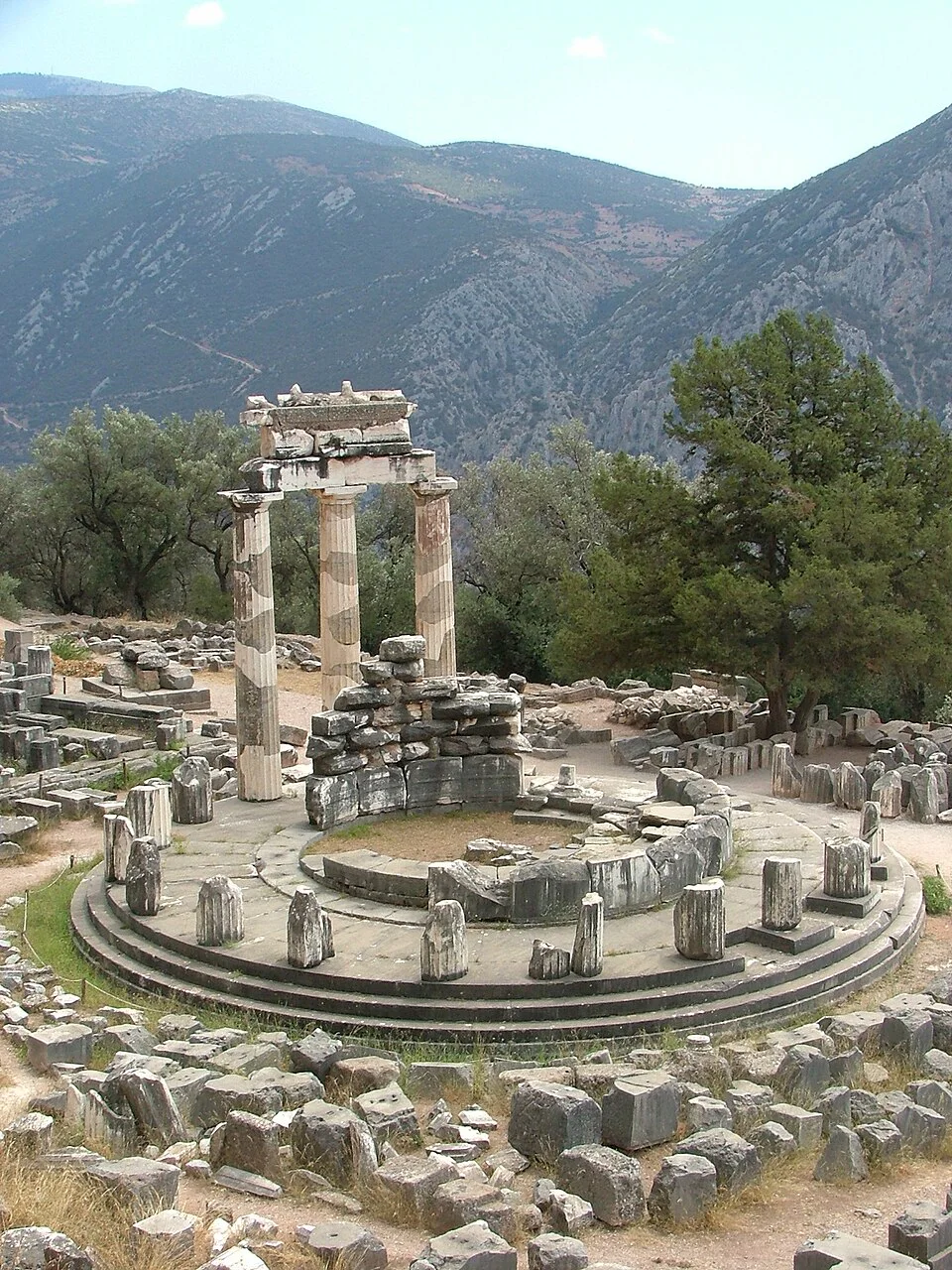 Tholos of Delphi
Ancient tradition credits the design of this tholos to Theodoros of Phocaea. The Roman writer Vitruvius preserves his name in a book on architecture. It is called a tholos, the Greek word for a round building. It went up over roughly a decade, starting around 380 BCE. Twenty Doric columns once stood around its outside, carrying a horizontal band of carved stone. Inside, ten Corinthian-style pilasters, flat columns attached to the wall, rose from a stone bench. Its upper parts are fine Pentelic marble, on a base of limestone. Nobody knows for certain what the building was for, or what happened inside it.
Listen in the appKufoletoAntonio De Lorenzo and Marina Ventayol · CC BY 3.0
04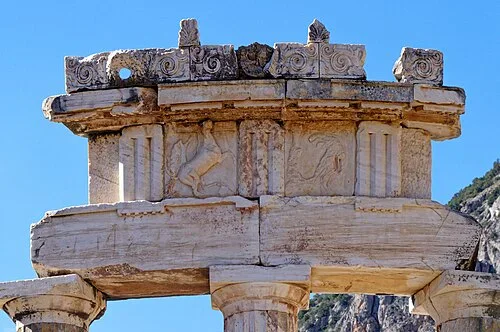 Tholos of Delphi
Tholos Entablature and Frieze
The band of stone above the columns, called the entablature, alternates grooved blocks with carved panels. The grooved blocks are called triglyphs, and the carved panels between them are metopes. On the outside, the metopes showed battles between Amazons and centaurs, scenes that Greek sculptors loved. Inside, a band of smaller figures survives only in broken pieces, and it may have shown the labours of Hercules or of Theseus. Specialists spent long periods fitting the fragments back together, so our view of it is only partial. Scholars praise the carvers' skill with marble and the lively, accurate detail of the figures. The figures on the metopes were carved in high relief, standing so far forward that they came away easily. In the early Christian years, the panels were reused as building stone and tomb covers, after their carved surfaces had been smoothed over.
Listen in the appPhoto: Holger Uwe Schmitt · CC BY-SA 4.0
05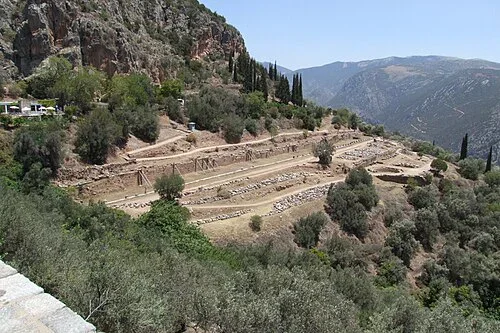 Gymnasium of Delphi
The gymnasium was a training complex built around 330 BCE, between the sanctuary of Athena Pronaia and the Castalian spring. It spread over two terraces. The xystus, a covered portico for training, stood on one of them, with a side corridor called the paradromis used by runners. The palaestra, a square court with rooms around it, lay on the lower terrace. The xystus was nearly two hundred metres long. It was only nine metres wide, and its floor was spread with sand to make things easier for the athletes. Its first colonnade was Doric, with eighty-three columns of porous stone called poros. In Roman times, marble Ionic columns took their place, eighty-three of them again. The palaestra's rooms were used for changing and for fighting practice. For a long time a monastery stood over the site, and travellers in the Ottoman period often stayed there. Some of them carved their names into fallen columns that still lay in place. Lord Byron's signature is among them, and it can still be seen on the restored columns.
Listen in the appPhoto: Harald Rossa · CC BY-SA 3.0
06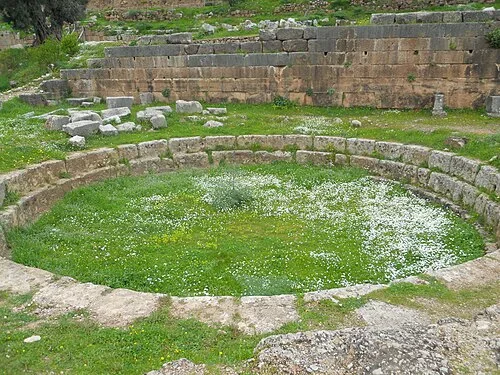 Gymnasium of Delphi
Circular Bath of the Gymnasium
The round pool here is about ten metres across. The pool is just under two metres deep. It lies just west of the palaestra. Its water came from the Castalian spring. From the pool, water ran on to ten stone basins for bathing. Athletes would wash in these basins after their exercise. In Roman times a bath with hot water was built close by, an extra luxury for the athletes.
Listen in the appErik Drost · CC BY 2.0
07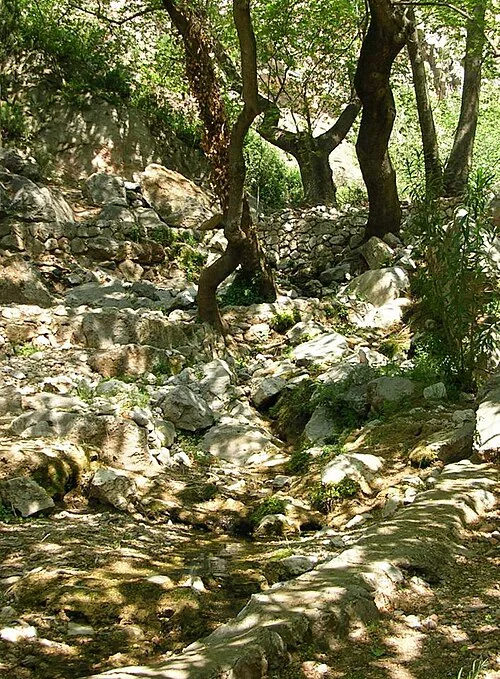 Castalian Spring
Every visitor to Delphi stopped at the Castalian spring, in the ravine between the cliffs, to wash and to drink. Athletes and pilgrims alike used its water. Accounts also say the Pythia and the priests cleansed themselves here before the oracle was given. Tradition gave the name either to a hero or to a nymph called Kastalia, daughter of the river Achelous. According to some versions of the myth, Apollo killed a monster that guarded the oracle, which is why the water was thought sacred. Roman poets later saw the spring as a source of inspiration for their verse.
Listen in the appPhoto: Testus · CC BY-SA 3.0
08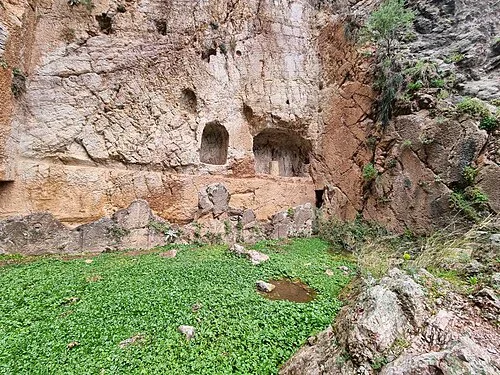 Castalian Spring
Roman Fountain at Castalia
Carved into the cliff beside this fountain are niches, meant to hold the votive gifts of pilgrims. Votive gifts are offerings given in thanks to a god. The fountain is usually dated to the first century BCE. It stands about fifty metres above the older spring. Water reached the fountain through a covered channel, and seven bronze spouts stood on its front. A paved courtyard lay before it, with stone benches along three sides. Later, one of the niches was turned into a church of Saint John the Baptist.
Listen in the appPhoto: Alaexis · CC BY-SA 4.0
09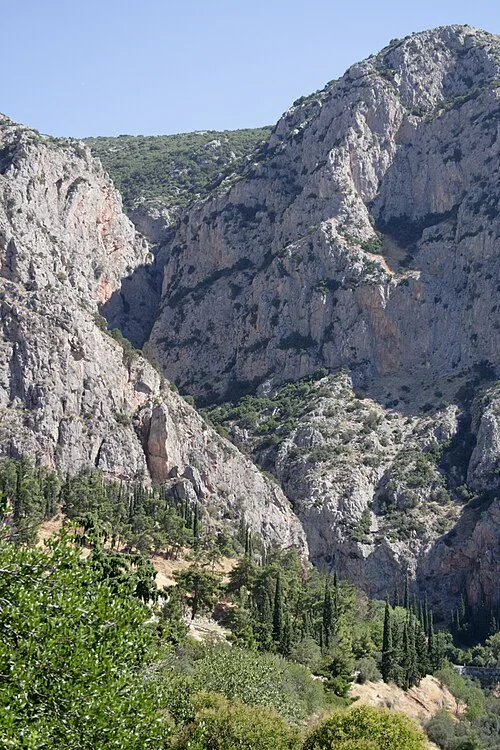 Phaedriades Cliffs
The Phaedriades Cliffs
Directly above the oracle and the Castalian spring rise two steep cliffs, known as the Phaedriades. The spring rose between them. Ancient writers said that those who had violated the sanctuary were thrown from these heights. In 279 BCE a Gallic army under a leader called Brennus invaded Delphi. The story goes that thunderstorms and snow came down, and rocks broke loose from the cliffs onto the attackers. By that account, the invaders were crushed and driven off. The Delphians set up a festival, the Soteria, to give thanks for their deliverance. It became one of the best known festivals in the Greek world.
Listen in the appPhoto: Zde · CC BY-SA 4.0
10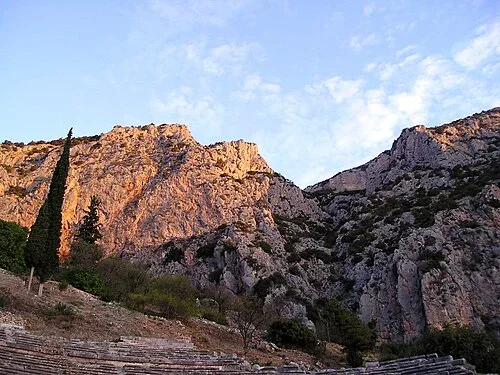 Phaedriades Cliffs
The Shining Ones
Two cliffs above the sanctuary carry a name usually rendered as 'the Shining Ones'. Low sunlight shows why. The sun catches the rock faces and turns them gold, while the ledges and gullies between them fall into shadow.
Listen in the appNickStenning · CC BY-SA 2.0
- 11
Roman Agora
A paved Roman square at the sanctuary's edge, and how Delphi kept its prestige while its treasures were taken.
- 12
The Sacred Way
The processional route from the spring to the temple, where rival cities raced to outdo one another in stone.
- 13
Climbing the Sacred Way
The steep stepped stretch of the route, where pale broad steps climb between walls of rough stone.
- 14
Exedra of the Kings of Argos
A curved stone base built around 369 BCE to carry bronze statues of Argos's legendary kings.
- 15
Treasury of the Sicyonians
A treasury built over the buried stones of two earlier monuments, both tied to a tyrant's war victory.
- 16
Siphnian Treasury
How a small island's silver and gold mines paid for a porch held up by carved women.
- 17
Siphnian Treasury Foundations
Why little more than the stone base survives of a treasury once famous for its carvings.
- 18
Athenian Treasury
A small marble treasury said to be built from Persian spoils, with two heroes carved around its walls.
- 19
Delphic Hymns to Apollo
Two hymns to Apollo cut into marble, with their musical notes written beside the words.
- 20
Bouleuterion of Delphi
The council hall that may have run the sanctuary's money, festivals and property, and what remains unclear about it.
- 21
Omphalos of Delphi
The myth of two eagles that met above Delphi, and the stone that marked the centre of the world.
- 22
Sacred Threshing Floor (Halos)
A serpent, a god, and a threshing floor where a ritual replayed their struggle every eight years.
- 23
Polygonal Wall
The wall that held up Apollo's terrace, and the inscriptions cut into its stones.
- 24
Polygonal Masonry Close-up
How many-sided stones were cut to fit so closely that the joints almost disappear.
- 25
Stoa of the Athenians
A marble portico built against an old wall to show off Athenian naval spoils from the Persian Wars.
- 26
Monument of King Prusias II
A king from Asia Minor honoured at Delphi on a tall stone pillar that once carried his bronze horse and rider.
- 27
Prusias Pillar in Detail
The weathered blocks and worn top of a pillar that once carried a king's statue.
- 28
Temple of Apollo
The temple's inner room where a priestess spoke for Apollo, and the king who misread her answer.
- 29
Columns of the Temple of Apollo
How one temple's history runs from a sixth-century fire to a Roman emperor's order.
- 30
Ancient Theater of Delphi
The hillside theatre where the music and drama contests of the Pythian Games took place.
- 31
Theater Above the Sanctuary
From the theatre's stone rows, the whole sanctuary and the valley beyond can be read at a glance.
- 32
Lesche of the Knidians
A painted clubhouse that ancient writers praised, and the terracotta roof pieces that show how its roof was decorated.
- 33
Stadium of Delphi
The stadium cut into the mountainside above the sanctuary, where the footraces of the Pythian Games were run.
- 34
Stadium Starting Line
The stone starting line where runners set their feet, and the holes and grooves cut into it.
- 35
Delphi Archaeological Museum
How a village built over Delphi was pulled down so the ancient sanctuary could be dug up, and how the museum began.
- 36
Archaic Bronze Votive Figure
A bronze of a standing young man, one of the many metal gifts left to the god at Delphi.
- 37
Sculpted Pediment and Frieze Fragments
Carved panels from the sanctuary's buildings, and why the frieze of the Siphnian Treasury is so well known.
- 38
Marble Lion Sculpture
A marble lion's head with a curled mane, one of the animal figures dedicated in the sanctuary.
- 39
Sphinx of the Naxians
A colossal sphinx that once stood on a tall column beside Apollo's temple, given by the island of Naxos.
- 40
Sphinx Carving in Detail
A close look at the braid, the layered feathers and the spiral scrolls of the Naxian sphinx.
- 41
Charioteer of Delphi
A life-size bronze charioteer dedicated to Apollo after a chariot victory, and how it came to survive.
- 42
Head of the Charioteer
The bronze head of the charioteer, with tight curls, a patterned band and inlaid eyes.
- 43
Chariot and Horses Display
Dark fragments of a lost chariot team, shown in front of a drawn outline.
Αρχαιολογικός Χώρος Δελφών
Frequently asked questions
How much does the guide cost?
Free app download. Listed guide price: $3.99. Guide price shown in the app. Audio guide only. Venue admission is separate.
Can I listen without internet?
Yes. Download the guide’s audio, images, and maps in the app before your visit. Your downloaded content is then available offline.
Can I listen in my language?
This audio guide is available in 15 languages, including English.
Do I need to follow a schedule?
No. This is a self-guided experience. Choose your stops, pause whenever you like, and return to a story at your own pace.
At your own pace
Explore Αρχαιολογικός Χώρος Δελφών.
Download Stanza, then search for “Αρχαιολογικός Χώρος Δελφών”.
Free app download · Guide price shown in the app
Keep exploring
Nearby audio guides
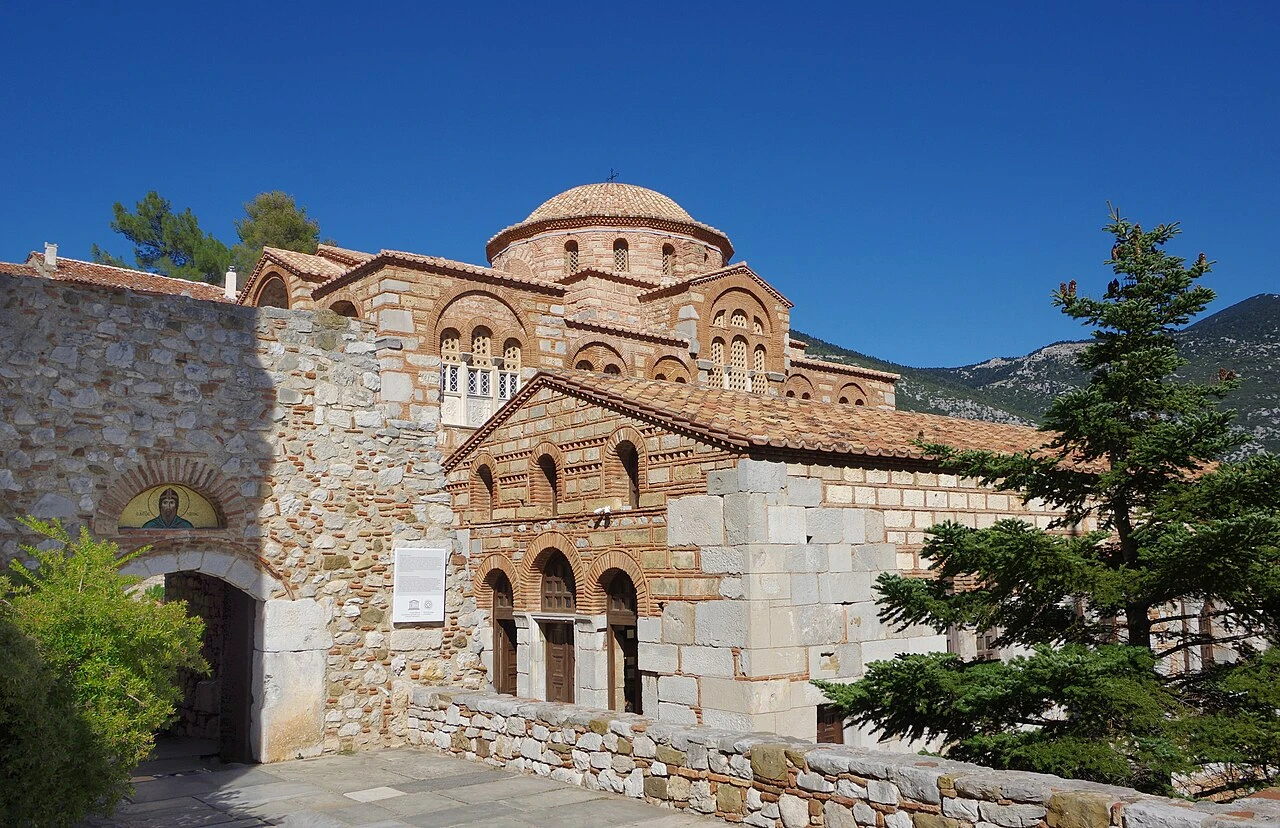
Distomo · 24 km
Hosios Loukas Monastery
Content & sources
Photo: Berthold Werner · CC BY-SA 3.0
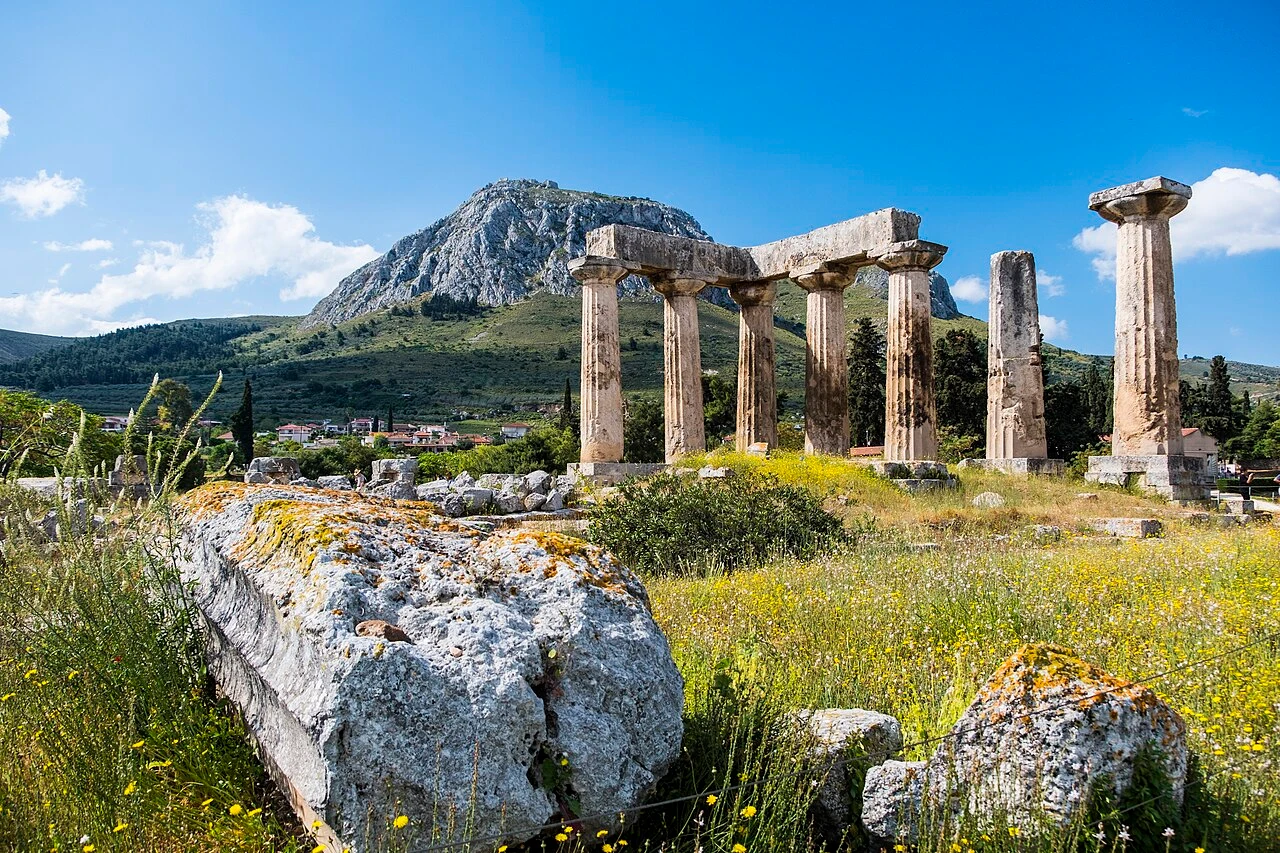
Corinth · 72 km
Ancient Corinth
Content & sources
Davide Mauro · CC BY-SA 4.0
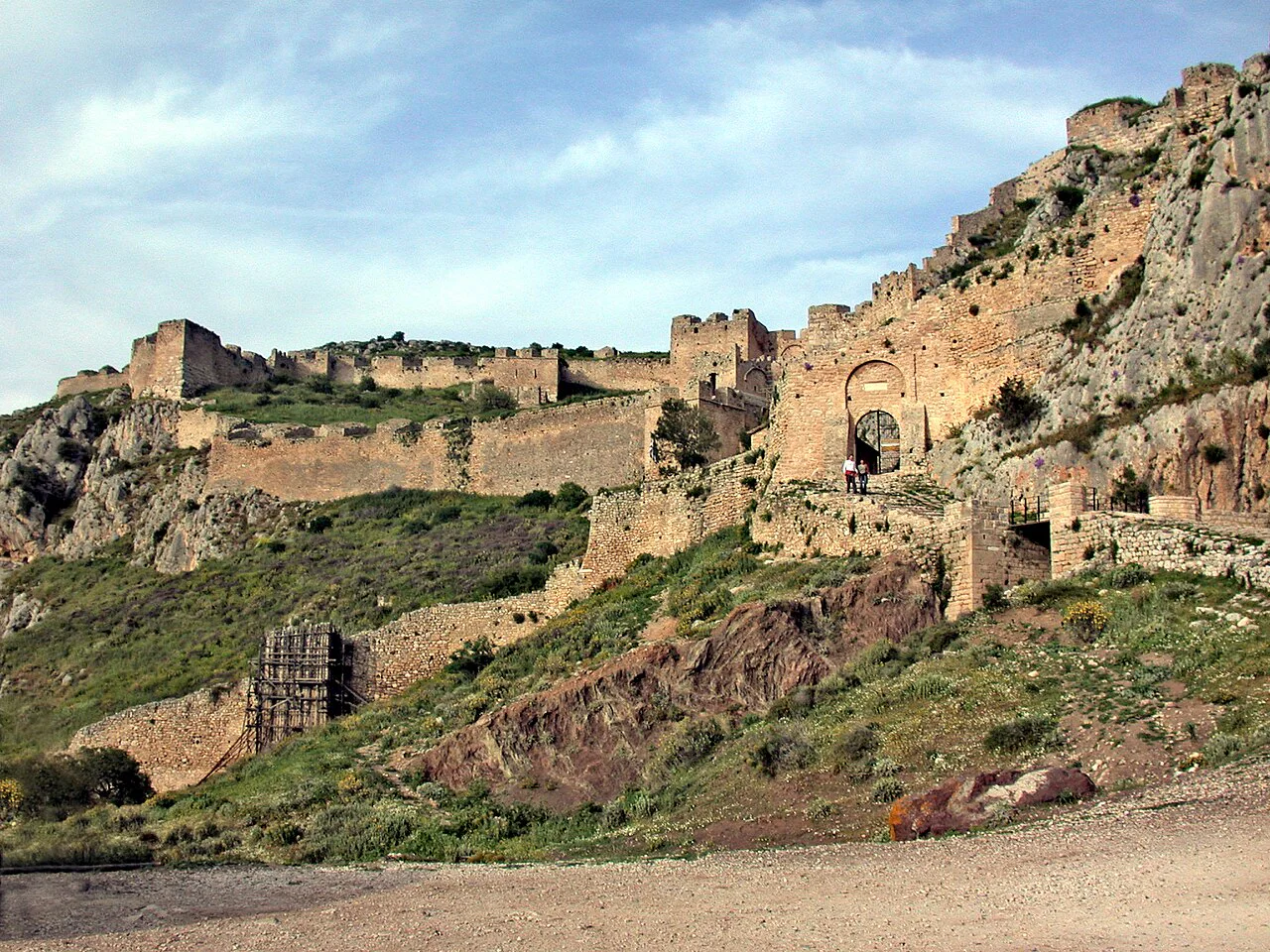
Municipal Unit of Corinth · 73 km
Ακροκόρινθος
Content & sources
MM · Public domain
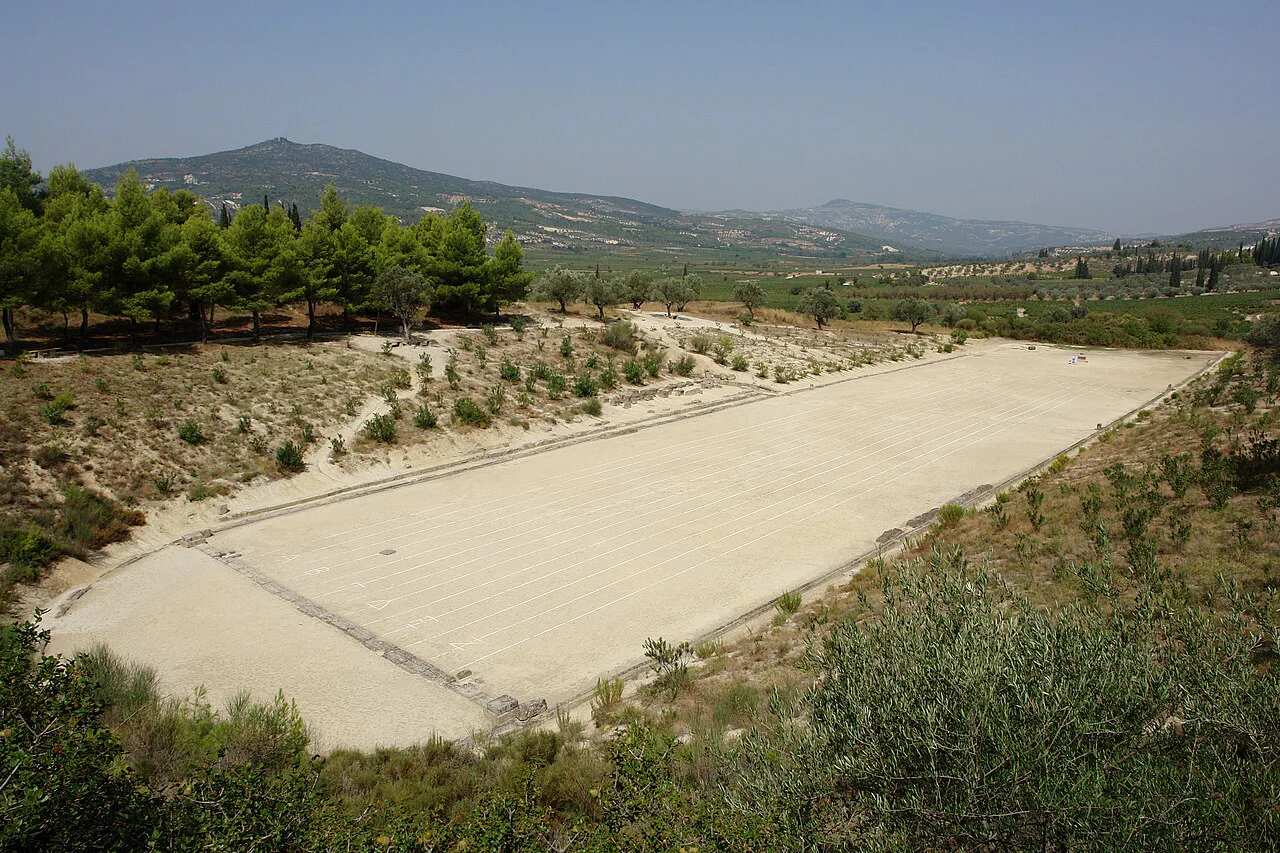
Nemea Municipality · 77 km
Αρχαία Νεμέα
Content & sources
Michael F. Mehnert · CC BY-SA 3.0