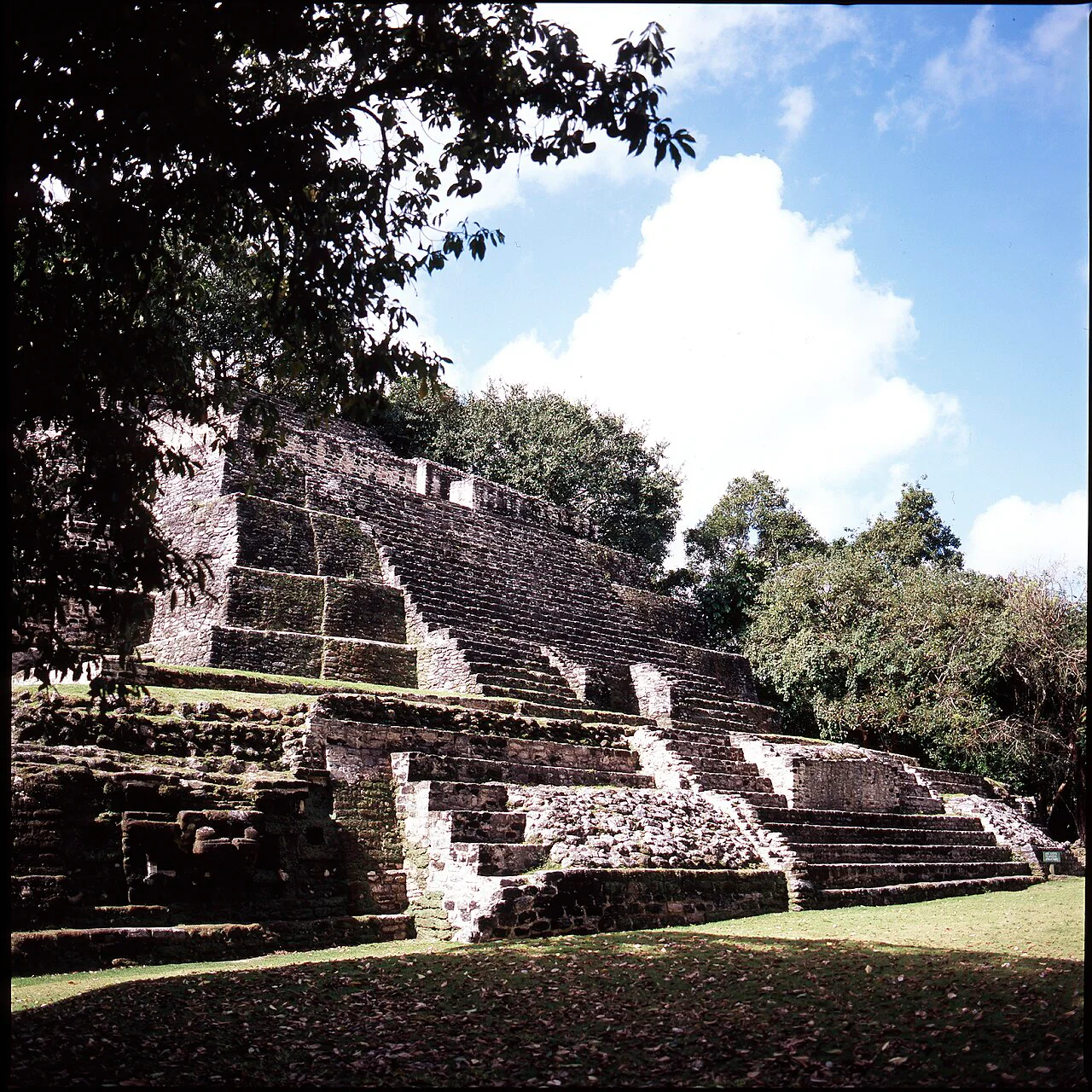
Stanza · Audio guide
Lamanai Audio Guide
A place to remember. A story to take with you.
Lamanai is a Mesoamerican archaeological site that was once a major city of the Maya civilization in Belize. It is renowned for its exceptionally long occupation spanning three millennia from the Early…
Download Stanza, then search for “Lamanai”.
About the tour
One guide. Your kind of visit.
Lamanai is a Mesoamerican archaeological site that was once a major city of the Maya civilization in Belize. It is renowned for its exceptionally long occupation spanning three millennia from the Early Preclassic period through the 20th century.
Ready when you are.
- 01Get the free Stanza app.
iOS & Android
- 02Find your guide.
“Lamanai”
- 03Download before you go.
Works offline
Audio guide / 13 narrated stops
Inside the guide
Get to know a few of the stories before you go. Open a stop to read more.
01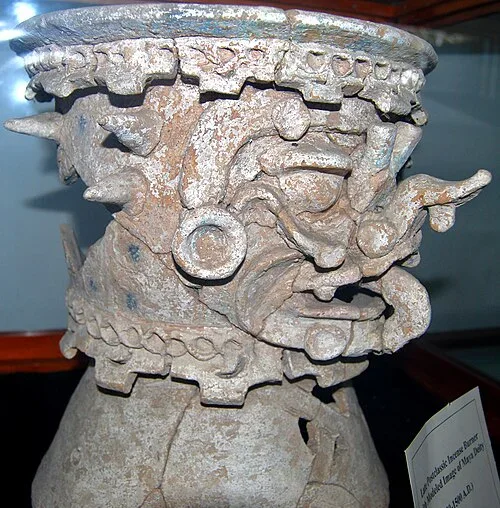 Lamanai On-Site Museum and Visitor Center
Incense Burner from the Site Museum
Welcome to Lamanai, a great Maya city on the New River Lagoon in northern Belize. The name is Maya for submerged crocodile, a nod to the toothy reptiles along the river banks. This carved incense burner was made for ritual use between about 1350 and 1500, near the end of the Postclassic period. It is proof that ceremony and craft were still alive here long after many other Maya cities had emptied. Most Classic-period sites in the southern lowlands were abandoned by the end of the tenth century. Lamanai was not. People lived here from the sixteenth century BC, through Maya kings, Spanish friars and British colonists, and into the twentieth century. That three and a half thousand year run is what makes this place worth the visit.
Bernard DUPONT · CC BY-SA 2.0
02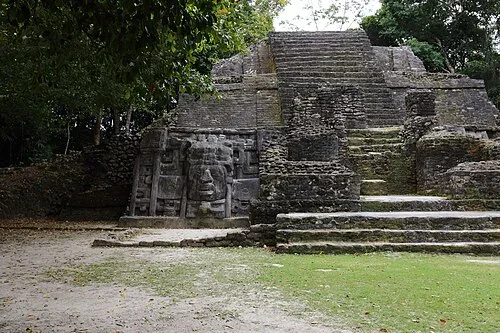 The Mask Temple (Structure N9-56)
Mask Temple
On the west face of the Mask Temple, two enormous masks decorate the facade. They are set on two levels on the south side of the central stairway, and the lower ones rise more than four and a half metres. Each shows a rather humanized face, framed by decorative elements. They were carved in the late fifth or early sixth century, and they still read clearly today. At Lamanai, ceremonial life was strongly developed, and these masks were its public face. A ruler who climbed this stairway passed beside towering images of power. For the people gathered in the plaza below, the message was hard to miss. This was evidence of ruling authority held with tight control over the populace.
Photo: Cephas · CC BY-SA 4.0
03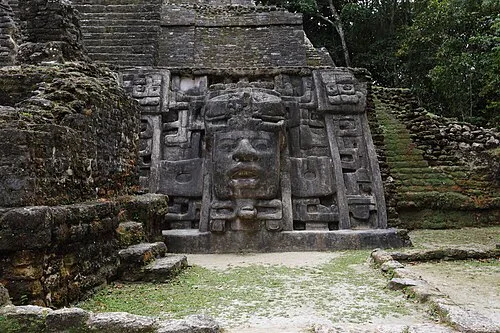 The Mask Temple (Structure N9-56)
The King with the Crocodile Headdress
The great face wears a headdress in the shape of a crocodile. That choice ties the ruler to the reptiles of the lagoon, and to the city's own name, Lamanai, the submerged crocodile. The masks were not carved straight from solid stone. Their makers built a core of stone armature first, then covered it with a thick layer of stucco. The fine details, the eyes, the mouth, the border patterns, were carved into that soft coating. It was a demanding technique, and a skilled one. The face itself is human in character, more a portrait than a monster. Its crocodile crown says the rest. A king here presented himself in the image of the animal that gave the city its name.
Listen in the appPhoto: Cephas · CC BY-SA 4.0
04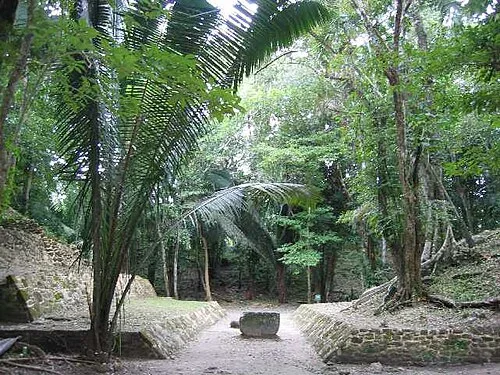 The Ancient Maya Ballcourt
The Ballcourt
This narrow alley between two sloping banks is a Maya ballcourt, the playing field of the ancient Mesoamerican ballgame. Teams across the Maya world contested such courts, though the rules of their game are lost. Lamanai had a single ballcourt, and it kept a secret. Excavation in the court revealed a ritual offering. A lidded bowl held crystalline hematite, cinnabar in a miniature vessel, jade, shell and pearl. All of it rested on top of a pool of mercury. Mercury had been found before at other Maya sites, but never in such a large quantity. The builders probably collected it for ritual use. Whoever sealed that offering left one of the most striking caches known from the Maya world.
Listen in the appPhoto: Elelicht · CC BY-SA 3.0
05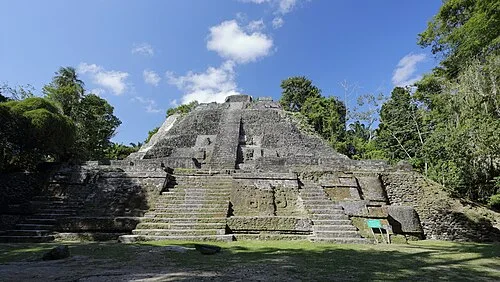 The High Temple (Structure N10-43)
High Temple
The High Temple is the tallest structure at Lamanai. It belongs with the Jaguar Temple and the Mask Temple among the great buildings dating from AD 625. A pyramid like this was not a hollow monument. It is a massive stone armature filled with earth, then finished with heavy layers of stucco. Rulers, engineers and artisans built such temples over generations, each phase adding height and presence. Every block was hauled and set without metal tools, wheels or draft animals. The result still dominates the plaza after more than thirteen centuries.
Listen in the appPhoto: Martin Falbisoner · CC BY-SA 4.0
06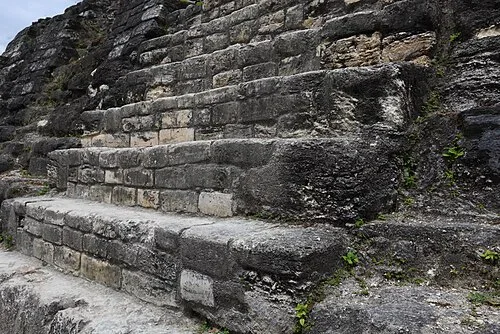 The High Temple (Structure N10-43)
The Climb
The steps of the High Temple are steep, worn stone, and they climb at a punishing angle. For visitors today, a wooden safety staircase runs over the worst of the ascent. Even with it, the climb means dozens of steps in high heat and heavy humidity. It is a small modern aid with an old effect. It lets anyone make the kind of ascent once reserved for a ruler or a priest. Pause halfway if the heat demands it.
Listen in the appPhoto: Cephas · CC BY-SA 4.0
07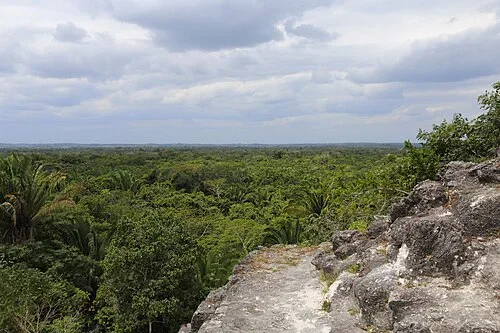 The High Temple (Structure N10-43)
View from the Summit
From the summit, the jungle canopy stretches to the horizon, and the New River Lagoon opens through it. This water was the foundation of the city's wealth. Lamanai spread along the lagoon's western shore across several square kilometres. The lagoon connected the city to rivers and coasts, and through them to a vast Mesoamerican trade network. For its three and a half thousand years of occupation, that access brought goods from far away to this shore. The few restored buildings a visitor sees are only a fraction of the ancient city. Most of it still lies under the trees in every direction.
Listen in the appPhoto: Cephas · CC BY-SA 4.0
08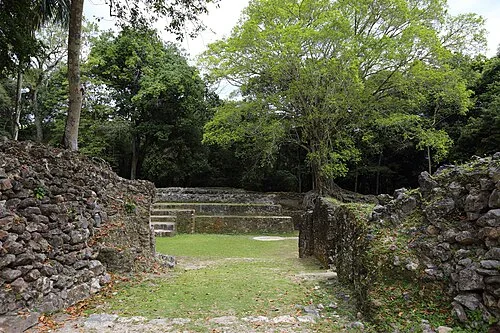 Ottawa Group Elite Residential Area & Stela Plaza
Ottawa Group: Where the Elite Lived
This quiet group of low platforms and courtyards was where Lamanai's elite lived. Metal arrived here by around AD 1150, and it changed what status looked like. More copper artifacts have been recovered at Lamanai than at any other site in the ancient Maya world. Bells, rings, tweezers, pins and clothing ornaments, nearly all of them found in elite burials. The metal was alloyed with tin or arsenic, which technically makes it bronze. Copper bells worn in performance rang out the standing of the person wearing them. Lustrous rings and ornaments did the same work for the eye. There is evidence the Maya here even produced copper objects on site, from mis-cast pieces and casting debris left behind. In the Postclassic world, metal was probably the most highly valued luxury good in this region.
Listen in the appPhoto: Cephas · CC BY-SA 4.0
09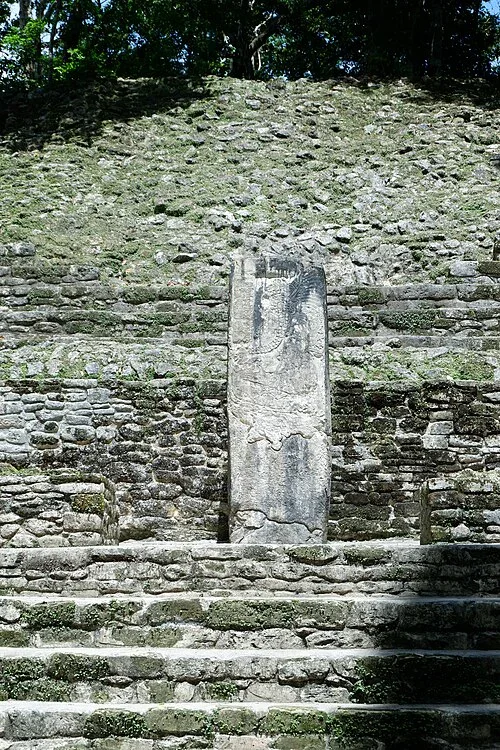 Ottawa Group Elite Residential Area & Stela Plaza
Stela 9
This weathered standing stone is Stela 9, erected at Lamanai in AD 625. Its text was carved in the Yucatec Maya language. Stelae like this belong to a tradition in which the Maya wrote their own history in stone. Lamanai's name appears in that inscriptional record, more than a thousand years old, written as Lam'an'ain. When Spanish missionaries arrived centuries later, they heard the same name from local people and wrote it down much as it stands. So the name on the maps today comes from the Maya themselves. The city's story here is known from its own records, not only from the accounts of outsiders.
Listen in the appPhoto: Bruce R.Schulman · CC BY-SA 4.0
10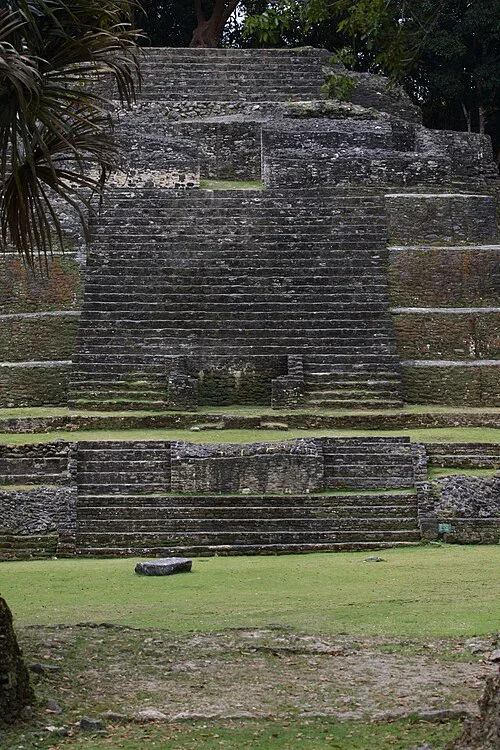 The Jaguar Temple (Structure N10-9)
Jaguar Temple
The Jaguar Temple rises from its plaza in tiers of stone, named for the jaguar masks carved on its sides. What you see is only part of it. A significant portion of the temple remains under grassy earth or dense jungle growth. Fully excavated, it would be significantly taller than the High Temple, the tallest building at the site. A local legend tells of an ancient spear hidden here, called the Heart of the Jaguar. It is a story told about the temple, not a find anyone has made. No such spear has ever surfaced. The jaguar masks themselves are real enough.
Listen in the appPhoto: Cephas · CC BY-SA 4.0
- 11
The Jaguar Face
Reading the blocky carved jaguar face that named a temple.
- 12
Colonial Layers
Maya rebels drove the Spanish friars out of this city.
- 13
What the Jungle Keeps
The fig tree, the iron wheel, and the archaeology still waiting under the jungle.
Lamanai
Frequently asked questions
How much does the guide cost?
Free app download. Listed guide price: $0.99. Guide price shown in the app. Audio guide only. Venue admission is separate.
Can I listen without internet?
Yes. Download the guide’s audio, images, and maps in the app before your visit. Your downloaded content is then available offline.
Can I listen in my language?
This audio guide is available in 15 languages, including English.
Do I need to follow a schedule?
No. This is a self-guided experience. Choose your stops, pause whenever you like, and return to a story at your own pace.
At your own pace
Explore Lamanai.
Download Stanza, then search for “Lamanai”.
Free app download · Guide price shown in the app
Keep exploring
Nearby audio guides
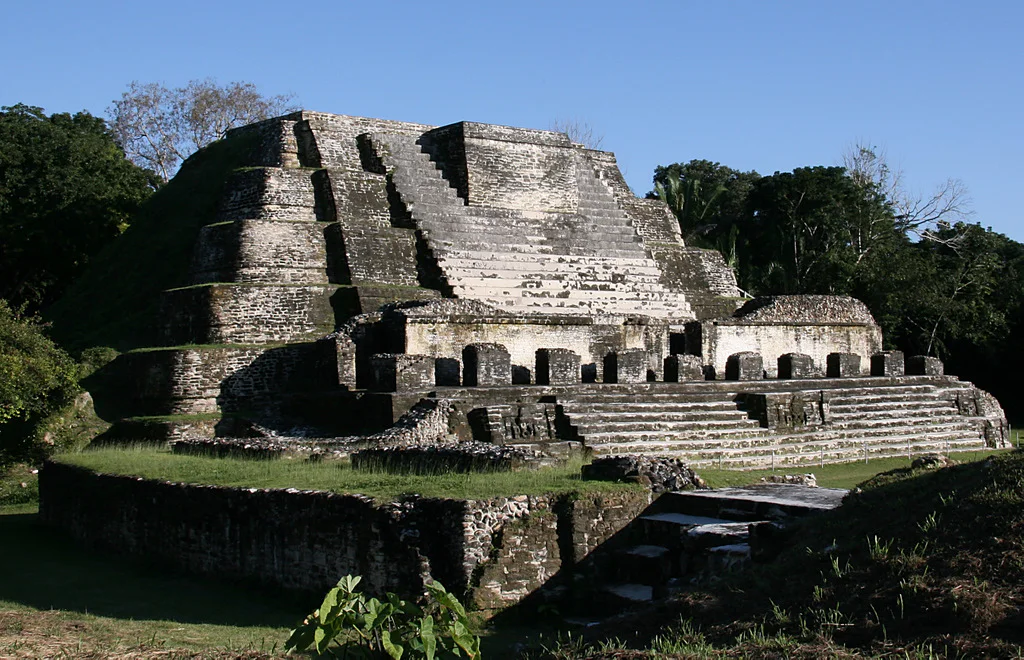
Rockstone Pond · 32 km
Altun Ha
Content & sources
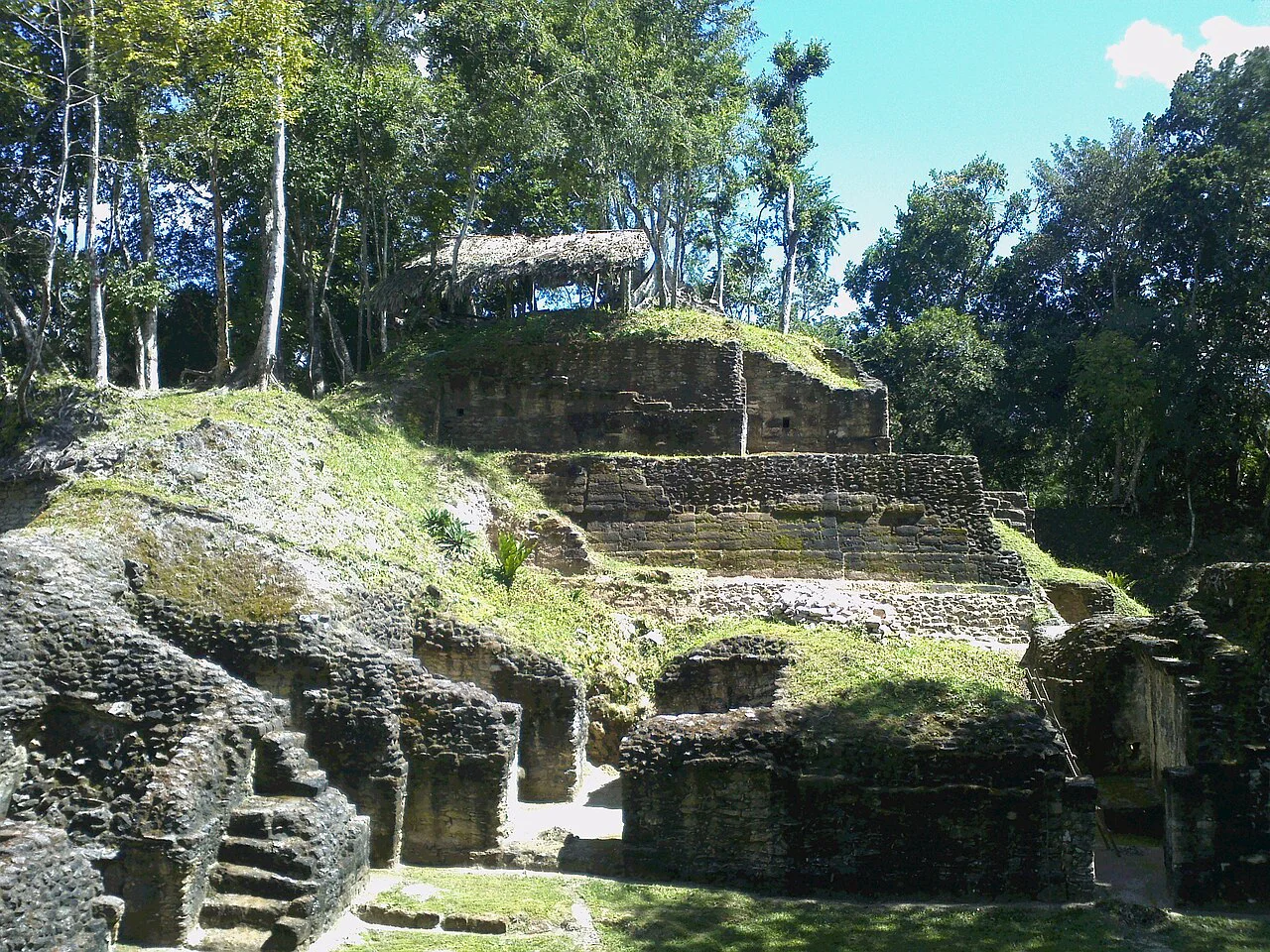
Michael Lazarev (Asmadeus) · CC BY-SA 2.0
Melchor de Mencos · 95 km
Naranjo
Content & sources
Photo: Rudy Canales · CC BY-SA 3.0
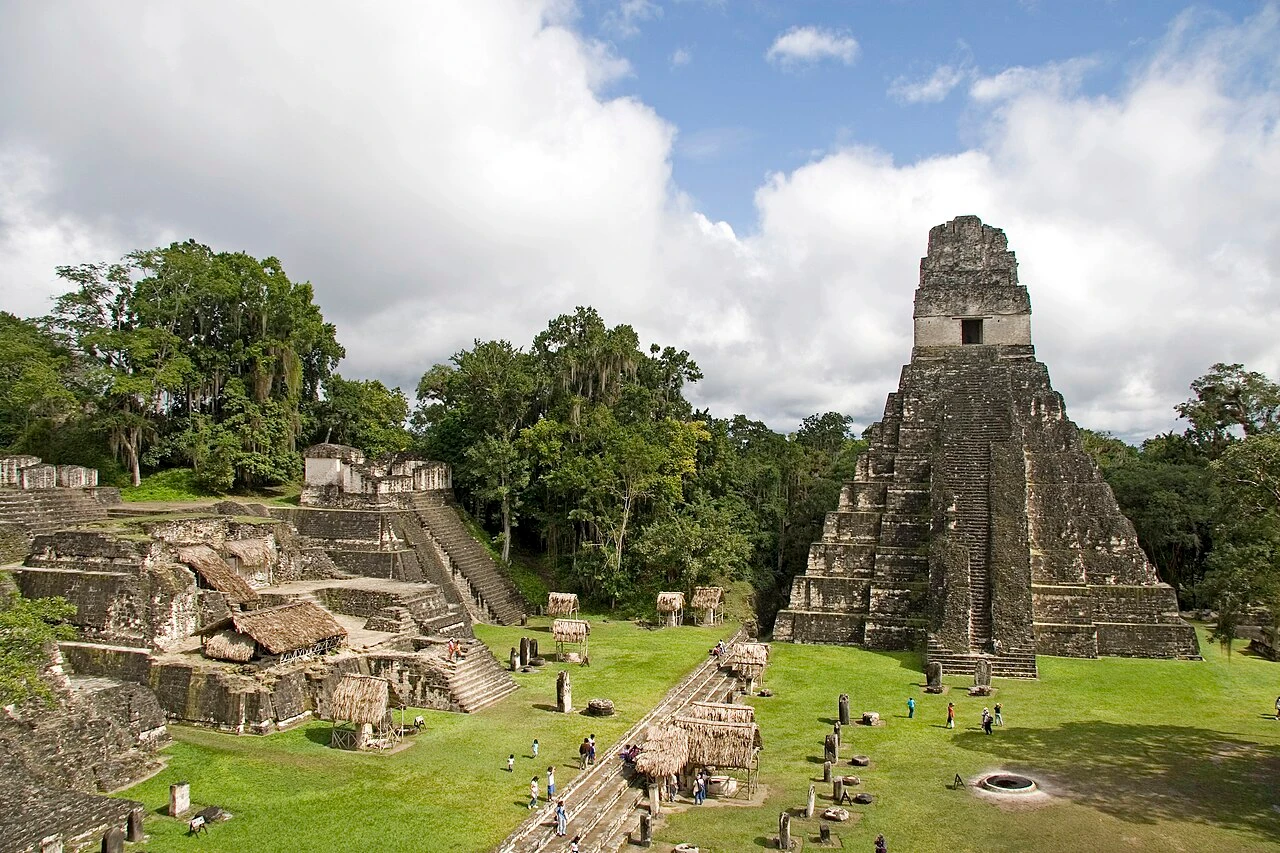
Flores · 119 km
Tikal
Content & sources
Photo: Mundo Maya · CC BY-SA 4.0
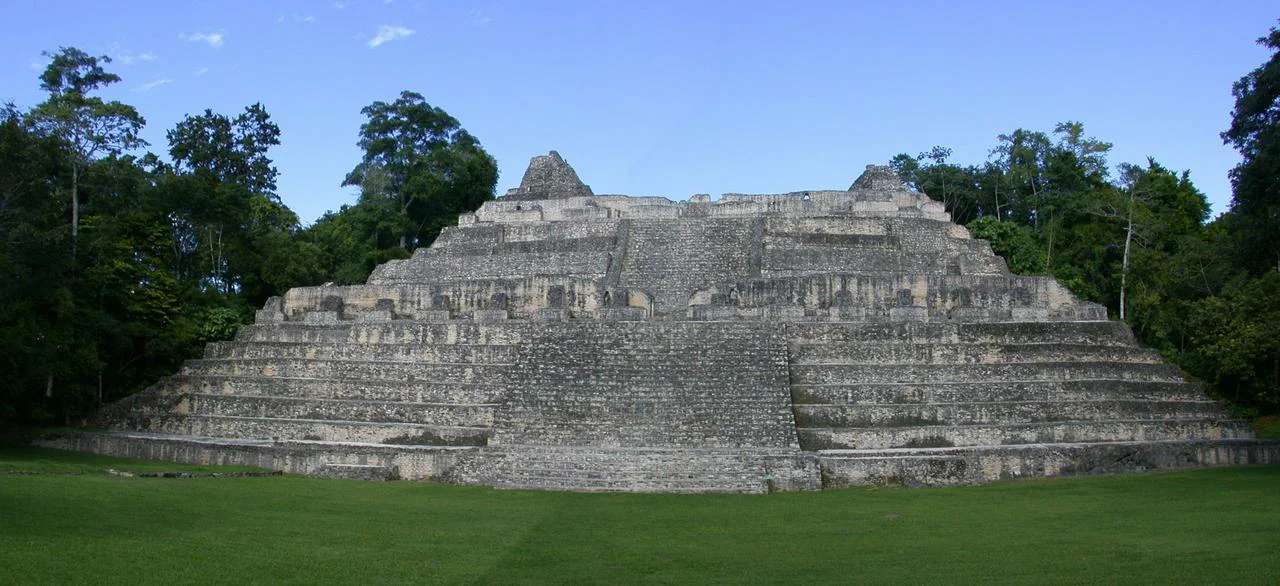
Cayo District · 122 km
Caracol
Content & sources
Devon Jones · CC BY-SA 3.0