Stanza · Audio guide
Naranjo Audio Guide
A place to remember. A story to take with you.
Naranjo is a Pre-Columbian Maya city located in the Petén Basin region of Guatemala. The site is known for its polychrome ceramic style and was occupied from about 500 BC to 950 AD.
Download Stanza, then search for “Naranjo”.
About the tour
One guide. Your kind of visit.
Naranjo is a Pre-Columbian Maya city located in the Petén Basin region of Guatemala. The site is known for its polychrome ceramic style and was occupied from about 500 BC to 950 AD.
Ready when you are.
- 01Get the free Stanza app.
iOS & Android
- 02Find your guide.
“Naranjo”
- 03Download before you go.
Works offline
Audio guide / 7 narrated stops
Inside the guide
Get to know a few of the stories before you go. Open a stop to read more.
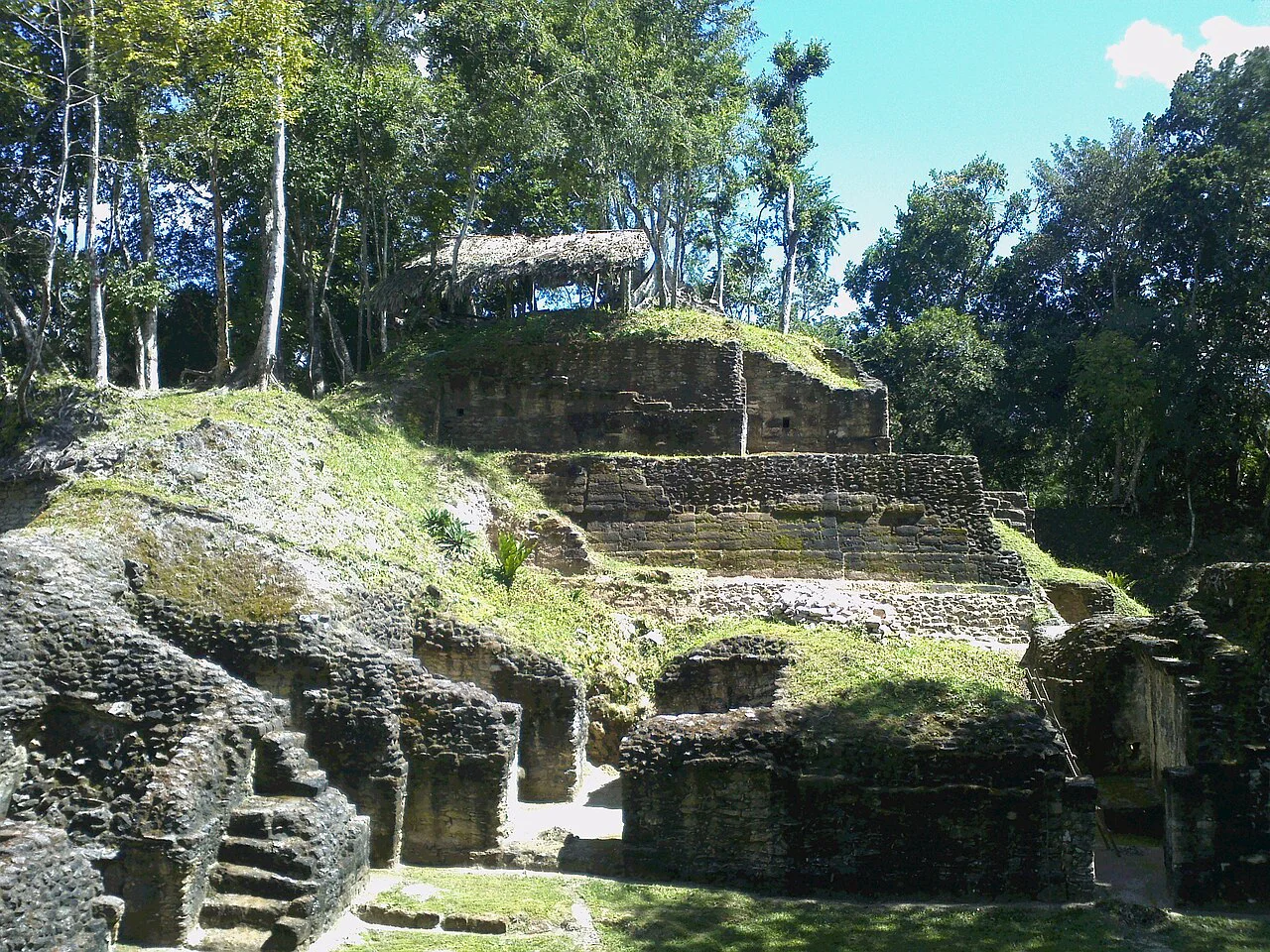
01 The Central Plaza: Heart of the Sa'aal Kingdom
Naranjo Sa'aal: Capital of a Maya Kingdom
Welcome to Naranjo, a Maya city its people called Sa'aal — a name meaning the place where maize gruel abounds. Its kings called themselves the Holy Lords of Sa'aal, and their kingdom was the second most extensive in the Petén, after Tikal alone. People were living here by about five hundred BC. The city's final years came around nine hundred AD, and its greatest age fell in the Late Classic period between them. At its height the center held a hundred and forty-eight major buildings. The grassy mounds rising through these trees were once temples, palaces, ballcourts and reservoirs, all joined by raised roads. What follows is the story this stone tells: kings at war, a queen who took a broken throne, a sacred mountain, and why the city was finally left to the forest.
Photo: Rudy Canales · CC BY-SA 3.0
02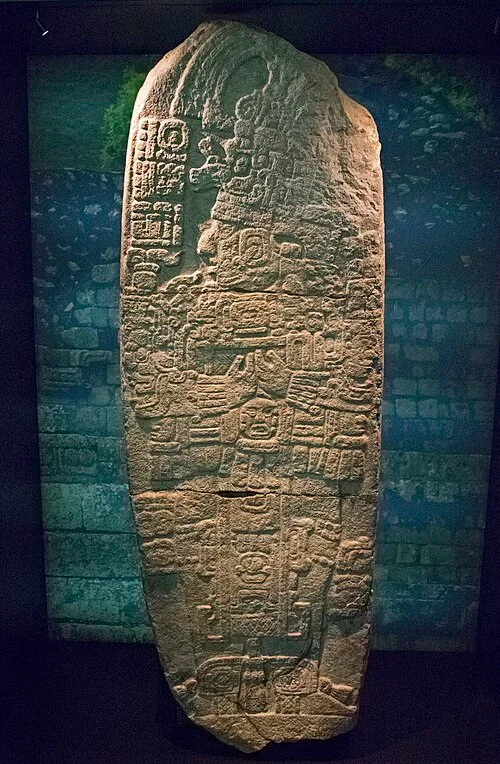 The Plaza Monuments: Records of Maya Warfare
Stela 6: Stone Record of Shifting Rivalries
The tall carved slabs that once lined these plazas are stelae, and they were never mere decoration. Each one carried columns of hieroglyphs recording what a king did and when he did it — a public history in stone, set up where the whole court could see it. This one, Stela 6, now kept in the national museum in Guatemala City, belongs to that tradition. And the history it stood for was violent. Caracol attacked Naranjo twice, and in 631 Calakmul took the city. A later king struck back, crushing Caracol in what the Maya called a star war, though by 680 Caracol had recovered and removed him. In 744 Tikal defeated Naranjo outright, and its ruler, Yax Mayuy Chan Chaak, was taken captive and likely sacrificed in the victory celebrations. The story did not end there. Around 814 the roles had reversed entirely: Papmalil, a ruler of Ucanal, presided over the accession of a Naranjo king.
Photo: Ymblanter · CC BY-SA 4.0
03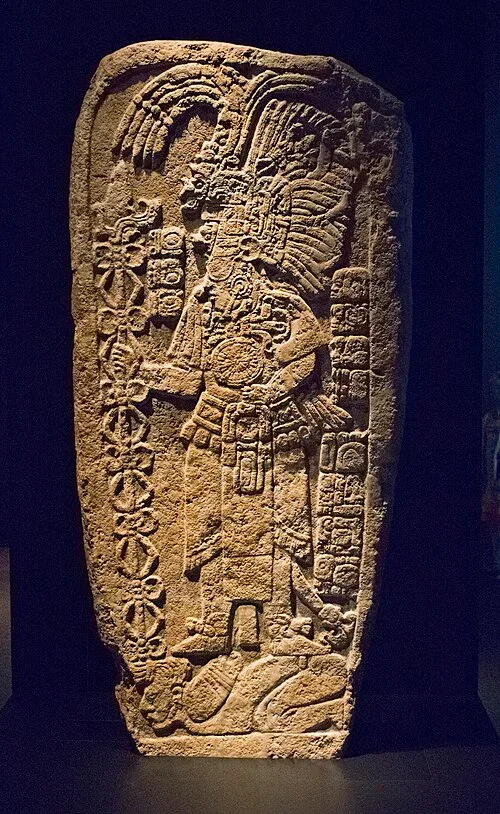 The Plaza Monuments: Records of Maya Warfare
Stela 8: An Inauguration in Stone
Not every stela records a war. Stela 8, also now in the national museum in Guatemala City, marks a ceremony: the inauguration of King K'ahk' Ukalaw Chan Chaahk in 755. The carving shows him at the moment he took office. He stands tall and frontal, wearing a headdress of feathers that rises above his head, with a ceremonial bar held across his shoulders and columns of hieroglyphs running down both sides of the stone. At his feet crouches a second, smaller figure. Some readers have seen a captive there, or a conquered place brought low before the new king — though the carving itself documents the inauguration, not who that figure is. What is certain is the purpose. A king's accession was a public event, staged before the court, and a stela like this fixed that day in stone so the date could be read for centuries.
Listen in the appPhoto: Ymblanter · CC BY-SA 4.0
04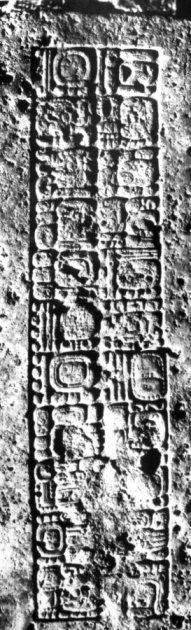 The Plaza Monuments: Records of Maya Warfare
A Century of Removal: Maler, the Stairway, and Recovery
In 1905 an explorer named Teobert Maler reached Naranjo, sent by Harvard's Peabody Museum. He was the first to map and photograph the site, and this photograph of the carved glyphs of Stela 10 comes from that early work of recording. Maler also turned his attention to a hieroglyphic stairway on Structure B-18, a set of carved steps believed to have been taken from Caracol and added to the temple in the seventh century. Some of those steps left Naranjo for Europe, and accounts differ over whether Maler or Thomas Gann removed them. In 1924 they were sold to the British Museum in London for about twenty pounds, and they are still there. The loss did not stop there. From 1997 to 2001 looters controlled the site. In 2002 the work of recovery began with a project to measure the damage, in which the archaeologist Vilma Fialko played a leading part, and it documented about 270 looters' tunnels and trenches cut into the ruins.
Listen in the appPhoto by Teoberto Maler · Public domain
05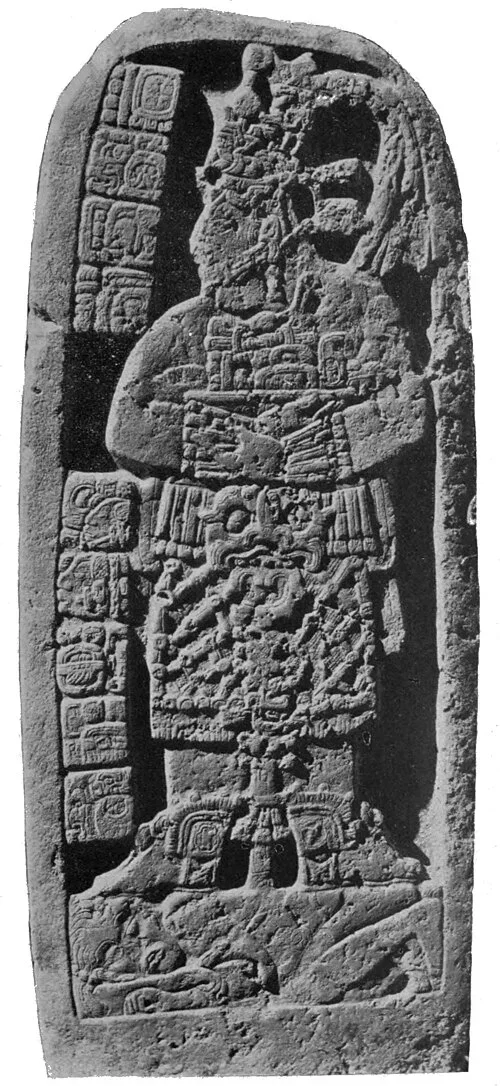 Stela 24: The Legacy of Queen Lady Six Sky
Stela 24: Lady Six Sky Takes Naranjo
In 682 a royal woman arrived at Naranjo, and the city's fate turned with her. She was Wak Chanil Ajaw, remembered today as Lady Six Sky, daughter of the ruler of Dos Pilas, B'alaj Chan K'awiil. She had been sent to reestablish Naranjo's broken royal line, and her arrival is carved on Stela 24, which once stood before Structure C-7 and is now in the national museum in Guatemala City. She was never formally made ruler of the city. Yet she performed as one, most likely as regent for her son K'ahk' Tiliw Chan Chaak, who took the throne as a small child of about five. Most likely under her direction Naranjo launched a string of military campaigns, defeating Tikal and then Ucanal. She lived on for decades after her son came of age, dying in 741. Her image appears on at least five of the city's stelae — numbers 3, 18, 24, 29 and 31 — a presence no other woman of Naranjo matched.
Listen in the appUnknown author · Public domain
06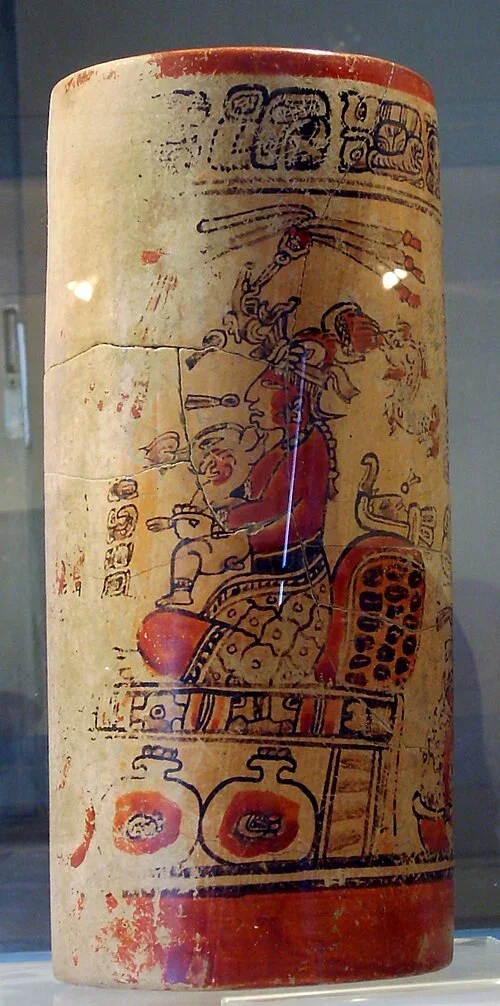 Royal Workshops: The Masterpieces of Maya Ceramics
The Polychrome Tradition: Painting for the Royal Court
Naranjo's kings did not only commission stone. The city is known for its polychrome ceramics, pottery painted in several colors in workshops serving the royal court. The tall cylinder vase here was found at Sacul, another Maya site in the Petén, and is now kept in the regional museum of south-eastern Petén in the town of Dolores. Yet it belongs to this story: its band of hieroglyphs names it as the drinking vessel of a lord of Naranjo. Vases like this held chocolate for the elite, made to be held and admired at court, and this one is painted with a mythological scene featuring the young Moon goddess. That painted writing belongs to the same tradition as the stelae in the plazas. The Maya recorded their kings and their dates wherever the surface allowed, on stone and on clay alike.
Listen in the appPhoto: Simon Burchell · CC BY-SA 3.0
07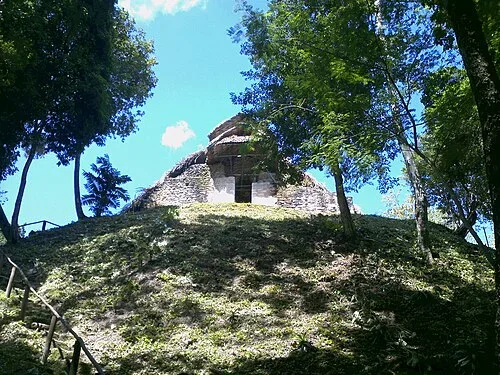 Triadic Acropolis C-9: The Sacred Mountain
The Sacred Mountain: Triadic Acropolis C-9
Every Maya city needed a mountain, and at Naranjo the builders made one. Triadic Acropolis C-9 is the largest complex of its kind in the city, and its main pyramid is the tallest structure on the site. What makes it extraordinary is where it stands. The pyramid was raised on top of a natural hill, and inside that hill lies a cave. For the Maya, a mountain with a cave was a sacred mountain — a place where the earthly world met the Underworld — and C-9 is about as close to a perfect realization of that idea as any builder could achieve. The temple mound rising over the trees here gives the idea its shape: a man-made mountain on a real one. Naranjo's people built their power, their history and their gods into the same landscape, and the hill still holds them all.
Listen in the appPhoto: Rudy Canales · CC BY-SA 3.0
Naranjo
Frequently asked questions
How much does the guide cost?
Free app download. Listed guide price: $0.99. Guide price shown in the app. Audio guide only. Venue admission is separate.
Can I listen without internet?
Yes. Download the guide’s audio, images, and maps in the app before your visit. Your downloaded content is then available offline.
Can I listen in my language?
This audio guide is available in 15 languages, including English.
Do I need to follow a schedule?
No. This is a self-guided experience. Choose your stops, pause whenever you like, and return to a story at your own pace.
At your own pace
Explore Naranjo.
Download Stanza, then search for “Naranjo”.
Free app download · Guide price shown in the app
Keep exploring
Nearby audio guides
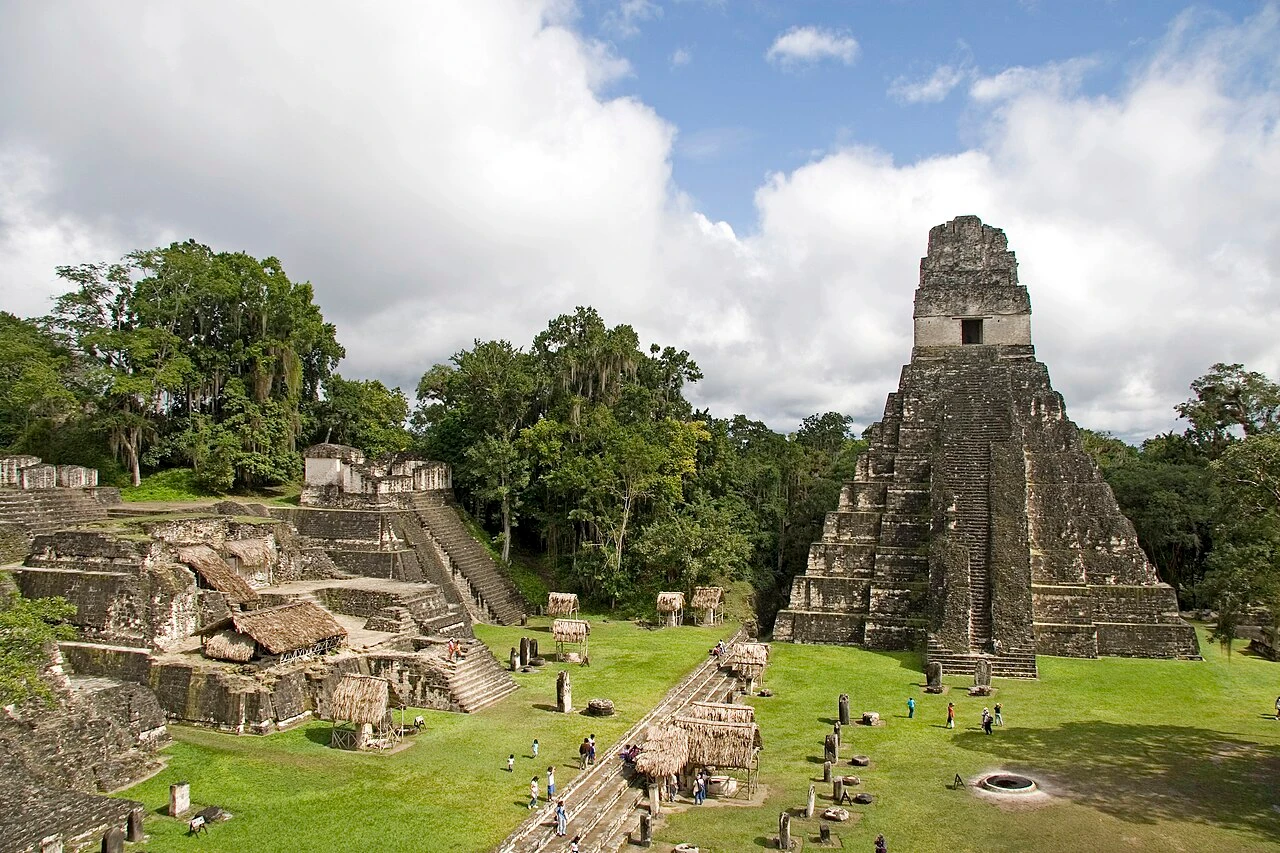
Flores · 40 km
Tikal
Content & sources
Photo: Mundo Maya · CC BY-SA 4.0
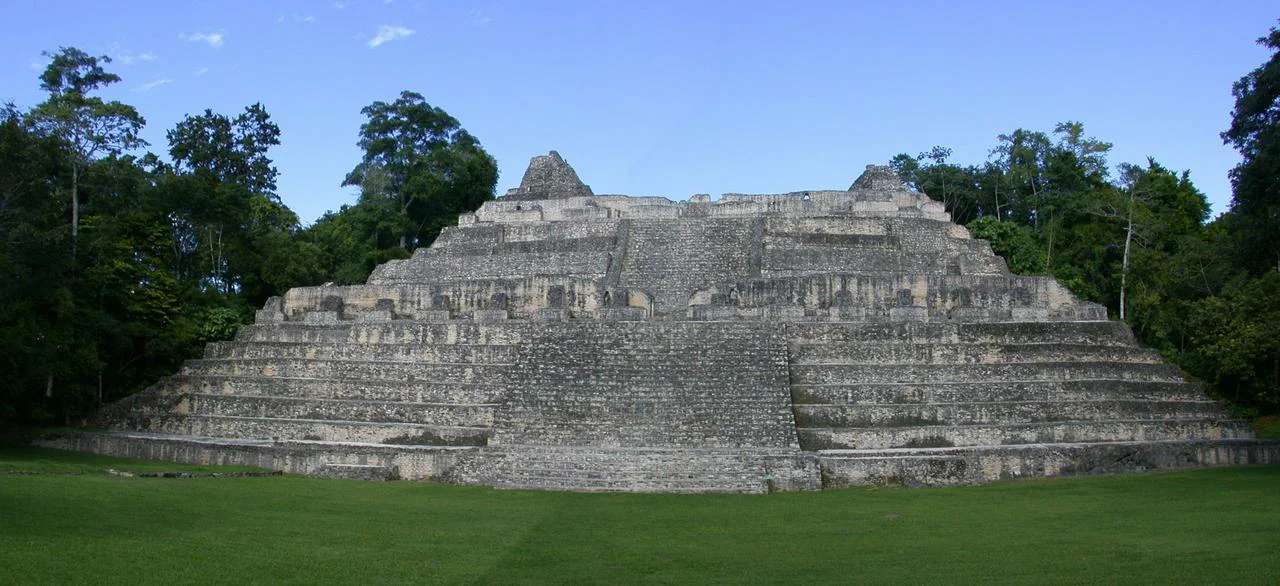
Cayo District · 44 km
Caracol
Content & sources
Devon Jones · CC BY-SA 3.0
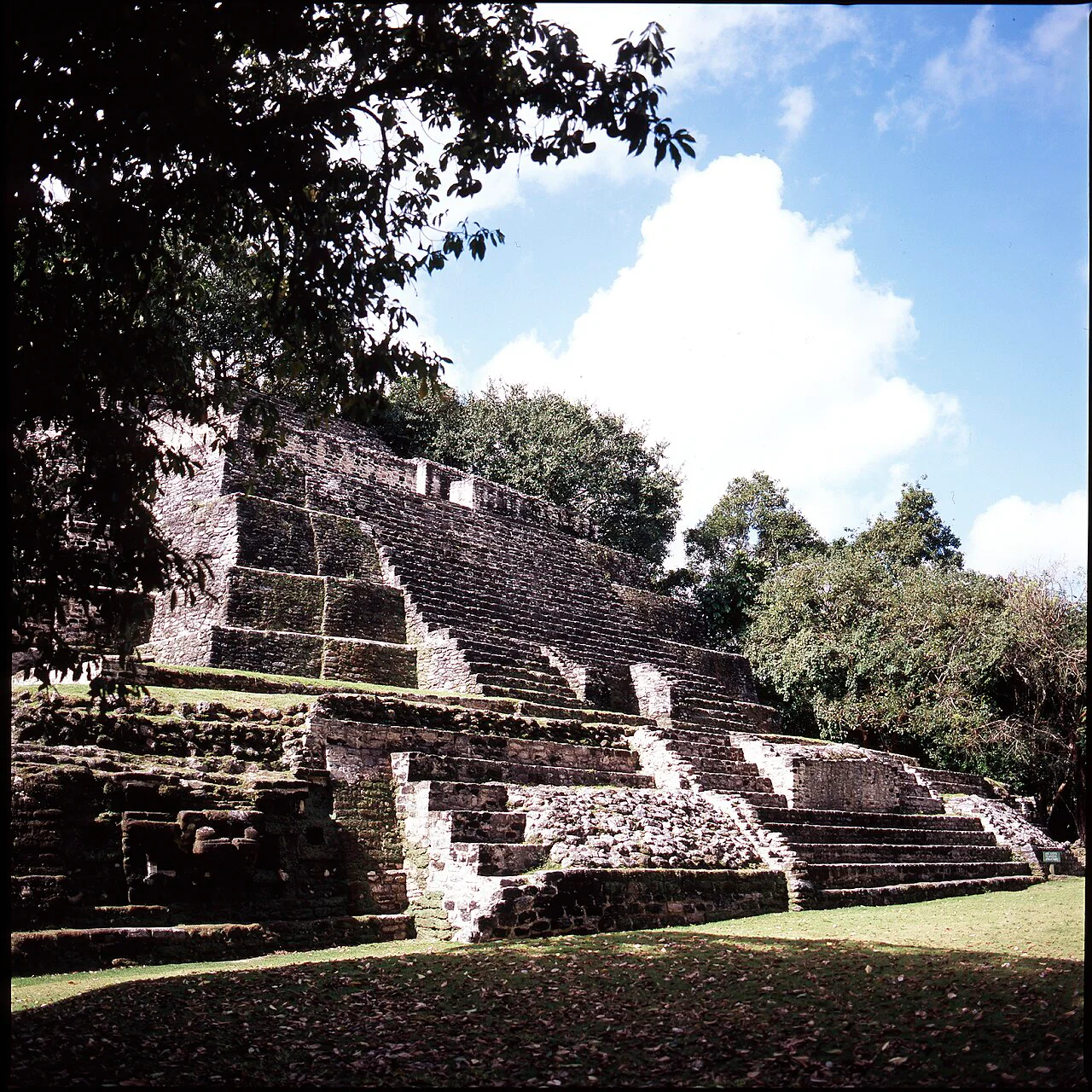
Indian Church · 95 km
Lamanai
Content & sources
Photo: Urbanarcheology · CC BY 3.0
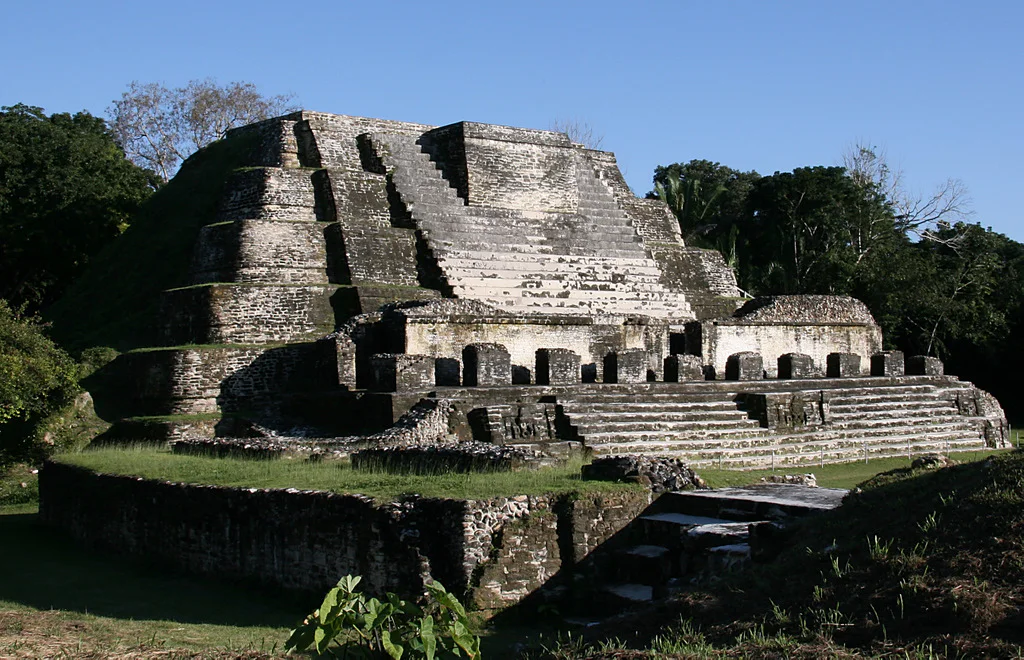
Rockstone Pond · 120 km
Altun Ha
Content & sources
Michael Lazarev (Asmadeus) · CC BY-SA 2.0