Stanza · Audio guide
Visoki Dečani Audio Guide
A place to remember. A story to take with you.
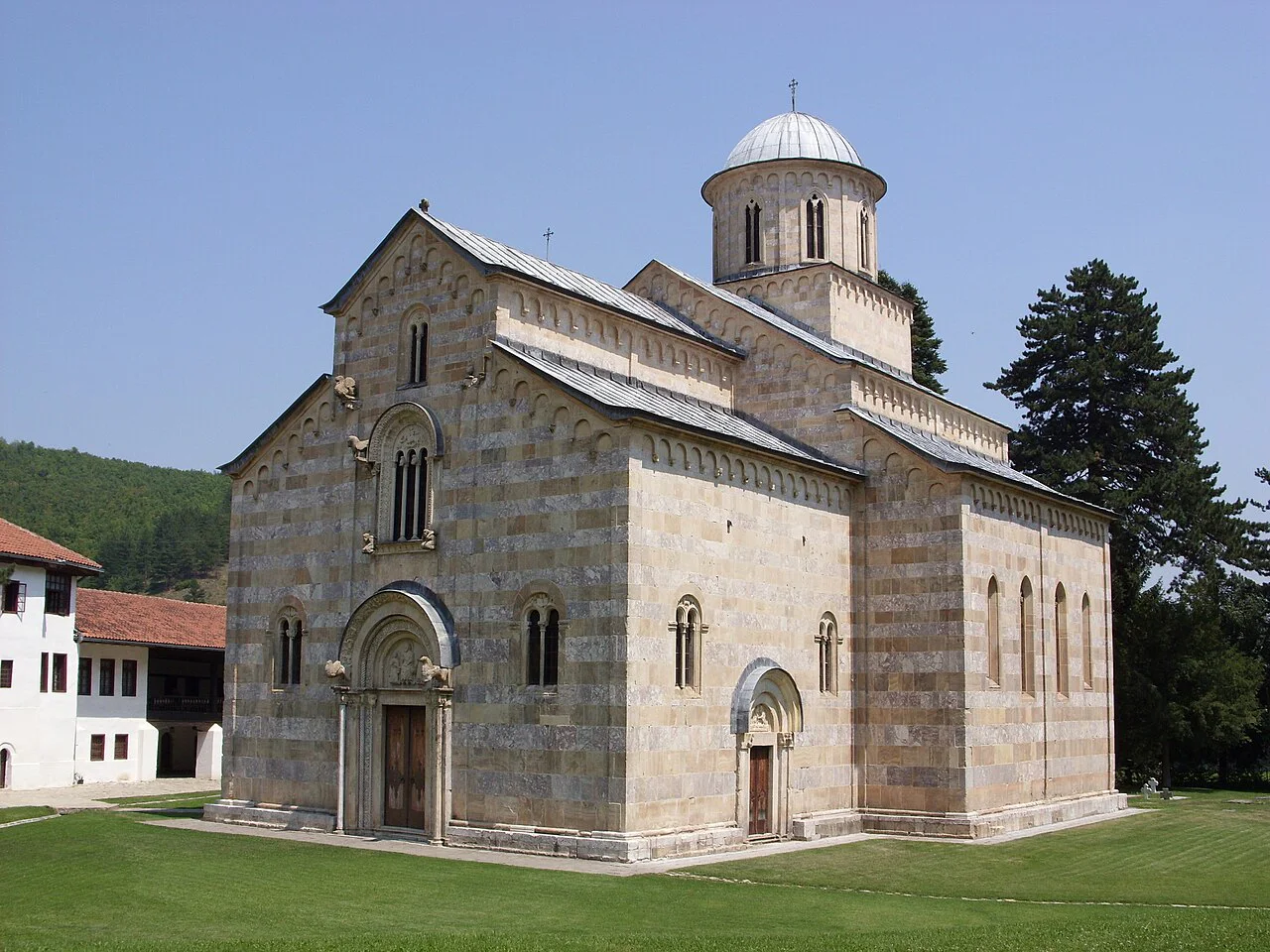
The Visoki Dečani Monastery is a medieval Serbian Orthodox Christian monastery located near Deçan, Kosovo. It was founded in the first half of the 14th century by Stefan Dečanski, King of Serbia.
Download Stanza, then search for “Visoki Dečani”.
About the tour
One guide. Your kind of visit.
The Visoki Dečani Monastery is a medieval Serbian Orthodox Christian monastery located near Deçan, Kosovo. It was founded in the first half of the 14th century by Stefan Dečanski, King of Serbia.
Ready when you are.
- 01Get the free Stanza app.
iOS & Android
- 02Find your guide.
“Visoki Dečani”
- 03Download before you go.
Works offline
Audio guide / 12 narrated stops
Inside the guide
Get to know a few of the stories before you go. Open a stop to read more.
01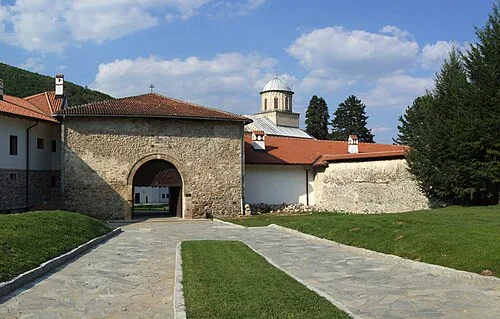 Fortified Entrance Gate and Courtyard View
Main Gate and Courtyard
Visoki Dečani is a Serbian Orthodox monastery near Deçan, in Kosovo, and it began in 1327 as a royal project. King Stefan Dečanski of Serbia founded it as an endowment, a gift set aside to support a church and its monks. The founding charter of 1330 has survived, and it is said to name Saint Sava as the man who chose this site. A legend gives the choice to the king himself. In that story he wandered through many places, until he came upon this spot, and its beauty charmed him. UNESCO listed the monastery as a World Heritage Site in 2004.
Pudelek (Marcin Szala) · CC BY-SA 3.0
02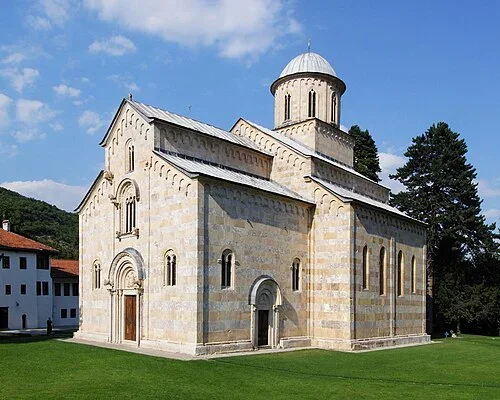 Fortified Entrance Gate and Courtyard View
Church Exterior and Striped Marble Walls
Visoki means high, and that is how the monastery is popularly known, as High Dečani. Its church is so large that it surpasses every other medieval church in the Balkans. Serbian writers note that its proportions were unusual for its time. Above the walls, a tall drum pierced with narrow windows carries the dome. The outer walls are built in alternating layers of white and pink marble.
Pudelek (Marcin Szala) · CC BY-SA 3.0
03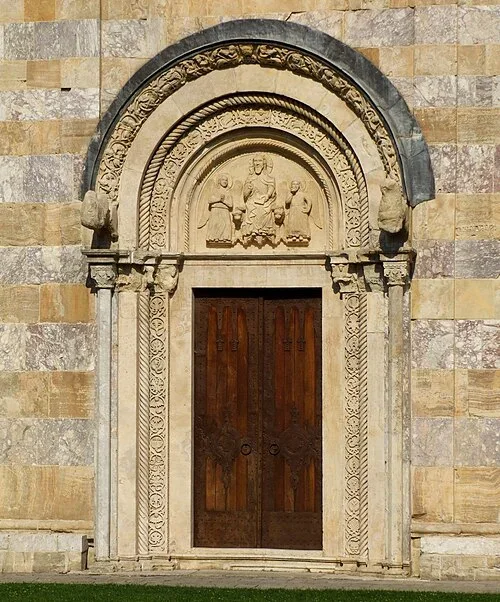 Western Facade and Romanesque Stonework
Romanesque Carved Portal
Layer after layer of this doorway is carved. Twisted rope and leafy ornament run up the columns and around the curve of the arch. Inside the arch, a seated figure occupies the centre, with a standing figure on either side. Small carved heads sit at the outer top corners. Below, wooden double doors are set into the banded stone. Bratislav Pantelić reads this stonework as Romanesque sculpture. He places it within what is called a Palaeologan renaissance, a revival of the arts in the late Byzantine world. UNESCO described the monastery as an irreplaceable treasure.
Listen in the appPudelek (Marcin Szala) · CC BY-SA 3.0
04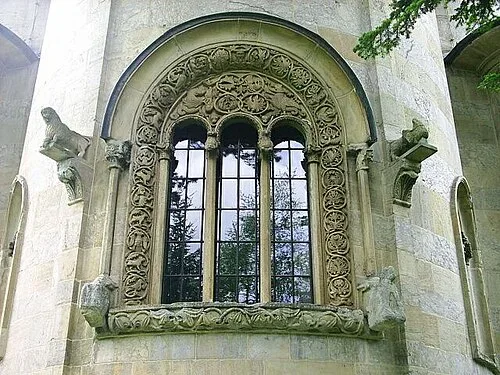 Western Facade and Romanesque Stonework
Carved Romanesque Window and Corbels
A window of three tall lights sits under a deeply carved arch, and bands of carved ornament wrap around it. Small carved figures sit on the corbels, the stone brackets that jut from the wall on either side. The chief architect was Vito of Kotor, a Franciscan friar. Serbian writers call him the master builder. They say several other masters worked with him, and some of their names are recorded. The building work lasted eight years. Those who helped build the monastery were given a village near Prizren, called Manastirica, as a shared gift. Many of them settled there once the work was done.
Listen in the appMartin Brož · CC BY 3.0
05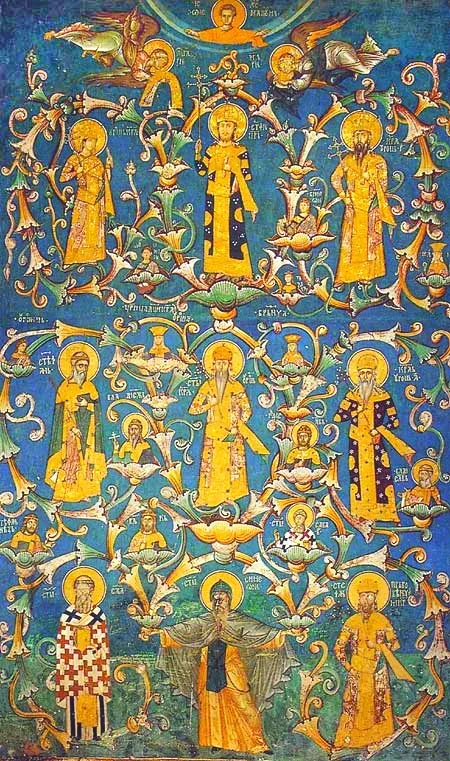 The Narthex and Nemanjić Dynastic Tree
Nemanjić Dynastic Tree Fresco
Golden vine scrolls spread across this fresco, and the figures sit among them in tiers. The royal figures wear haloes, and winged figures appear in the top corners. At the very bottom, a robed figure stands with both arms stretched wide. The fresco shows the Nemanjić family, the royal line that Stefan Dečanski belonged to. Many of them were made saints, and one reading is that the fresco presents the family's rule as holy and rightful.
Listen in the appUnknown author · Public domain
06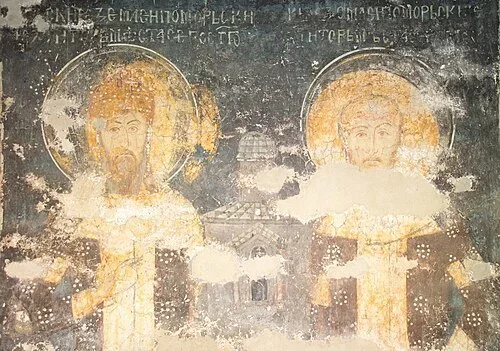 The Narthex and Nemanjić Dynastic Tree
Founders' Portrait: Stefan and Dušan
Stefan Dečanski died in 1331, and the church was still unfinished. His son, Stefan Dušan, became king that same year and carried on the building. Some accounts call him emperor rather than king. This scene shows the two as founders, standing side by side. Both wear crowns and haloes, though the plaster has flaked in places and the faces are hard to make out. Between them stands a small domed building, which may be meant as the church they founded.
Listen in the appXIV century serbian painter · Public domain
07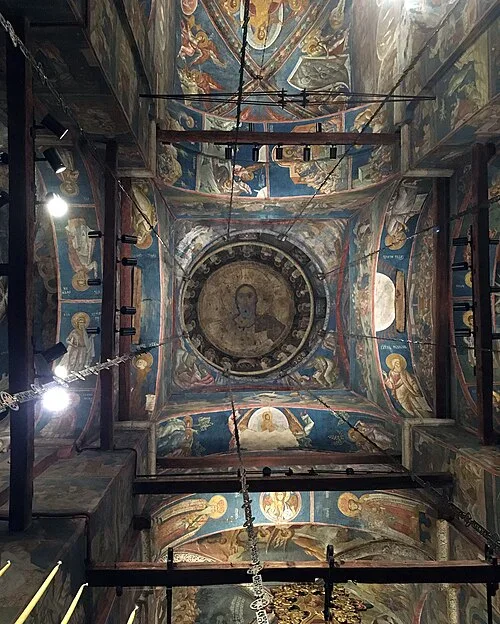 Central Naos and the Dome of Christ Pantocrator
Dome with Christ Pantocrator
The dome is painted with Christ as Pantocrator, a Greek title that means ruler of all. A large medallion carries his central face, and a ring of smaller roundels circles it. Painted angels fill the curve around the medallion. The church is dedicated to the Ascension of the Lord. Four piers support the dome beneath it. Wooden beams and metal cables cross the scene, which suggests that support or repair work has been carried out here at some point.
Listen in the appThis image was made by Sadko. Please credit this with: "Sadko, Wikipedia" in the immediate vicinity of the image. A message to me would be appreciated as well. If you wish to use, license, or buy the image, please contact me to discuss terms. More of my work can be found in my personal gallery. · CC BY-SA 4.0
08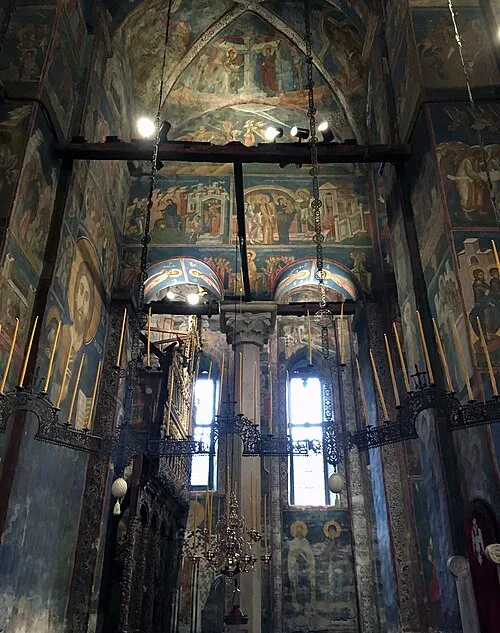 Central Naos and the Dome of Christ Pantocrator
Naos Interior and Painted Walls
Painted scenes cover the walls and vaults of this church. They are arranged in twenty major cycles, which are sets of scenes on one theme. Together they include more than a thousand compositions. Among them are several thousand portraits. The work took about fifteen years, and painters with roots in Serbia, in the Byzantine world and on the Adriatic coast all took part. The church is said to hold the largest preserved collection of Byzantine painting. Candle stands and hanging lamps fill the space, and light from the windows falls across the painted walls.
Listen in the appThis image was made by Sadko. Please credit this with: "Sadko, Wikipedia" in the immediate vicinity of the image. A message to me would be appreciated as well. If you wish to use, license, or buy the image, please contact me to discuss terms. More of my work can be found in my personal gallery. · CC BY-SA 4.0
09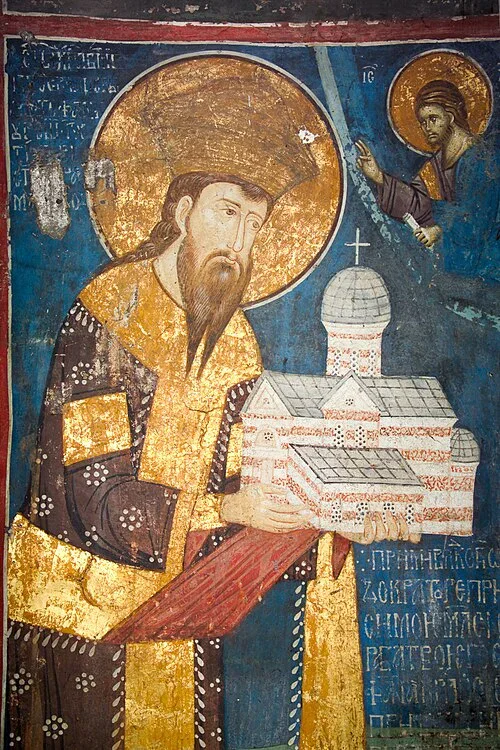 Sacred Shrine of Saint Stefan Dečanski and the Iconostasis
Founder Fresco of Stefan Dečanski with Church Model
King Stefan Dečanski holds a small model of a domed church. He is bearded and haloed, in a tall headdress and robes trimmed with gold. In medieval painting, founders were often shown holding the church they had endowed. The king was buried in the church, making it a royal burial place. His tomb, a carved wooden sarcophagus, was finished in 1340.
Listen in the appBLAGO Fund, Inc. · CC BY 4.0
10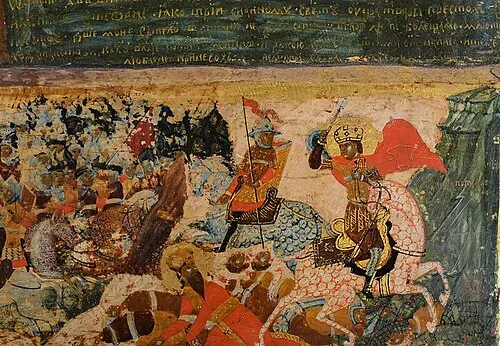 Sacred Shrine of Saint Stefan Dečanski and the Iconostasis
Battle Scene from a 16th-Century Icon of Stefan Dečanski
Longin was a painter-monk who spent two decades at this monastery in the second half of the sixteenth century. The monastery's painting carried on while the region was ruled by the Ottoman Empire. He made fifteen icons, including scenes of the Great Feasts and of hermits. His most celebrated work is an icon of Stefan Dečanski. This battle scene is crowded with mounted warriors, spears and banners. The battle is named as the Battle of Velbazhd, but it is unclear whether Longin painted it. A haloed rider in a crown-like headdress is set apart on the right.
Listen in the appUnknown author · CC0
- 11
Saint Demetrius Defending Thessalonica
A protector saint defending a city from its walls, and the monastery's two side chapels.
- 12
Monastery Enclosure in Mist
Albanian villages given to the monastery, Albanian protectors, and the refugees who came in the war.
Visoki Dečani
Frequently asked questions
How much does the guide cost?
Free app download. Listed guide price: $0.99. Guide price shown in the app. Audio guide only. Venue admission is separate.
Can I listen without internet?
Yes. Download the guide’s audio, images, and maps in the app before your visit. Your downloaded content is then available offline.
Can I listen in my language?
This audio guide is available in 15 languages, including English.
Do I need to follow a schedule?
No. This is a self-guided experience. Choose your stops, pause whenever you like, and return to a story at your own pace.
At your own pace
Explore Visoki Dečani.
Download Stanza, then search for “Visoki Dečani”.
Free app download · Guide price shown in the app
Keep exploring
Nearby audio guides
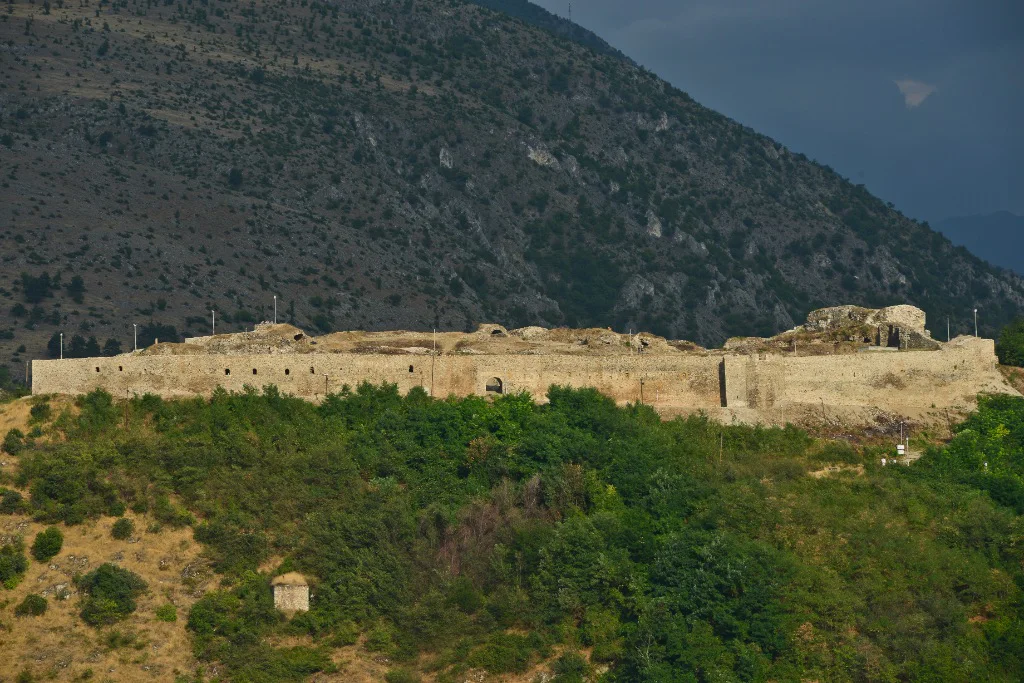
Prizren · 54 km
Prizren Fortress
Content & sources
Photo: Bleart kabashi · CC BY-SA 4.0
Novi Pazar City · 65 km
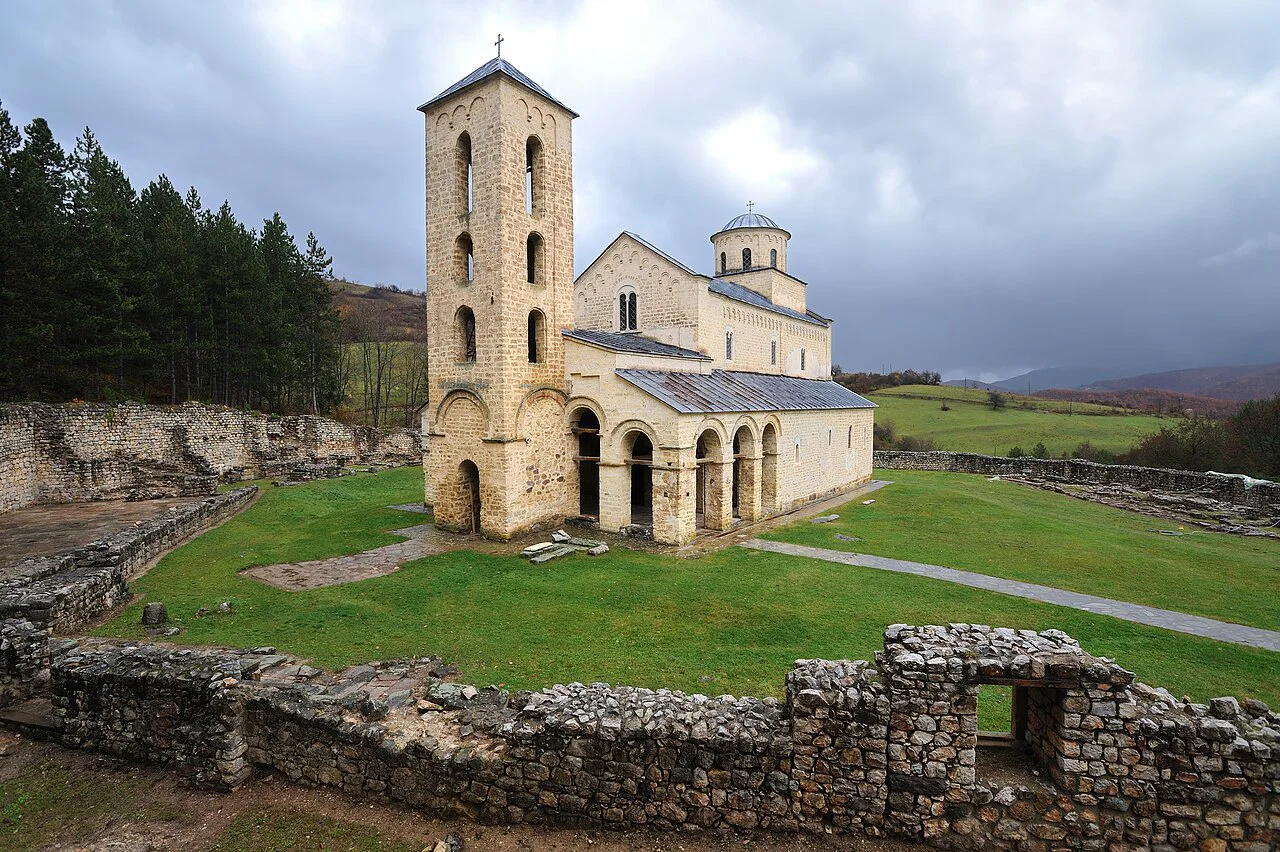
Sopoćani
Content & sources
Photo: Pavle Marjanovic · CC BY-SA 3.0
Gračanica · 76 km
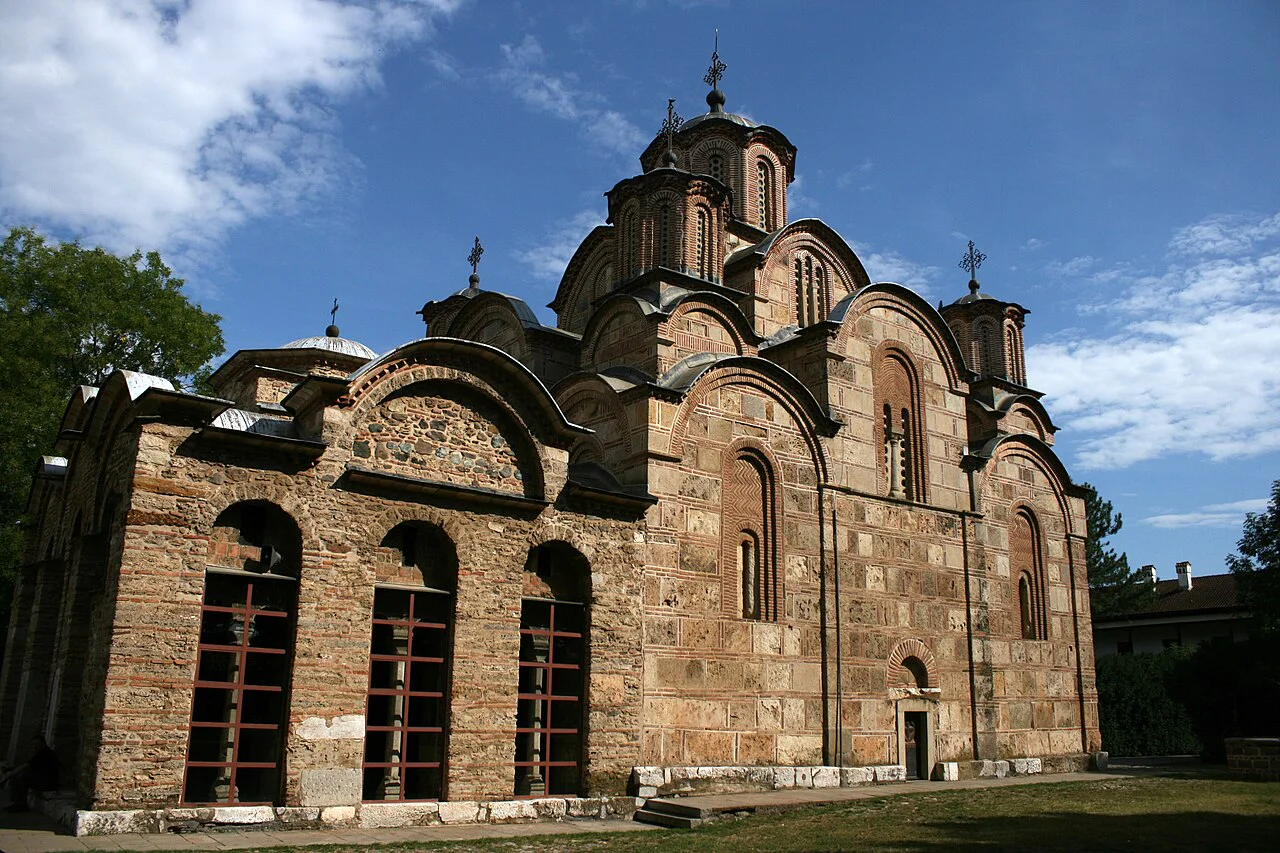
Gračanica Monastery
Content & sources
Quinn Dombrowski · CC BY-SA 2.0
Danilovgrad Municipality · 102 km
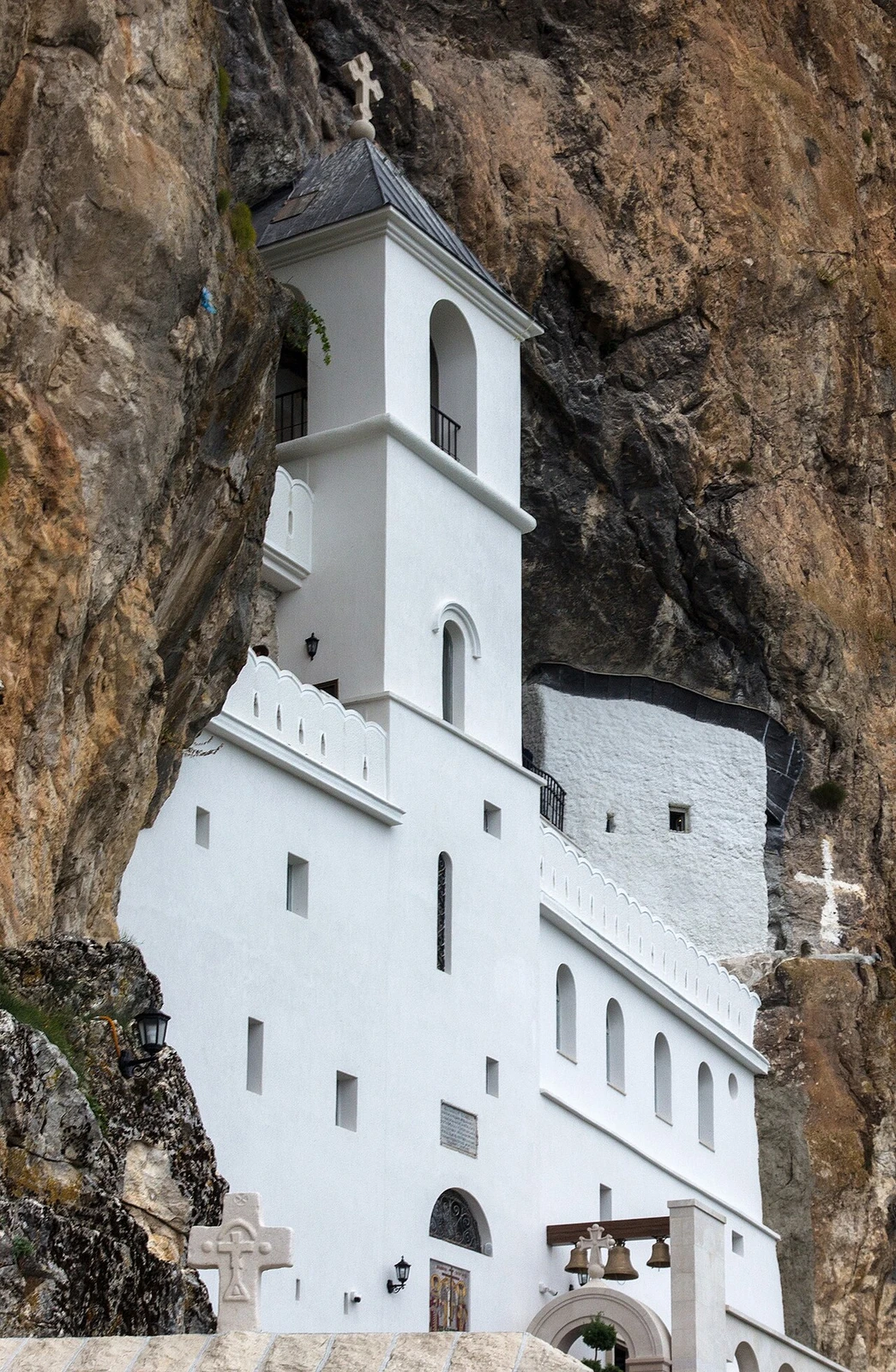
Ostrog Monastery
Content & sources
Alexey Komarov · CC BY 3.0