Stanza · Audio guide
Prizren Fortress Audio Guide
A place to remember. A story to take with you.
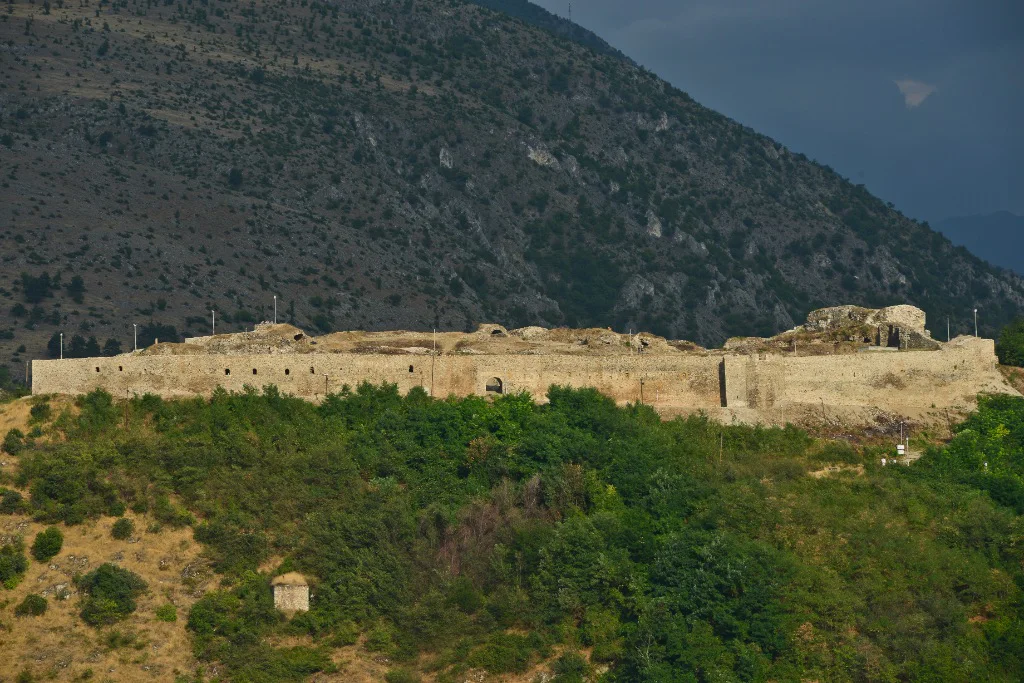
Prizren Fortress is a hilltop fortification in Prizren that has seen habitation and use since the Bronze Age. It is a cultural heritage monument of Kosovo that was reconstructed in the era of eastern Roman…
Download Stanza, then search for “Prizren Fortress”.
About the tour
One guide. Your kind of visit.
Prizren Fortress is a hilltop fortification in Prizren that has seen habitation and use since the Bronze Age. It is a cultural heritage monument of Kosovo that was reconstructed in the era of eastern Roman Emperor Justinian.
Ready when you are.
- 01Get the free Stanza app.
iOS & Android
- 02Find your guide.
“Prizren Fortress”
- 03Download before you go.
Works offline
Audio guide / 9 narrated stops
Inside the guide
Get to know a few of the stories before you go. Open a stop to read more.
01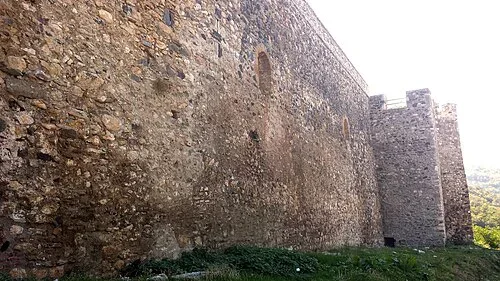 Northern Ramparts and Gateway
The Outer Ramparts and Fortified Wall
Welcome to Kalaja e Prizrenit, the fortress that has watched over this town from its hill for thousands of years. The hill rises to about 525 metres above the sea, a steep cone on the eastern edge of Prizren. Its ramparts were not drawn on a flat plan. They follow the natural lines of the ground, contour by contour, wrapping the summit in an enclosure of roughly one and a half hectares, stretched out from north to south. From up here, a garrison could see the river valley and the routes running through western Dardania, the old land around Prizren. That command of the valley is the reason a fortress exists on this spot at all. The wall itself gives the story away. It is rubble stone, patched and reworked, the work of many hands across many centuries. Byzantine builders, Serbian rulers and Ottoman engineers all left their mark here.
Photo: GentiBehramaj · CC BY-SA 4.0
02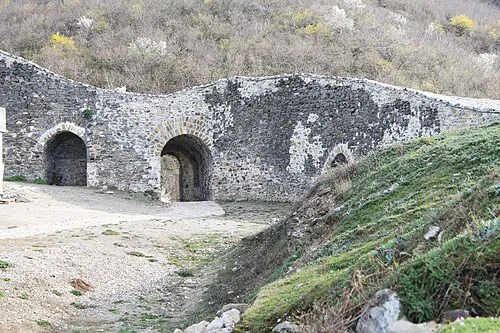 Northern Ramparts and Gateway
The Arched Gateway
These arched openings are the way in, reached after a steep climb from the quarter below the fortress. Much of what surrounds them here took its present form under the Ottomans. They took direct control of Prizren after 1450, and over the following centuries the fort kept growing. The great rebuilding came in the 18th century, and that campaign shaped most of the fortress as it stands now. The ramparts, the towers and the gateway passages belong to that final phase of construction. Earlier walls lie beneath and around them, from the Byzantine and Serbian periods, but the face of the fortress is Ottoman work. So the arches carry you into a stronghold that was still being expanded and strengthened long after gunpowder had changed warfare. It remained a working fortress into the twentieth century.
Photo: GentiBehramaj · CC BY-SA 4.0
03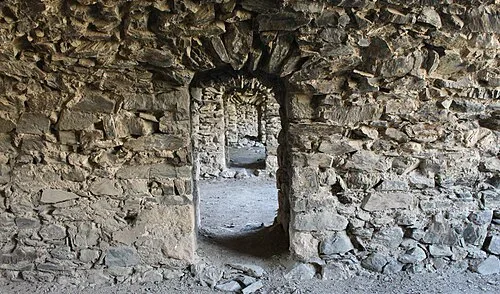 Subterranean Casemates and Gunpowder Vaults
The Casemate Corridor
A line of stone arches, one behind another, leads into the heart of the fortress. These vaulted galleries are part of what made the place work as a defense. Excavations here have uncovered rampart walls reinforced with towers, casemates, labyrinth corridors, depots and inner rooms. Casemates are vaulted chambers built into the fortifications themselves. They gave defenders shelter inside the walls during an attack, and safe space for stores. The labyrinth corridors connected it all, letting men and supplies move protected from one point to another. None of this was visible from outside. The fortress looked like a wall on a hill, but inside it was honeycombed with passages and chambers. Digging began here in 1969, and then resumed in 2004 and again from 2009 to 2011. Those campaigns turned the fortress from a ruin into an archaeological record, layer by layer.
Listen in the appPhoto: Kreshnik Basha · CC BY-SA 4.0
04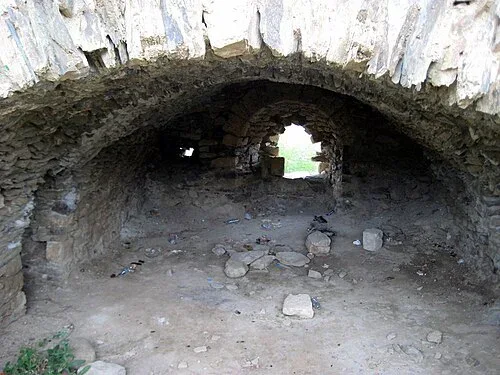 Subterranean Casemates and Gunpowder Vaults
The Vaulted Chamber
Inside this chamber, the light comes only from the openings in the vault above. It is a space built for function, not comfort, and it belonged to a fortress with a serious job. Under the Ottomans, this fort became a central stronghold of Rumelia, the heartland province of their European empire. A garrison lived here, and spaces like this one held what a garrison needed: enclosed rooms, protected stores, vaulted roofs strong enough to shrug off trouble. The fortress was meant to be self-contained, a strongpoint that could hold out on its own. And the hill was not only a military post. In the Ottoman years, Serbs from the town gathered at Kaljaja in the evenings and danced the Kolo, their circle dance, at these monumental places. A fortress by day, and on some evenings a gathering place for the town below.
Listen in the appArianit Dobroshi · CC BY-SA 3.0
05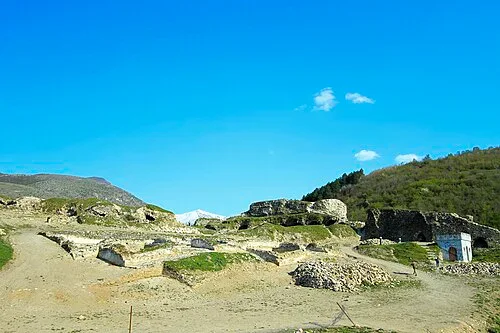 Upper Town and Ancient Acropolis
The Upper Town Summit
This open plateau is the summit of the hill, and the oldest ground in the fortress. People lived here as early as around 2000 years before Christ, in the Bronze Age, and stayed through the late Iron Age. The low foundation lines across the plateau mark out the layers they left behind. Digging here documented, for the first time, a prehistoric settlement that was the first core of life on this hill. Pottery and finds from those layers match material from Vlashnjë, a prehistoric site in a nearby village. Then the hill enters written history. In the sixth century, the Byzantine chronicler Procopius wrote a book called On Buildings, listing the forts that Emperor Justinian had restored in Dardania. Among them he names a fort called Petrizen, and this hilltop is very likely that fort. The name Petrizen is linked to the very name of Prizren itself. Some scholars also connect Prizren with the Roman town of Theranda, though another candidate for that place is Suhareka, and the question is still open.
Listen in the appIlir Elshani · CC BY-SA 4.0
06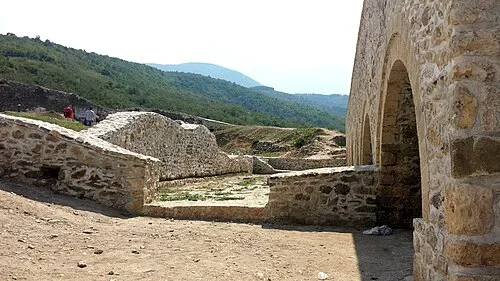 Upper Town and Ancient Acropolis
The Acropolis Walls
These rebuilt wall sections and arched structures carry the fortress's medieval story. In 1072, leaders of an uprising against Byzantine rule came to the Prizren area from Skopje. They called on Mihailo of Duklja for help, and he sent his son Constantine Bodin with three hundred soldiers. A Byzantine force sent against them was defeated near Prizren, and after that victory the rebel leaders proclaimed Bodin Emperor of the Bulgarians, here at Prizren. The uprising was crushed by the end of that same year. Byzantine rule in the region ended for good in 1219 and 1220, when the Serbian Nemanjić dynasty took control, and they held the fort until 1371. After that, a series of regional feudal families took turns holding Prizren, often with Ottoman backing. The most famous name here is Stefan Dušan, who ruled as Serbian emperor. About three kilometres to the southeast he built the Monastery of the Holy Archangels and the nearby Višegrad fort, known as Dušanov grad. For a time, those served as the fortifications of his court at Prizren, before he moved the court to Skopje.
Listen in the appPhoto: GentiBehramaj · CC BY-SA 4.0
07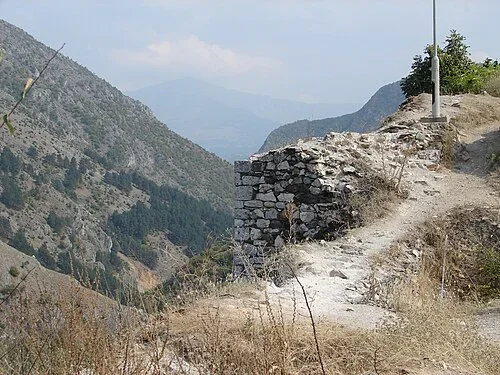 Bistrica Gorge and Trade Route Overlook
The Bistrica Gorge Overlook
From this stretch of wall, the land falls away into a river gorge, with mountain ridges climbing on both sides. This view was the fortress's working face. In the Middle Ages, the fort belonged to the chain of strongpoints guarding the Via de Zenta, the trade route that ran through the Drin valley and linked the Adriatic coast with the central Balkans. Everything moving along that route, merchants, pack animals, goods from the sea, had to pass through the valley below. A lookout here could follow movement through the gorge long before it reached the town. The idea was old when the medieval guards took it over. Back in the sixth century, Justinian's builders had lined the White Drin with forts just like this one, connecting the coast with the Kosovo valley. So the same watch, kept over the same valley, ran from late antiquity deep into the Middle Ages.
Listen in the appa.dombrowski · CC BY-SA 2.0
08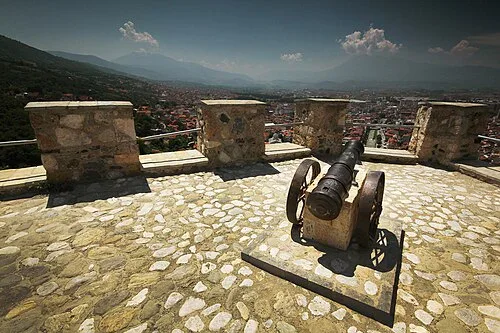 Western Artillery Bastion and City Overlook
The Bastion Overlook
A cannon rests on its wooden carriage at the edge of this stone-paved bastion, aimed out over the whole city. It is displayed here as a feature of the overlook, a reminder of the fortress's armed past rather than proof of where guns once stood. What this elevation offered any defender is obvious from up here: the rooftops, the minarets and the bridges of Prizren all spread out below, with mountains closing the horizon. Whoever held this bastion held the commanding view of the town and the approaches to it. The fortress kept that military role for a very long time, serving as a fortress and nothing else for most of its life. The end came in 1912, with the First Balkan War. After that, the fortress's days of active military service were over, and the cannon here has nothing left to aim at but the view.
Listen in the appBleron Çaka · CC BY-SA 3.0
09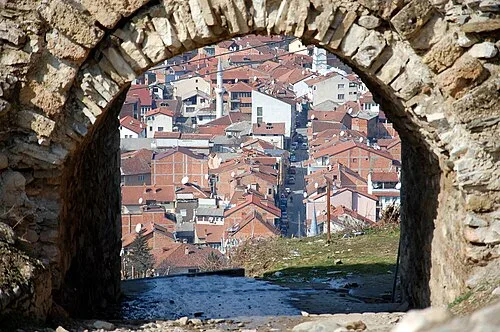 Western Artillery Bastion and City Overlook
The Gateway View
Through this stone archway, the red roofs and minarets of Prizren fill the frame. The fortress and the town made each other. The old quarter at the foot of the hill is called Nënkalaja, which literally means below the fortress, because it grew up around this stronghold. Prizren itself appears in records from 1019, under the Byzantine emperor Basil the Second, written as Prisdriana. In time the town became a trading hub, and Ragusan merchants were stationed in the old town below the walls, making Prizren their gateway toward eastern Kosovo and beyond. The fortress watched over all of that growth, and in return the town gave the fortress its meaning. Today Kalaja e Prizrenit is considered the symbol of Prizren and an important part of the cultural identity of Kosovo. It was declared a Monument of Culture of Exceptional Importance in 1948, and it stands under permanent heritage protection. Some four thousand years of life on one hill says a great deal about the people who kept choosing it.
Listen in the appPhoto: Bujar Imer Gashi · CC BY-SA 3.0
Prizren Fortress
Frequently asked questions
How much does the guide cost?
Free app download. Listed guide price: $0.99. Guide price shown in the app. Audio guide only. Venue admission is separate.
Can I listen without internet?
Yes. Download the guide’s audio, images, and maps in the app before your visit. Your downloaded content is then available offline.
Can I listen in my language?
This audio guide is available in 15 languages, including English.
Do I need to follow a schedule?
No. This is a self-guided experience. Choose your stops, pause whenever you like, and return to a story at your own pace.
At your own pace
Explore Prizren Fortress.
Download Stanza, then search for “Prizren Fortress”.
Free app download · Guide price shown in the app
Keep exploring
Nearby audio guides
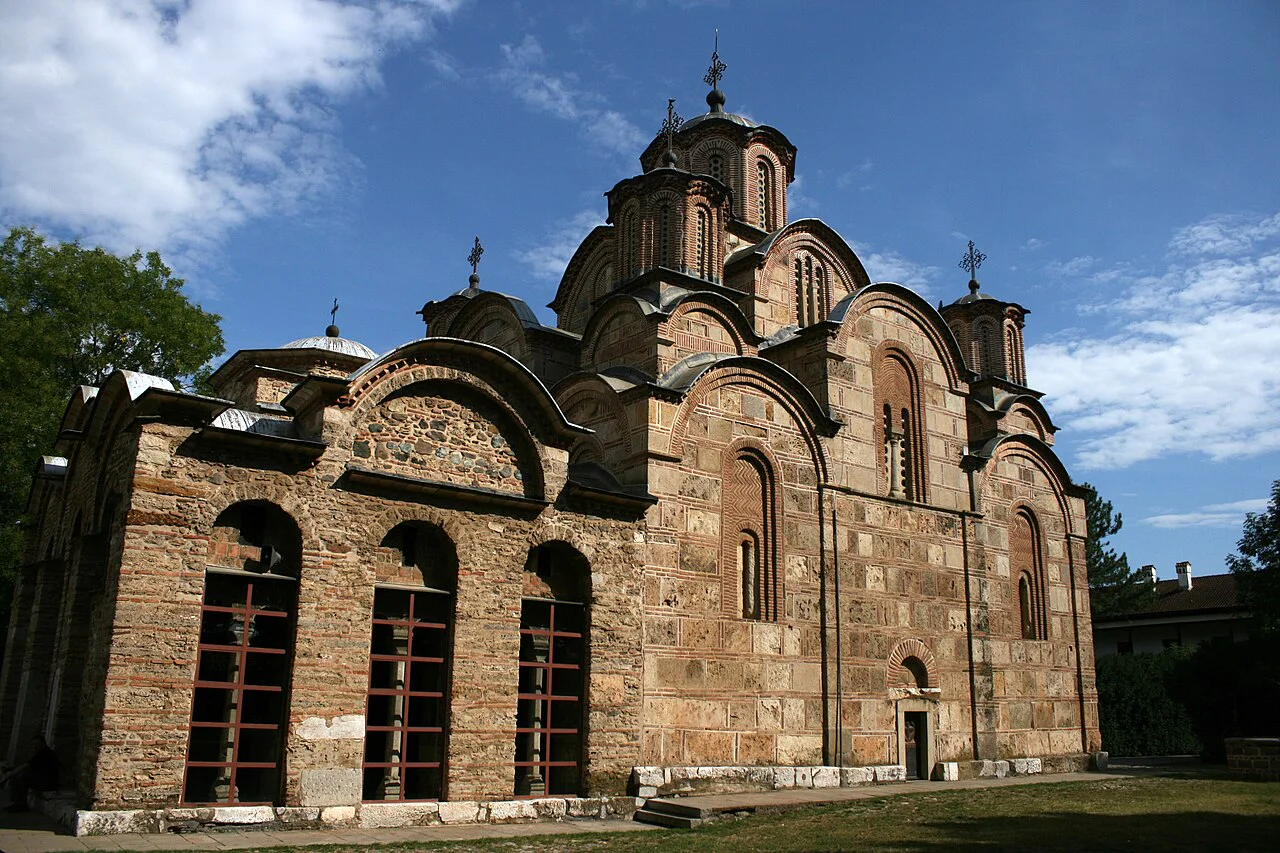
Gračanica · 57 km
Gračanica Monastery
Content & sources
Quinn Dombrowski · CC BY-SA 2.0
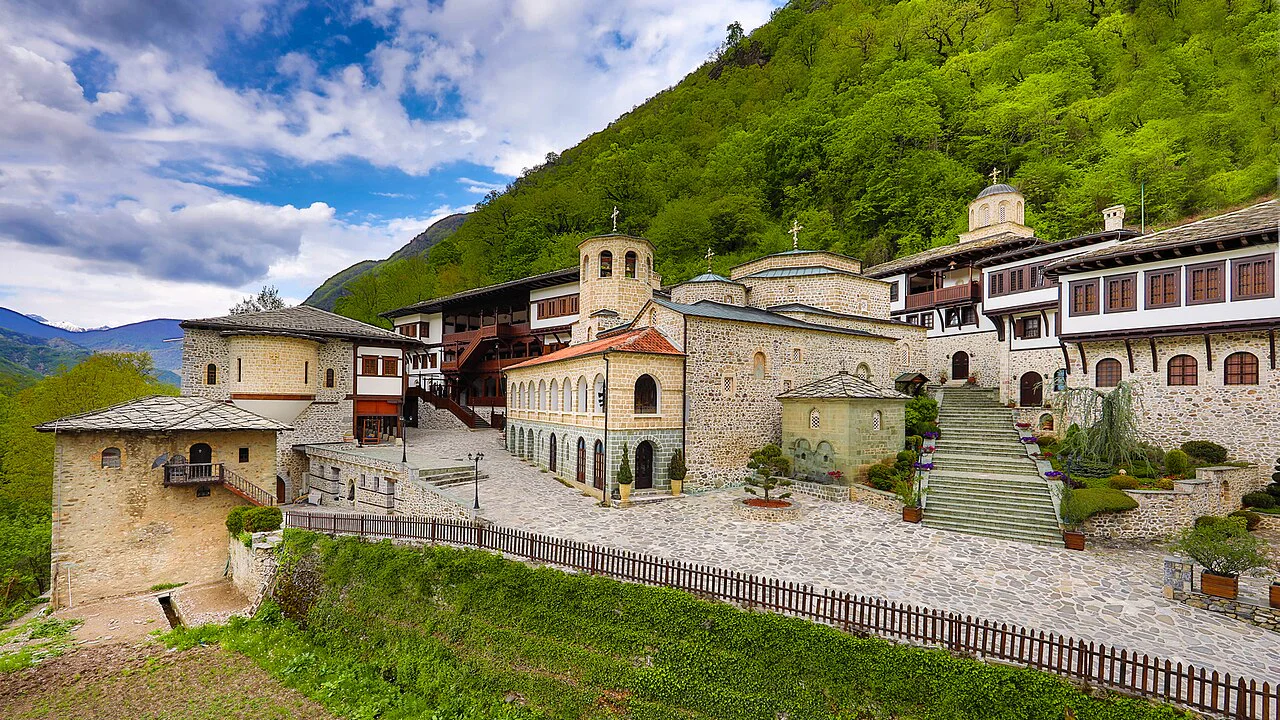
Rostushe · 66 km
Saint Jovan Bigorski Monastery
Content & sources
Photo: BigorskiMonastery · CC BY-SA 4.0
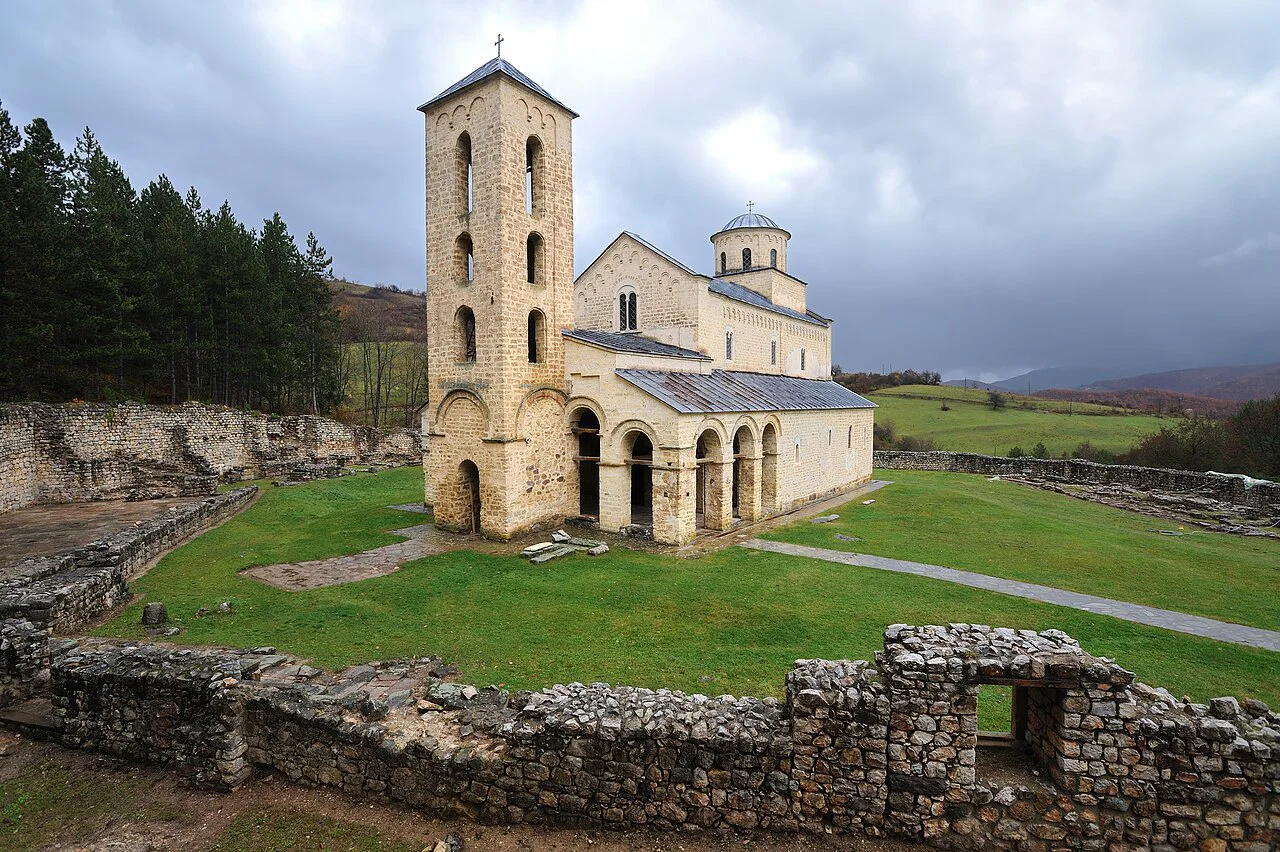
Novi Pazar City · 105 km
Sopoćani
Content & sources
Photo: Pavle Marjanovic · CC BY-SA 3.0
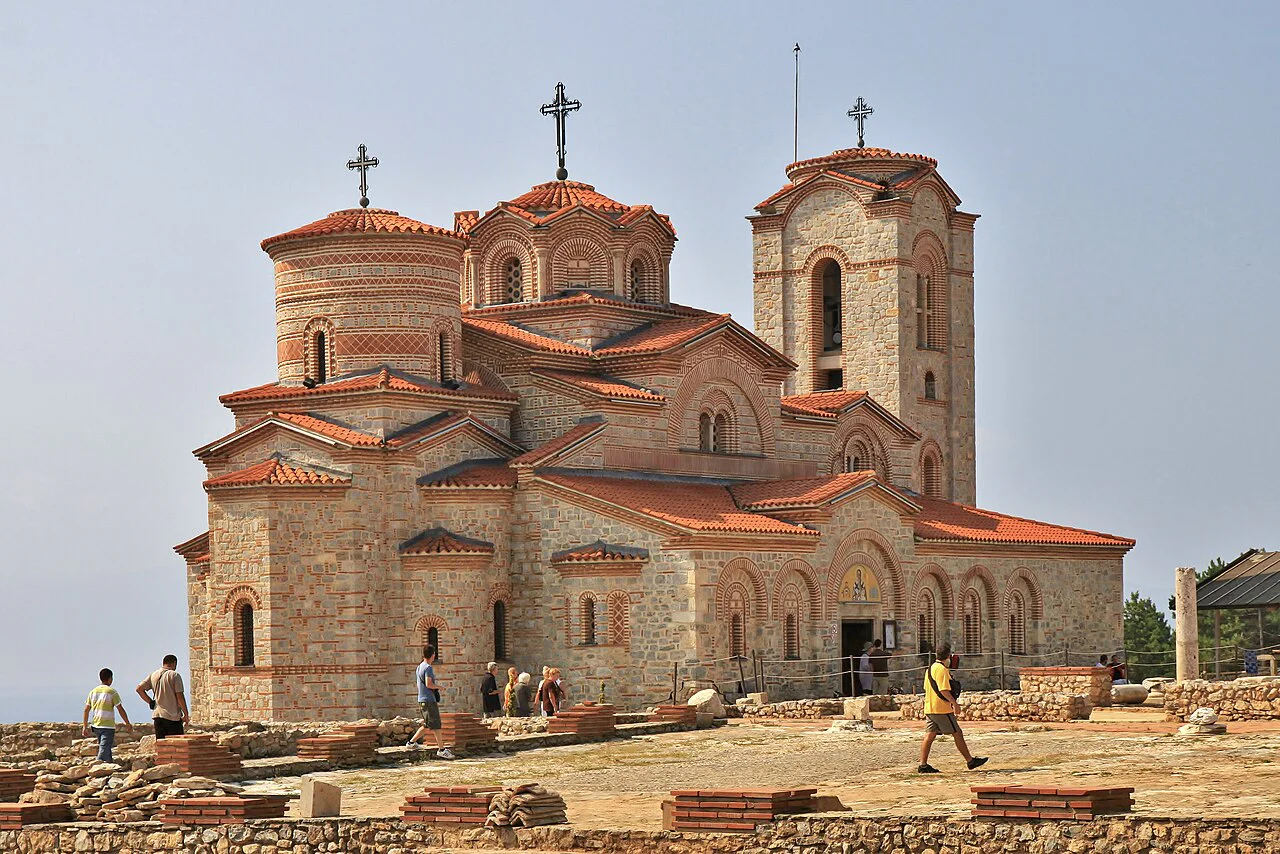
Ohrid · 122 km
Church of Saints Clement and Panteleimon
Content & sources
Marcin Konsek · CC BY-SA 4.0