Stanza · Audio guide
Dzibilchaltún Audio Guide
A place to remember. A story to take with you.
Dzibilchaltún is a Maya archaeological site located in the Mexican state of Yucatán. It is situated approximately 10 miles north of the state capital of Mérida.
Download Stanza, then search for “Dzibilchaltún”.
About the tour
One guide. Your kind of visit.
Dzibilchaltún is a Maya archaeological site located in the Mexican state of Yucatán. It is situated approximately 10 miles north of the state capital of Mérida.
Ready when you are.
- 01Get the free Stanza app.
iOS & Android
- 02Find your guide.
“Dzibilchaltún”
- 03Download before you go.
Works offline
Audio guide / 12 narrated stops
Inside the guide
Get to know a few of the stories before you go. Open a stop to read more.
01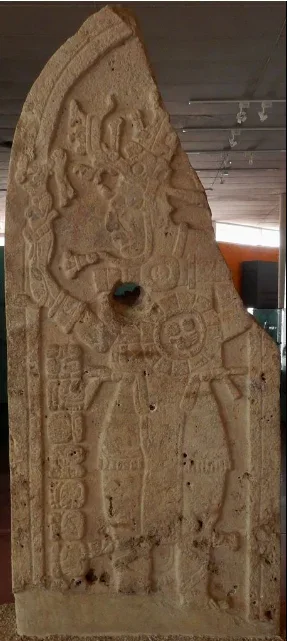 Museum of the Maya People
Estela 19 in the Museum of the Maya People
Welcome to Dzibilchaltún, a Maya city in the north of the Yucatán Peninsula, a short drive from Mérida. The name means "where there are writings on flat stones," and this carved slab shows why. Stelae like it, cut with hieroglyphic texts, were raised across the city, and they anchor its whole story. The figures on this stone wear the regalia of Maya lords, though which ruler it honors is not known. The city's story runs long, from around 600 BC to about 1100 AD. Its golden age came in the Late Classic centuries, when more than twenty-five thousand people lived here. People still argue over what the Maya called the place. One reading gives Ich Kaan Ti'Ho, another Ch'iy Chan Ti'Ho.
Repositorio INAH · CC BY-SA 4.0
02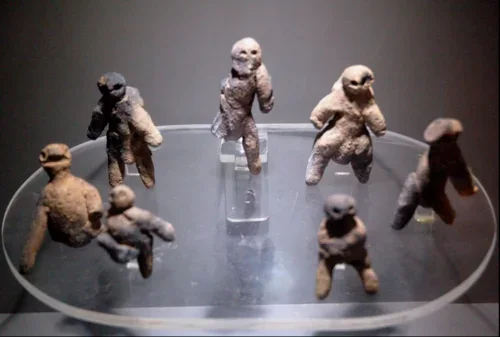 Museum of the Maya People
The Seven Clay Dolls
These seven small figures of clay gave a temple its name. When archaeologists excavated the main temple in the nineteen-fifties, they found them hidden beneath the floor. They had been placed there as an offering. Each figure is different. Some are blackened, some pale, and each has a rough, lively face shaped by hand. They were made of raw clay, unfired earth pressed into human form. Whoever set them there never meant them to be seen again, at least not from the world above. The temple they lay under has been called the Temple of the Seven Dolls ever since. Today the dolls are on display in the site's museum.
Repositorio INAH · CC BY-SA 4.0
03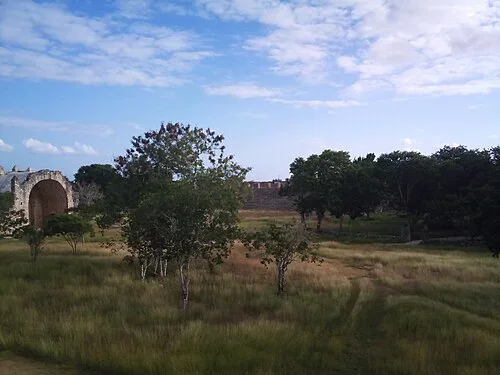 The Central Plaza and Structure 36
The Central Plaza
The reason for this city begins by the sea, about twenty-two kilometers away. There the coast produces salt, one of the great necessities of the ancient trade world. The city's founders wanted to be as close as possible to that salt region. But the land in between is poor country, either mangrove swamp or bare rock, hardly fit for living. So they settled here, on terrain that was fertile and habitable, and still within reach of the coast. At its height, this open ground was the civic and ceremonial heart of a metropolis that dominated the northwest of the peninsula.
Listen in the appLugares INAH · CC BY-SA 4.0
04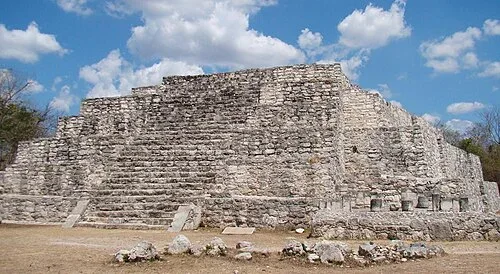 The Central Plaza and Structure 36
Structure 36
This pyramid is built of limestone masonry, laid by hand. Buildings like it, with temples and plazas, cover roughly twenty-five hectares here. The city's history was not a straight line. It was occupied for many centuries, and more than once it grew into a mid-sized city and then contracted back to a small town. Each expansion meant new building campaigns, new platforms raised over old ones. By around 1100 AD, in the Postclassic, the great construction had slowed. What stands here is the work of many generations, each adding its layer to the last.
Listen in the appLugares INAH · CC BY-SA 4.0
05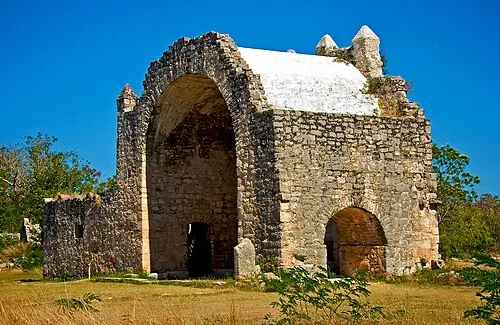 The Spanish Open Chapel
, principal façade
A Spanish church rose in the middle of a Maya city. After the conquest, in the sixteenth century, Christian builders put an open chapel directly amid the ancient plaza. They did not clear the ground or move away. They built inside the old monumental setting, among pyramids and plazas that were still sacred ground to Maya memory. The great stone arch at the heart of the ruin still carries traces of white plaster on its roof. To stand here is to see two worlds in one frame of stone, the Maya city and the Spanish mission sharing the same plaza.
Listen in the appPhoto: Kevincollins123 · CC BY-SA 3.0
06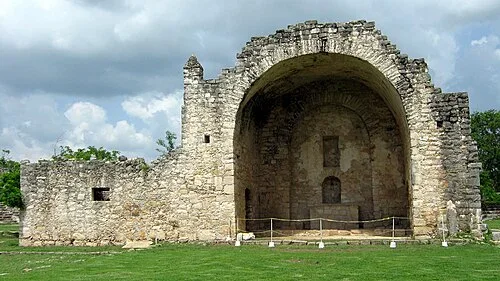 The Spanish Open Chapel
Inside the Open Chapel
The vast open vault of this chapel faces the plaza, and at its far end survives the altar wall. The building type answers a practical question. Open chapels were built across early colonial Mexico so that very large congregations could be gathered outdoors, within sight of the altar. The practice was shaped by the scale of indigenous communities, far bigger than any European church interior of the time could hold. So the sky served as the ceiling, and the plaza served as the nave.
Listen in the appPhoto: Magister Mathematicae · CC BY-SA 3.0
07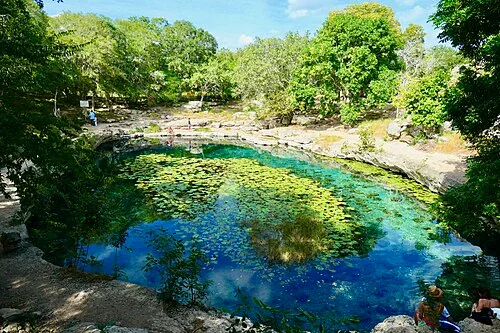 Cenote Xlacah
, the open sinkhole
Everything in this city began with a hole in the ground. Cenote Xlacah is an open sinkhole lying at the center of the ruins, ringed with green shores and floating water lilies. In a land without rivers, its clean drinking water was likely what influenced the builders' choice of this site. It stretches about a hundred meters from end to end. Across, it measures some forty meters. In places the water plunges forty meters down. Its name is a Maya word said to mean "old town," as if the water remembered the city before the stones did.
Listen in the appBruno Rijsman · CC BY-SA 2.0
08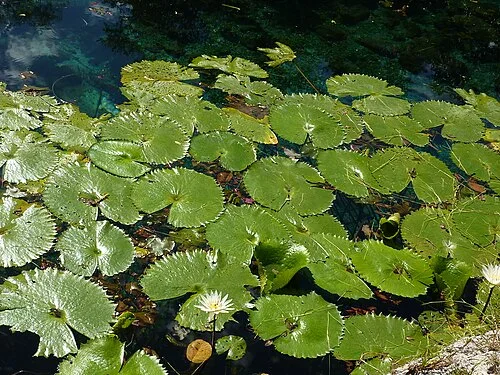 Cenote Xlacah
Offerings in the Waters of Xlacah
The same pool that quenched the city also received its offerings. Divers descending into Xlacah recovered large numbers of objects from its depths. Most were vases, but there were carved bones and wooden objects as well. The finds indicate that the cenote was the center of a religious cult, a place of ritual offerings over centuries. Much the same was done at the sacred cenote of Chichen Itza, far to the east. For generations local people also used this pool as a swimming hole. Whether swimming is allowed has changed over the years, and concerns have been raised about wastewater from nearby developments.
Listen in the appUser:Vmenkov · CC BY-SA 3.0
09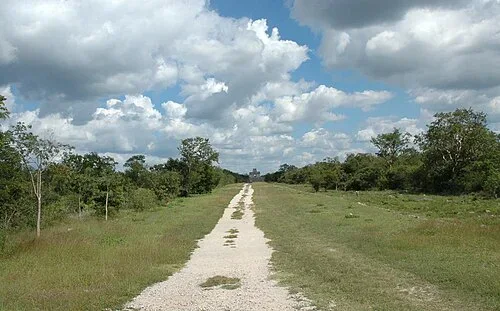 Sacbé Number One (The White Road)
Sacbé Number One, the White Road
A straight line of pale stone runs toward the horizon here, and it goes by a Maya name. This is a sacbé, a "white road," raised over a fill of stone and rubble and originally coated with white limestone. Networks of these roads connected various points of the city to the main plaza and to Cenote Xlacah. The principal one ties the Temple of the Seven Dolls to the rest of the site, and to Cenote Xlacah. They were infrastructure, but they were also routes of procession, walked in ceremony as well as in daily errands. The same road still runs dead straight, all the way to the temple.
Listen in the appLugares INAH · CC BY-SA 4.0
10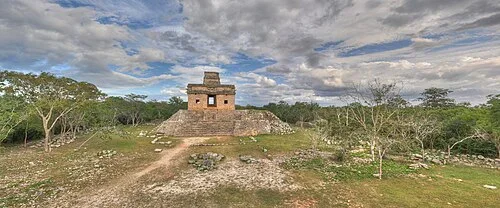 The Temple of the Seven Dolls
 from the Causeway
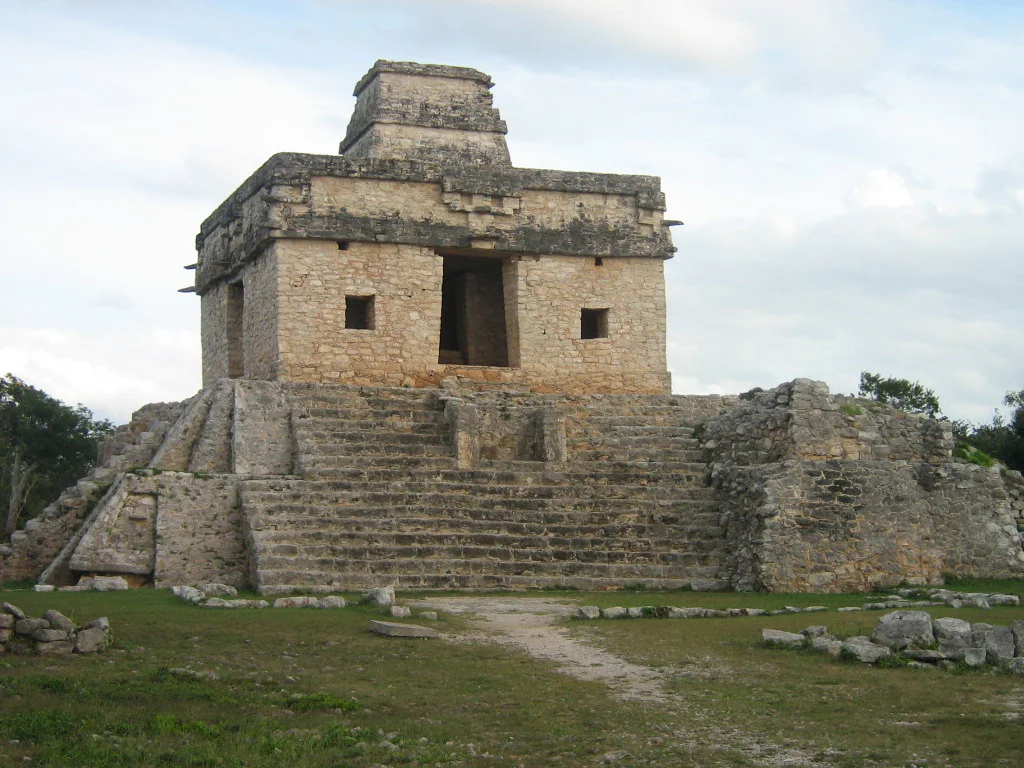
At the end of the white road stands the city's most famous building. The Temple of the Seven Dolls is a compact square temple on a stepped base, crowned with a tower-like roofed superstructure. Some call it the Temple of the Sun, because of what happens here twice a year. At the spring and autumn equinoxes, crowds gather at dawn to watch the rising sun frame itself in the temple's doorways. The spring one falls around the twenty-first of March, the autumn one near the end of September. But researchers urge caution. There is no archaeologically attested marker for any observation point, and equinox orientations are rare in the Maya area and in Mesoamerica generally. In their view it is improbable the building was deliberately aligned to the equinoxes. The crowds still come, and the debate is still open.
Listen in the appPhoto: PashiX · CC BY-SA 4.0
- 11
Inside the Temple
Inside the temple: leaning stone vaults, wooden lintels, and small windows rare in classic Maya design.
- 12
The Temple and the Stela
A standing stone before the temple, and the name of a king who ruled here.
Dzibilchaltún
Frequently asked questions
How much does the guide cost?
Free app download. Listed guide price: $0.99. Guide price shown in the app. Audio guide only. Venue admission is separate.
Can I listen without internet?
Yes. Download the guide’s audio, images, and maps in the app before your visit. Your downloaded content is then available offline.
Can I listen in my language?
This audio guide is available in 15 languages, including English.
Do I need to follow a schedule?
No. This is a self-guided experience. Choose your stops, pause whenever you like, and return to a story at your own pace.
At your own pace
Explore Dzibilchaltún.
Download Stanza, then search for “Dzibilchaltún”.
Free app download · Guide price shown in the app
Keep exploring
Audio guides — Mexico
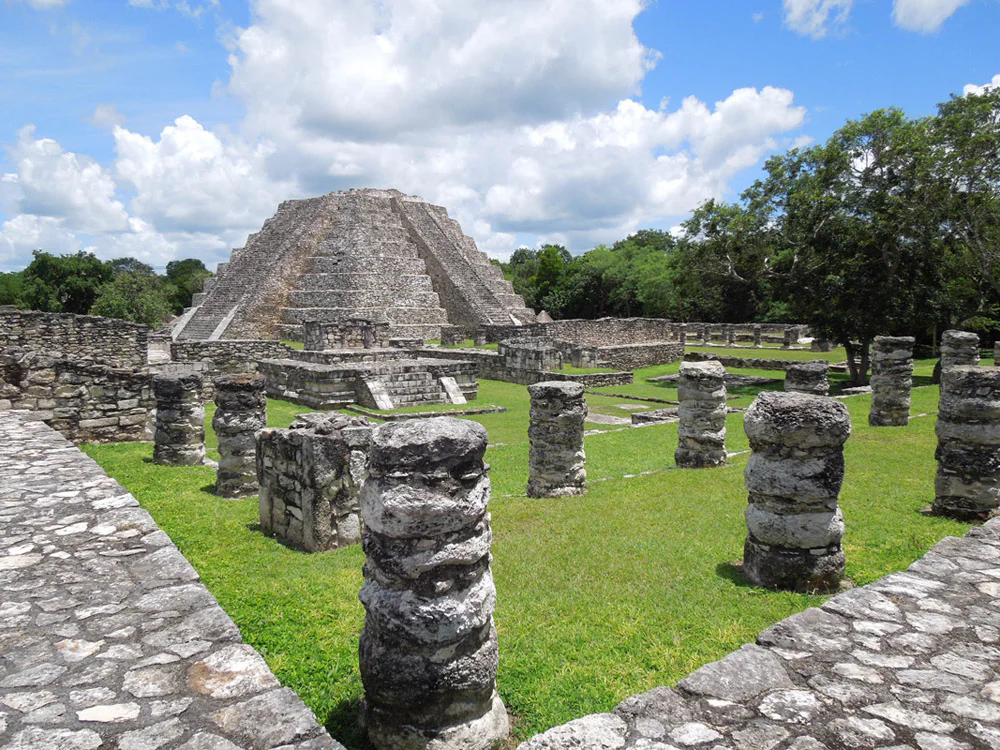
Telchaquillo · 53 km
Mayapán
Content & sources
Photo: Joeldesalvatierra · CC BY-SA 3.0
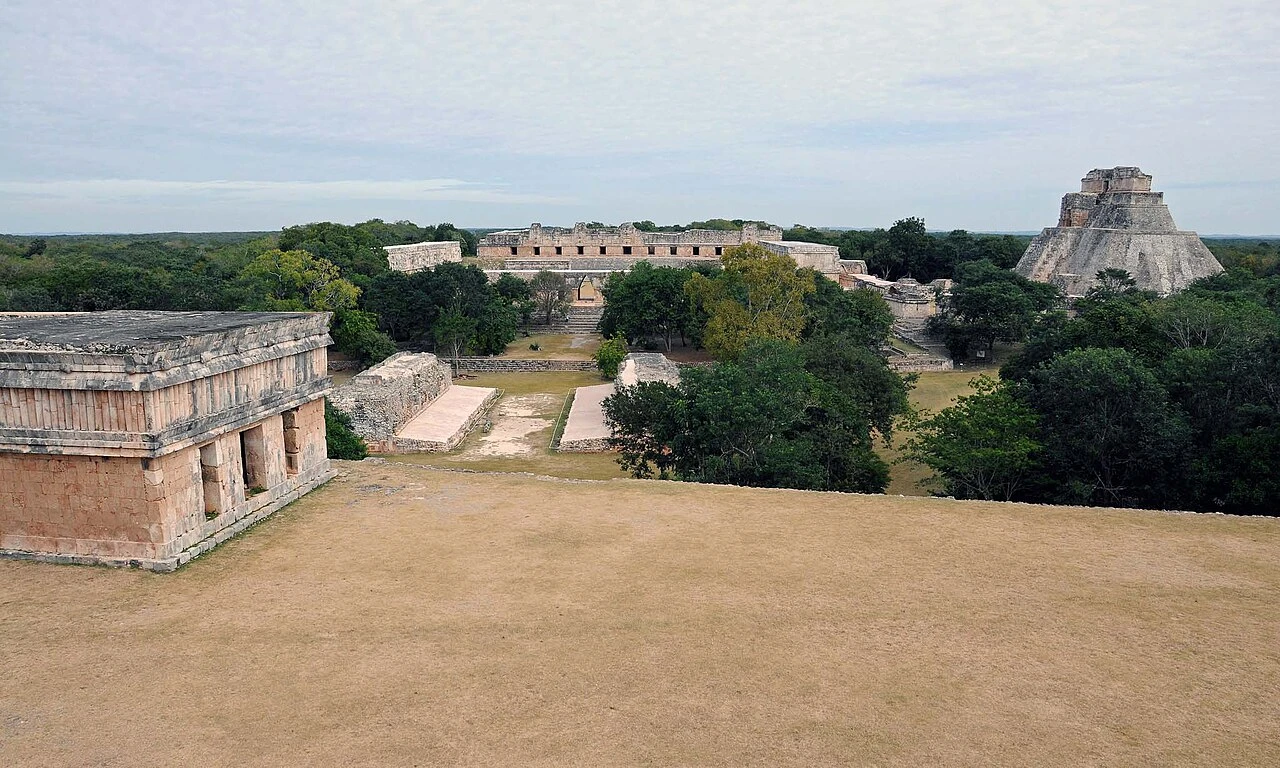
Uxmal · 83 km
Uxmal
Content & sources
Photo: Adrian Hernandez · CC BY-SA 4.0
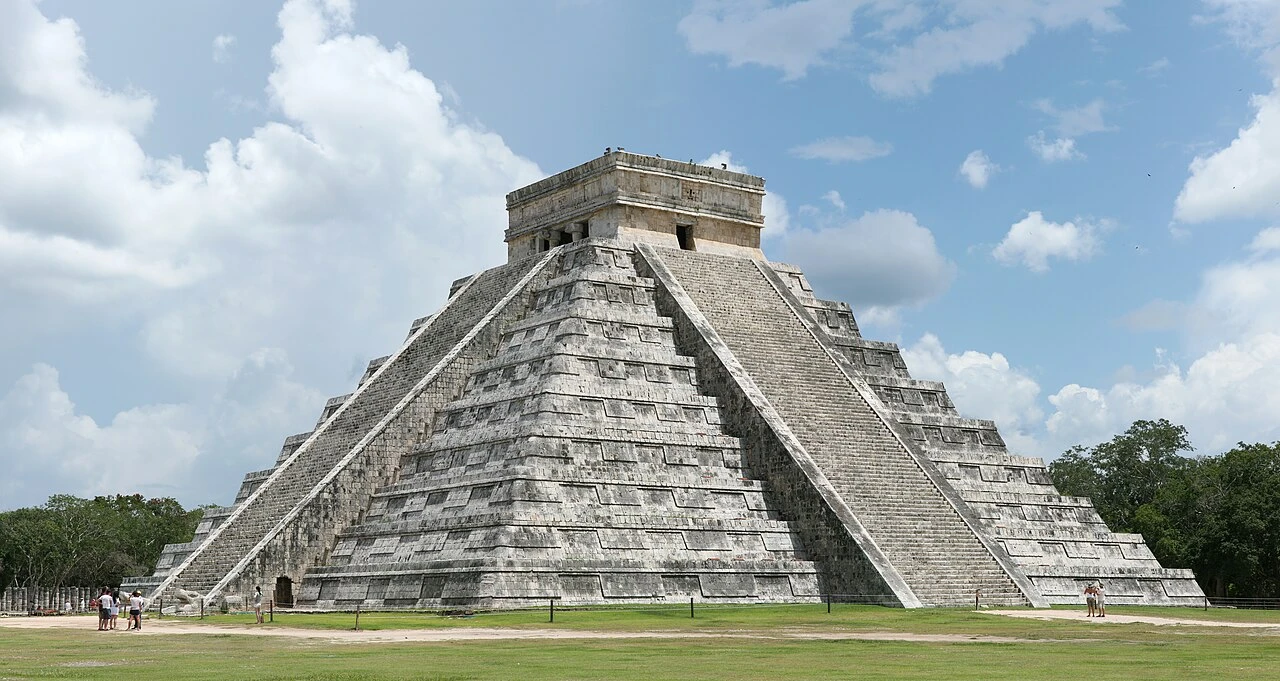
Tinum · 115 km
Chichen Itza
Content & sources
Daniel Schwen · CC BY-SA 4.0
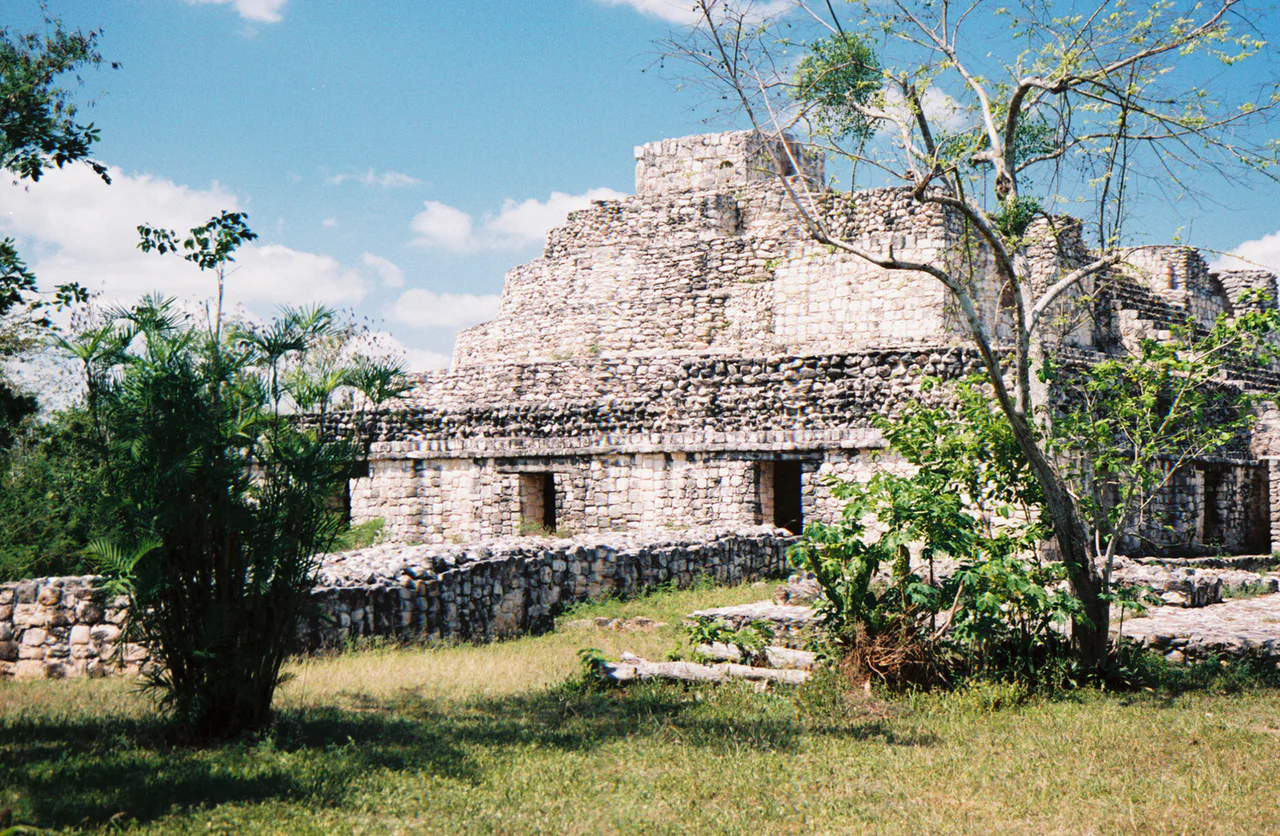
Temozón Municipality
Ek Balam
Content & sources
Photo by Dorothy Beals and Sarah Martin Original uploader was Elijahmeeks at en.wikipedia · CC BY-SA 3.0