Stanza · Audio guide
Alignements de Carnac Audio guide
A place to remember. A story to take with you.
The Carnac stones are a dense collection of megalithic sites including stone rows, dolmens, and tumuli located in northwestern France. They form the largest collection of prehistoric standing stones in the…
Download Stanza, then search for “Alignements de Carnac”.
About the tour
One guide. Your kind of visit.
The Carnac stones are a dense collection of megalithic sites including stone rows, dolmens, and tumuli located in northwestern France. They form the largest collection of prehistoric standing stones in the world, erected by the pre-Celtic people of Brittany.
Ready when you are.
- 01Get the free Stanza app.
iOS & Android
- 02Find your guide.
“Alignements de Carnac”
- 03Download before you go.
Works offline
Audio guide / 26 narrated stops
Inside the guide
Get to know a few of the stories before you go. Open a stop to read more.
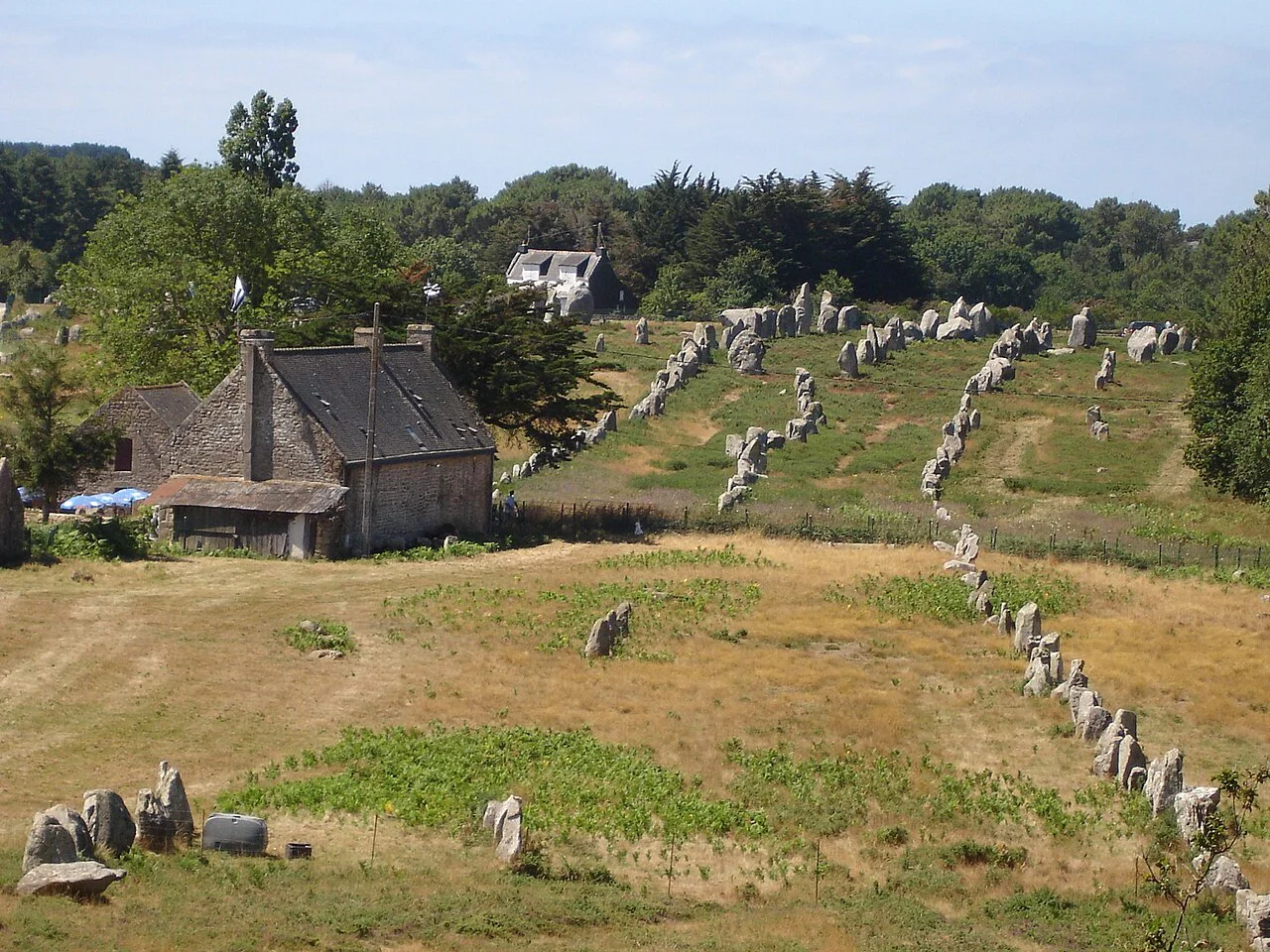
01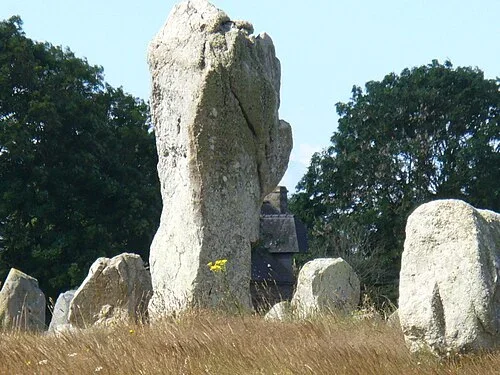 Ménec AlignmentsMénec Alignments
More than three thousand standing stones rise from the fields around Carnac, the largest collection of its kind in the world. Rows of granite blocks run for kilometres across the land. Around them lie dolmens, the stone chambers of tombs, and tumuli, the earthen mounds once raised over graves. Single menhirs stand alone in farmland too. All of it was hewn from local granite by the pre-Celtic people of Brittany, probably around 3300 BC. Some stones may be older still, perhaps as early as 4500 BC. What the rows were for is still argued over. Some say territory, some a calendar, some a place of ceremony. Even the identity of the builders is debated. A BBC documentary argued for Mesolithic hunter-gatherers rather than Neolithic farmers, which would set Carnac apart from Stonehenge, claimed as the work of early farmers.
Steffen Heilfort · CC BY-SA 3.0
02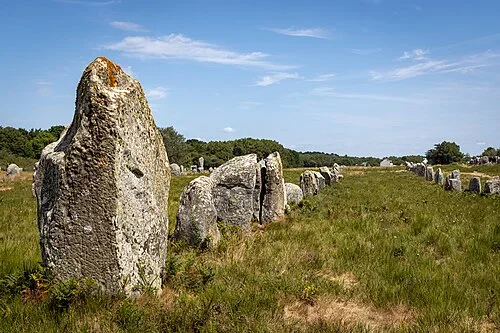 Ménec AlignmentsMénec: Eleven Rows of Stone
Eleven converging rows of menhirs cross this field. From end to end they run nearly twelve hundred metres. The band they form is about a hundred metres wide. The tallest stones, around four metres high, stand at the wider western end. Along the rows they dwindle to knee height before rising again toward the far east. Scale like this is the real achievement of Ménec. Setting so many multi-tonne blocks upright took organisation of a kind scattered family groups could never manage. Someone had to plan the rows, feed the workforce and keep the project going season after season. Whatever the stones meant to their builders, raising them marks a society able to command enormous collective labour.
Photo: Superbass · CC BY-SA 4.0
03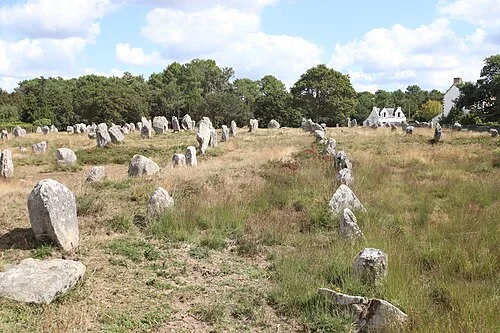 Toulchignan AlignmentsToulchignan Alignment
Thousands of stones standing in perfectly straight lines cried out for an explanation, and local tradition supplied several. A Christian legend tells how Saint Cornély, fleeing soldiers who pursued him, turned them to stone where they stood. In Breton, the rows were known as the soldiers of Saint Cornély. Local versions of the Arthurian tales give the credit to Merlin instead, said to have petrified a whole Roman legion, straight lines and all. The gentlest story belongs to Christmas Eve. Le Rouzic passed on the belief, first written down in 1864, that on that night the stones marched down to the streams to drink, crushing anyone in their path. Children in Carnac loved the tale and told it to visiting tourists, until a municipal order banned its telling in the 1960s.
Listen in the appPhoto: Lionel Allorge · CC BY-SA 3.0
04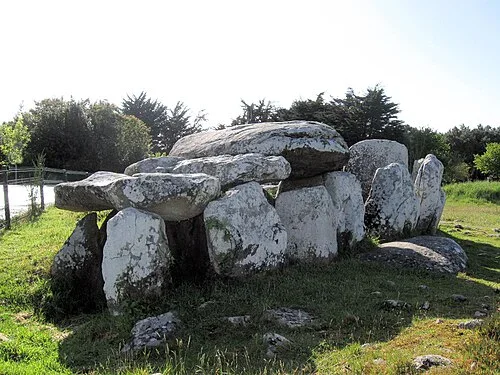 Kermario DolmenDolmen de Kermario
A dolmen is built from a few large uprights with a massive capstone laid across them. Here at the western approach to Kermario, the stonework still holds its shape. When the tomb was new, the whole structure was buried under a mound of earth. At many of Carnac's dolmens that mound has now disappeared. Sometimes excavation removed it. What is left is the bare skeleton of stones, in various states of ruin. Elsewhere in the region, earthen mounds were built up over graves, with a passage leading to a central chamber that once held objects placed there by the living.
Listen in the appGerhard Haubold · CC BY-SA 3.0
05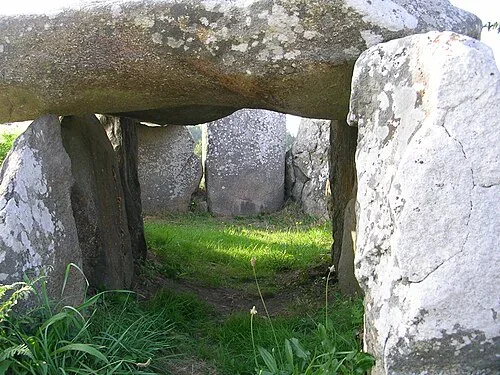 Kermario DolmenInside the Tomb: Kings of the Stone Age
The chamber beyond the portal was made for the dead, and around Carnac some of the dead were buried like royalty. Three exceptionally large burial mounds stand in this region, raised in the mid-fifth millennium BC. They are known as Saint-Michel, Tumiac and Mané-er-Hroëk. Each held the burial of a single individual, along with large polished axeheads, stone arm-rings and jewellery of a stone called callaïs. Many of the axeheads are jade from the Italian Alps. Some reach 46 centimetres in length and may have taken more than a thousand hours to grind and polish. The callaïs came from south-western Iberia, apparently carried by boat across the Bay of Biscay. Their age matches the fabulously rich burials of the Varna culture in Bulgaria. Such burials have led researchers to speak of divine kings. The famous finds come from those great mounds, not from this chamber, which belongs to the same wider landscape of the dead.
Listen in the appMichael Kranewitter · CC BY-SA 3.0
06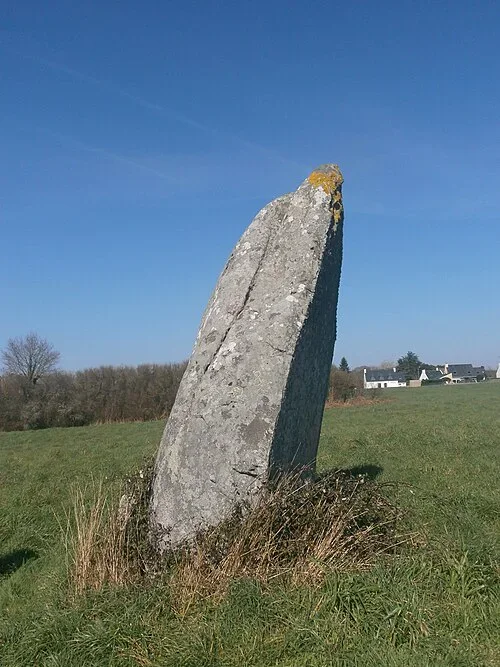 Kerluhir MenhirMenhir de Kerluhir
Learned interest in these stones began in the 1720s, and the theories started flowing. In 1796 La Tour d'Auvergne attributed the rows to gatherings of the druids. In 1805 Maudet de Penhoët claimed they represented the stars in the sky. Romantic writers came to see the stones for themselves, and the railway carried a wider public to Brittany than the antiquaries alone. In 1858 Flaubert openly mocked all these pseudo-scientific theories, with plenty of humour. Every one of those readings came later than the stones themselves, which were standing ages before any druid.
Listen in the appPhoto: Tsaag Valren · CC BY-SA 3.0
07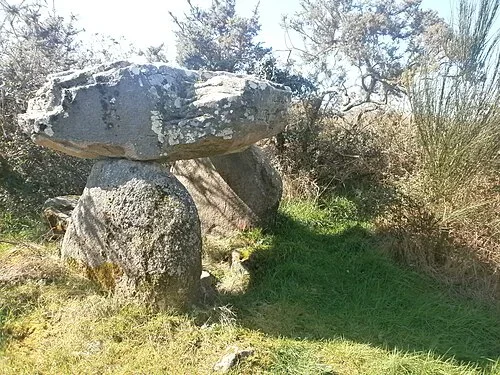 Roch-Vihan DolmenDolmen de Roch-Vihan
Dolmens like this one are generally considered tombs. The stones, however, keep their greatest secret. Brittany's soil is acidic, and over the millennia it has eaten away the bones of the dead. So the chambers cannot say who was buried here, or how many, or with what rites. What looks like a clear monument is, on the inside, a silence. Any account of the people laid in these collective graves has to be built from evidence found elsewhere.
Listen in the appPhoto: Tsaag Valren · CC BY-SA 3.0
08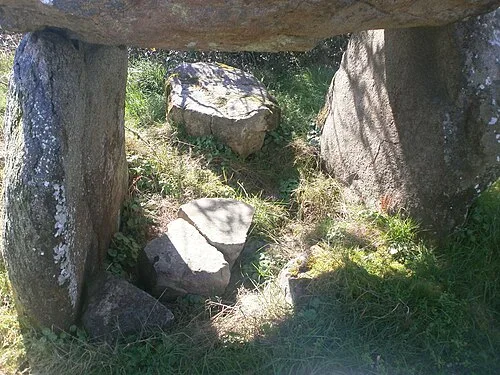 Roch-Vihan DolmenDolmen de Roch-Vihan: Working Life of the Ruins
Recent centuries were not kind to these monuments. There are reports of dolmens serving as sheep shelters, chicken sheds, even ovens. More commonly still, stones were carted away to make room for roads, or to be used as building material. A ruin could be a quarry, a barn or a bakehouse, depending on the need of the moment. Today the state of France marks its claim beside every standing-stone formation, with an inscription proclaiming its ownership.
Listen in the appPhoto: Tsaag Valren · CC BY-SA 3.0
09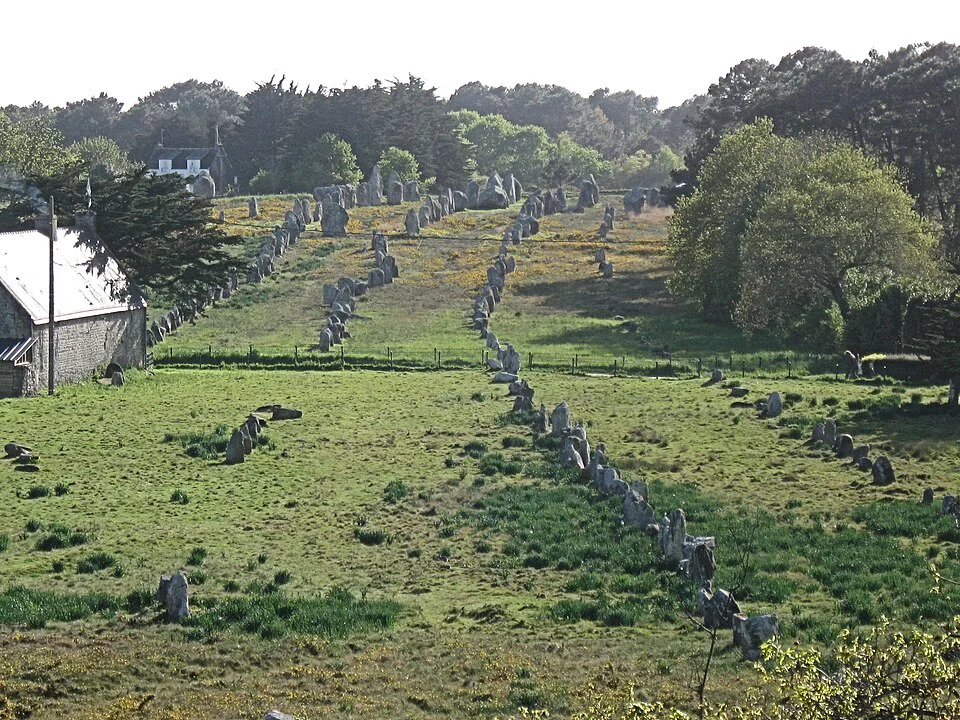 Kermario AlignmentsKermario Alignments
The three great fields of Carnac, Ménec, Kermario and Kerlescan, together trace a contour line. They follow it at roughly twenty metres above sea level, as if the builders had read the land and set their stones along its shoulder. The three groups may once have formed a single ensemble, later split apart as stones were carried off for other purposes. Some researchers go further and read the whole layout as a designed landscape, its rows acting like corridors of stone opening through the terrain. That interpretation is a modern theory, not an established fact. What the view over the field shows plainly is that the rows were not laid down at random.
Listen in the appGerhard Haubold · CC BY-SA 3.0
10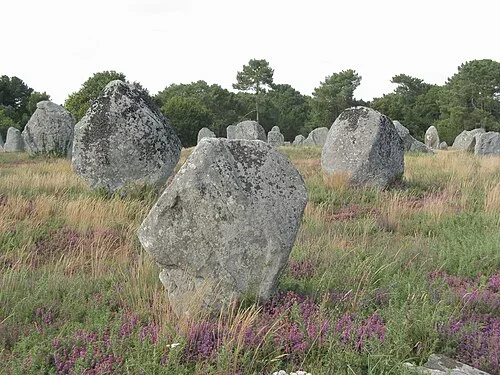 Kermario AlignmentsThe Stone Itself
Every menhir here is made of the same local stone, a coarse granite flecked with two kinds of mica. It outcrops across these sites, so the builders rarely had far to carry anything. Most of the time they only had to exploit local fault lines, prying the blocks free where the rock already wanted to break. Most menhirs are raw rectangular blocks, left just as they came from the ground. A few appear shaped toward the top. The wild, tortured outlines of the largest stones are not the mason's work. They come from natural erosion, both before the megaliths were raised and after.
Listen in the appPhoto: Demeester · CC BY-SA 3.0
Alignements de Carnac
Frequently asked questions
How much does the guide cost?
Free app download. Listed guide price: $3.99. Guide price shown in the app. Audio guide only. Venue admission is separate.
Can I listen without internet?
Yes. Download the guide’s audio, images, and maps in the app before your visit. Your downloaded content is then available offline.
Can I listen in my language?
This audio guide is available in 15 languages, including English.
Do I need to follow a schedule?
No. This is a self-guided experience. Choose your stops, pause whenever you like, and return to a story at your own pace.
At your own pace
Explore Alignements de Carnac.
Download Stanza, then search for “Alignements de Carnac”.
Free app download · Guide price shown in the app
Keep exploring
Audio guides — France
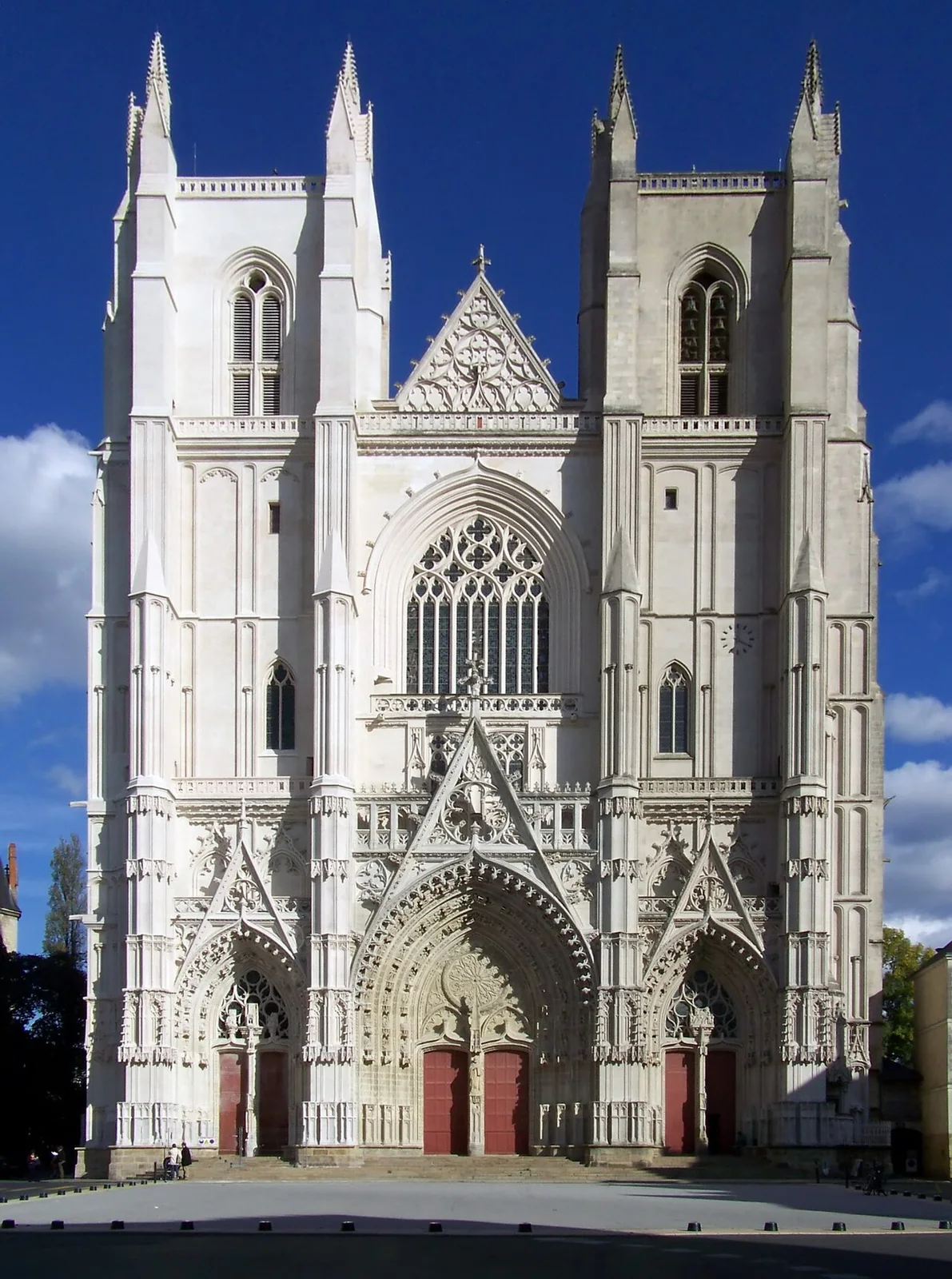
Nantes · 122 km
Cathédrale Saint-Pierre-et-Saint-Paul de Nantes
Content & sources
Photo: Eusebius · Public domain
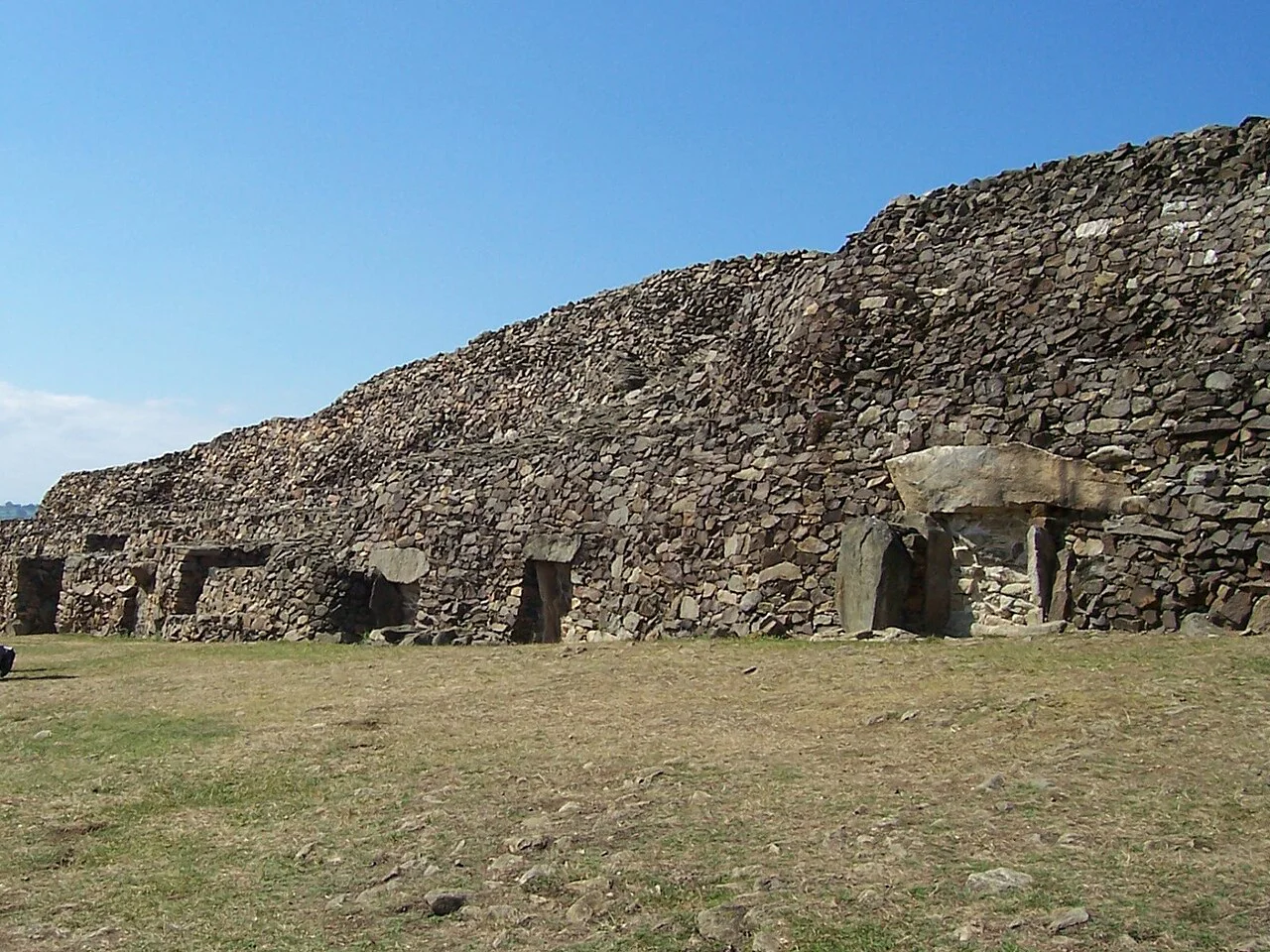
Plouezoc'h · 133 km
Cairn de Barnenez
Content & sources
No machine-readable author provided. NewPapillon assumed (based on copyright claims). · CC BY-SA 3.0
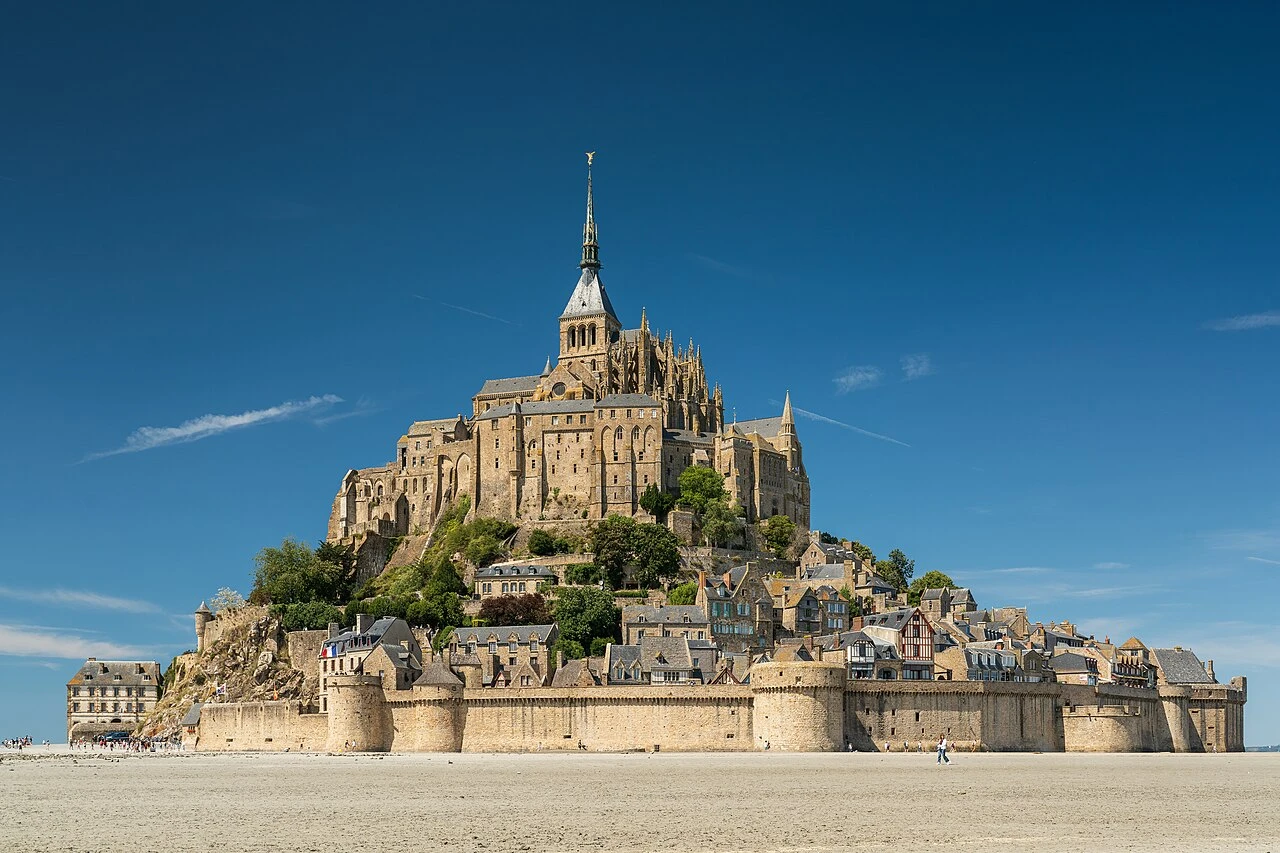
Le Mont-Saint-Michel
Le Mont-Saint-Michel, Mont-Saint-Michel Abbey
Content & sources
Photo: Lynx1211 · CC BY-SA 4.0
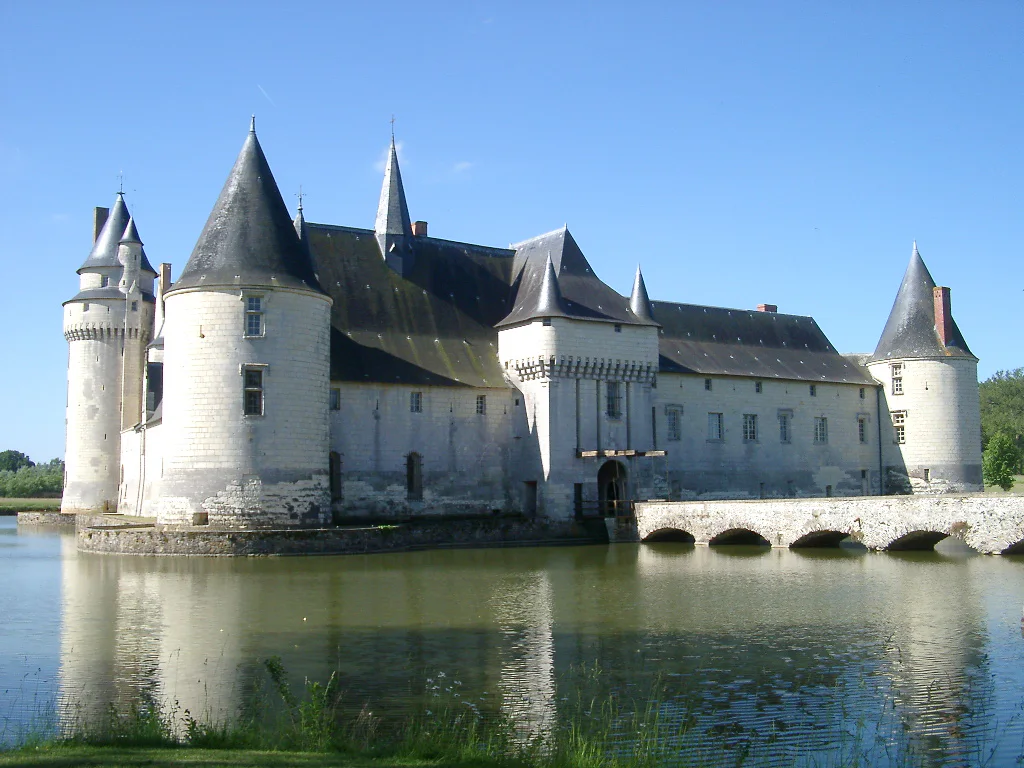
Écuillé
Château du Plessis-Bourré
Content & sources
The original uploader was NonNobis at French Wikipedia. · CC BY-SA 3.0