Stanza · Audio guide
Basilica di San Pietro di Castello Audio Guide
A place to remember. A story to take with you.
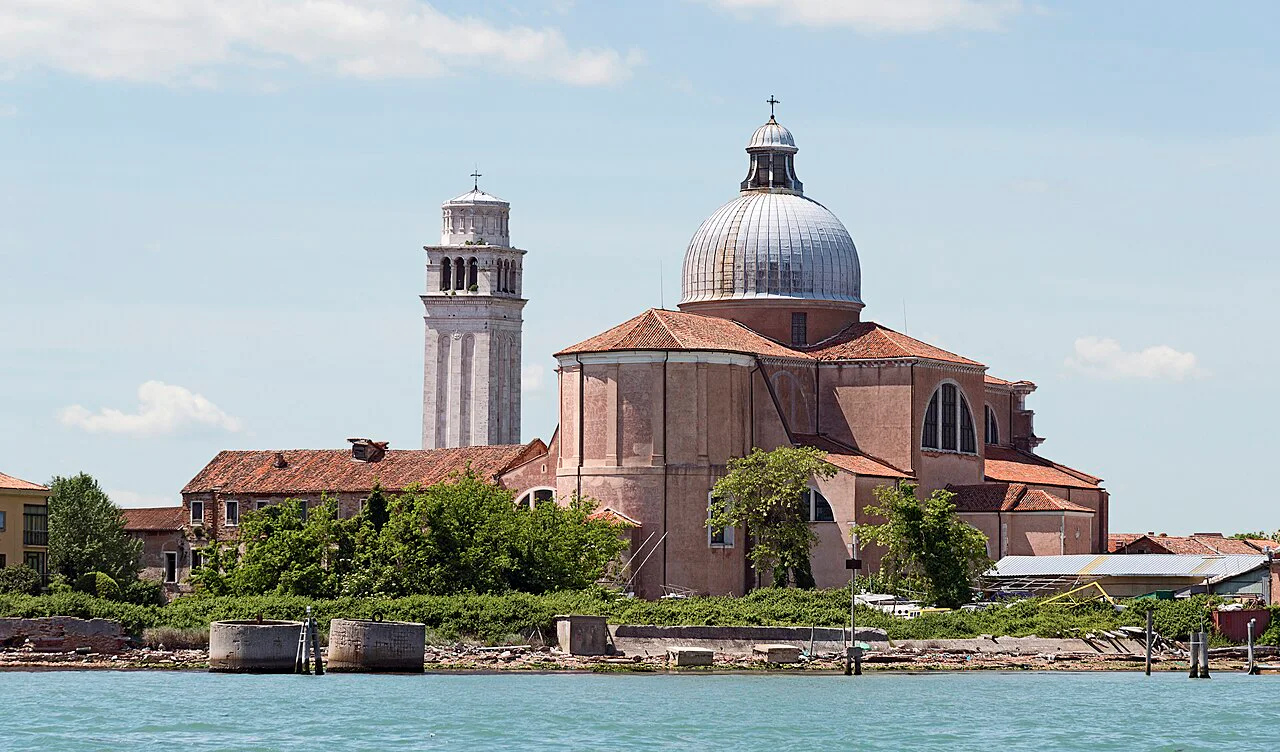
The Basilica di San Pietro di Castello is a Roman Catholic minor basilica located in the Castello sestiere of Venice. It served as the city's cathedral church from 1451 to 1807 and features architecture by…
Download Stanza, then search for “Basilica di San Pietro di Castello”.
About the tour
One guide. Your kind of visit.
The Basilica di San Pietro di Castello is a Roman Catholic minor basilica located in the Castello sestiere of Venice. It served as the city's cathedral church from 1451 to 1807 and features architecture by prominent figures including Andrea Palladio.
Ready when you are.
- 01Get the free Stanza app.
iOS & Android
- 02Find your guide.
“Basilica di San Pietro di Castello”
- 03Download before you go.
Works offline
Audio guide / 8 narrated stops
Inside the guide
Get to know a few of the stories before you go. Open a stop to read more.
01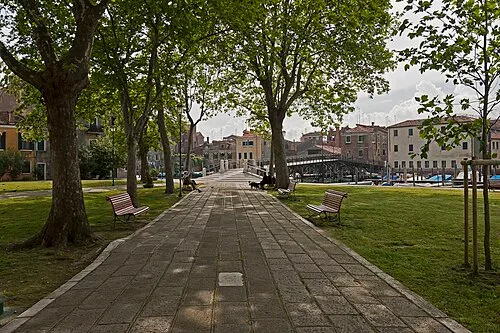 Campo San Pietro and the Leaning Campanile
Campo San Pietro and the Island Setting
Tradition says a bishop named Magnus founded this church in the seventh century. Magnus was the bishop of Oderzo, and he had come to the Venetian lagoon. At that time there was no city here, only small communities scattered across marshy islands. In a vision, Saint Peter appeared to Magnus. He was to build a church on the spot where he saw oxen and sheep grazing side by side. Magnus found that spot and built the church. It was first dedicated to Saints Sergius and Bacchus, and only later to Saint Peter. The island and the church share the name San Pietro di Castello. In 1120 a fire destroyed the church. The new building that replaced it was grander than the one before.
Didier Descouens · CC BY-SA 4.0
02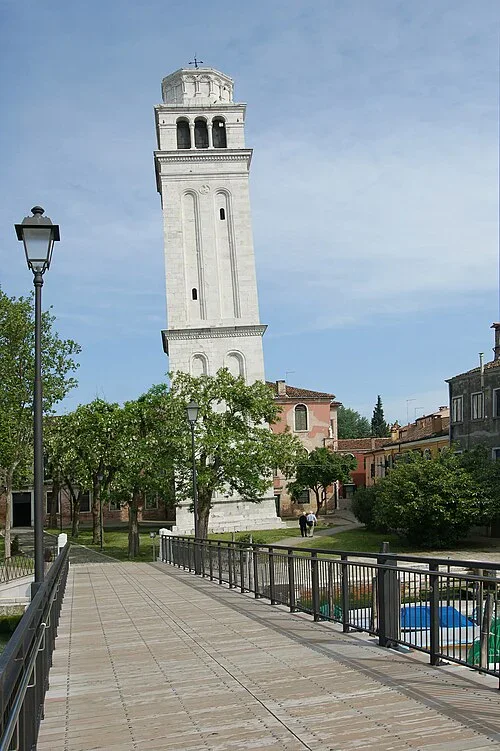 Campo San Pietro and the Leaning Campanile
Mauro Codussi's Campanile
Mauro Codussi rebuilt this bell tower in the 1480s, after lightning had damaged the earlier one. He used white Istrian stone and left it exposed on the outside. It was the first time this stone was seen in Venice. Tall arched openings break up the pale shaft near the top. On the seventeenth of October, 1822, lightning struck the tower again. The strike destroyed the top, a wooden dome covered in lead with a small lantern, and it was never rebuilt. The tower is often described as one of the most precarious in Venice.
Didier Descouens · CC BY-SA 4.0
03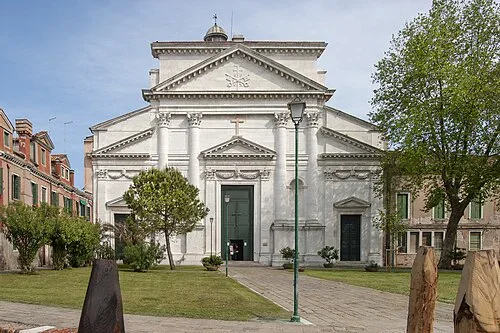 The Classical Facade
Classical Facade of San Pietro di Castello
Andrea Palladio prepared a new design for this facade in 1558. It was his first commission in Venice, from Patriarch Vincenzo Diedo. Diedo died before the plans could be carried out, and Palladio withdrew. Work resumed in 1596 under Francesco Smeraldi, who built a less ambitious version of the design. The reason may have been a lack of money. The centre rises on four columns set against the wall, beneath a triangular pediment. Flanking it is a double broken pediment, a gable with its top cut open. The result is more restrained than other Palladian designs in Venice.
Listen in the appDidier Descouens · CC BY-SA 4.0
04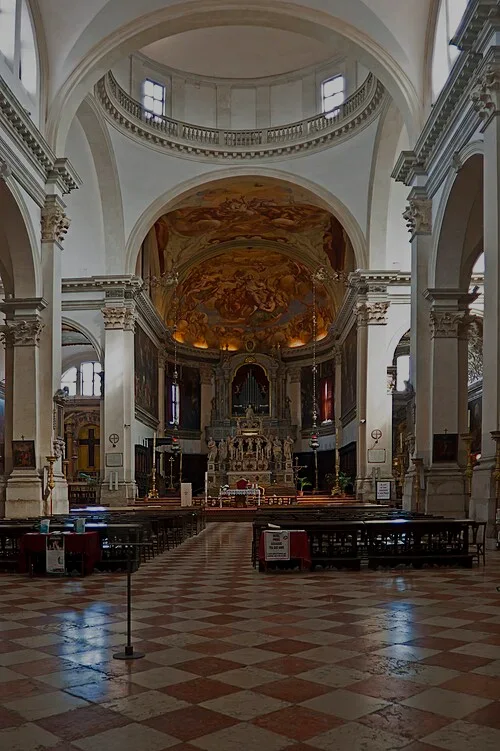 The Monumental Nave
Interior Nave and Crossing Dome
For more than three hundred and fifty years, this church was the city's cathedral. In 1451 it became the seat of the Patriarch of Venice. Yet it hardly played the dominant role a cathedral usually had. Saint Mark's, the church of the state, overshadowed it. It also stood some distance from the city's political and economic centre, and was inconveniently placed. The long nave, with its chequered floor, leads to a large dome over the crossing. That dome signals the church's religious importance. Gerolamo Grapiglia oversaw the work on the interiors from 1619. In 1807 Saint Mark's became Venice's official cathedral instead. After that, San Pietro was increasingly neglected.
Listen in the appDidier Descouens · CC BY-SA 4.0
05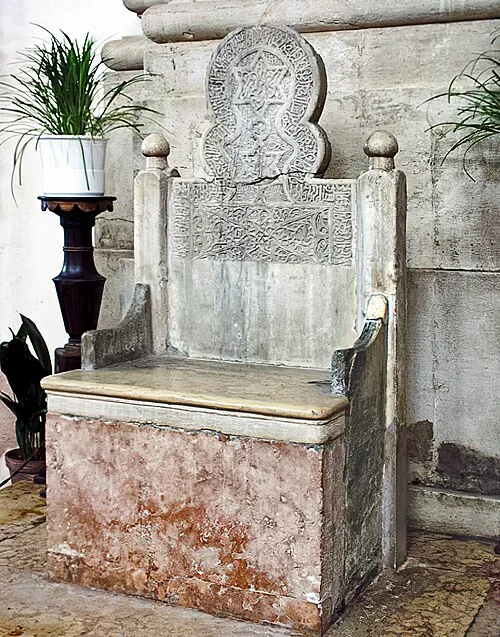 The Throne of Saint Peter
According to legend, this seat belonged to Saint Peter when he was bishop of Antioch. Legend adds that the Byzantine emperor Michael the Third gave it to the doge Pietro Tradonico. The stone itself tells a different story. The seat dates from the thirteenth century. Its backrest was cut from an ancient Islamic funerary stone, a grave marker. At the top, a rounded panel carries a star-like ornament. Below it runs a band of inscription in Kufic, an early angular Arabic script. The verses come from the Qur'an. One asks the Lord not to shame the faithful on the day of resurrection. Small round knobs crown the side posts, and the seat rests on a plain, box-like base. Another verse asks God for forgiveness and mercy.
Listen in the appDidier Descouens · CC BY-SA 4.0
06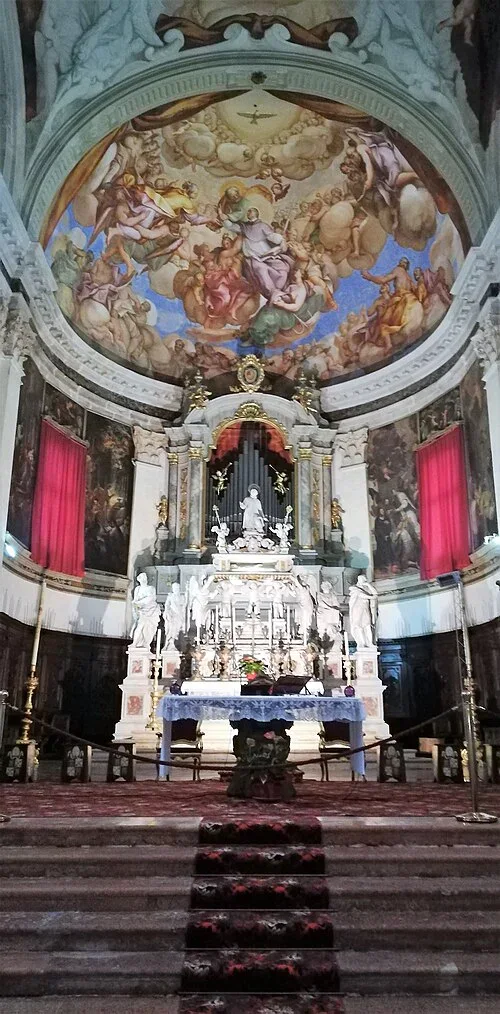 The High Altar and Presbytery
High Altar and Presbytery
Baldassarre Longhena designed the high altar, and it dates from 1646. Clemente Molli carved it, including some of its statues. White statues gather around the altar, and red curtains hang on the walls at either side. A painted vault, crowded with figures on clouds, fills the space above. Red carpet covers the steps that climb toward it. The altar keeps the remains of Saint Lorenzo Giustiniani, the first Patriarch of Venice.
Listen in the appPhoto: Effems · CC BY-SA 4.0
07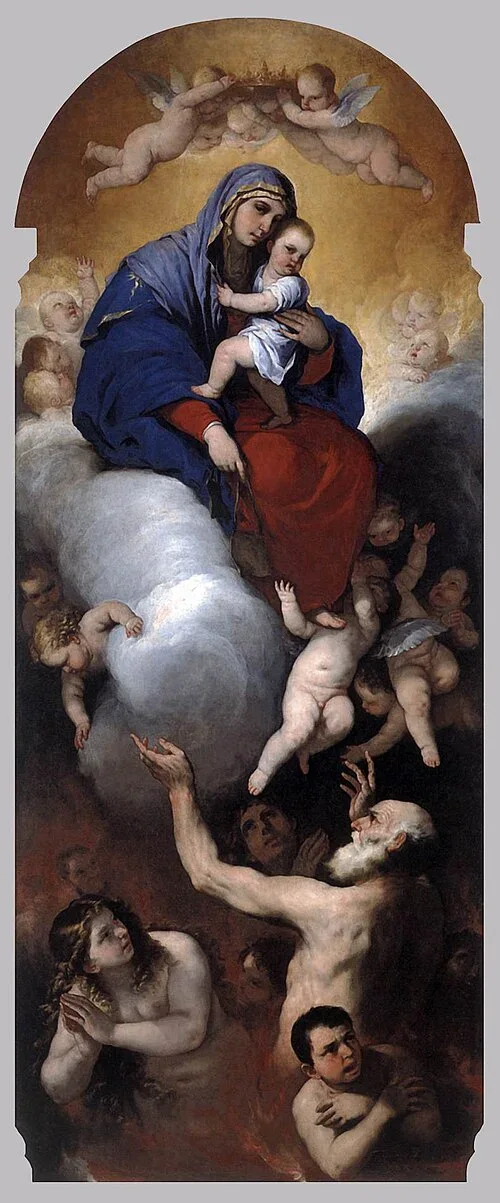 The Vendramin Chapel
Luca Giordano's Virgin and Child with Souls in Purgatory
The Virgin and Child sit on a cloud in this altarpiece by Luca Giordano, painted in 1650. This painting hangs in the Vendramin chapel. The chapel is dedicated to Cardinal Francesco Vendramin and to Our Lady of Carmel. The architect Longhena also designed this chapel. In Catholic art, the Virgin is often shown interceding, or pleading on behalf of souls in Purgatory. Cherubs peer from the clouds around her, and more angels crowd the golden sky above. Below, in shadow, figures reach upward toward her. A bearded old man stretches out his arm, and a young woman clasps her hands.
Listen in the appLuca Giordano · Public domain
08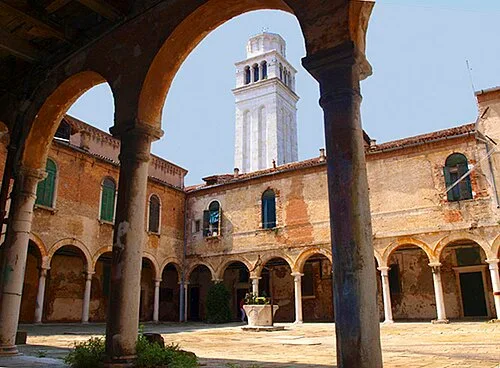 The Patriarchal Cloister and Departure
Arcaded Courtyard and Campanile View
Firebombs damaged the church during the First World War. Only in the 1970s did conservation organisations step in, and the church was restored to its former condition. Its conservation is now managed through its membership of the Chorus Association of Venetian Churches. The church remains active today as a minor basilica and a parish church. Round arches frame the white tower rising above the roofs. Nothing of the earliest building survives except one fragment of mosaic, kept in a side chapel.
Listen in the appPhoto: Qypchak · CC BY-SA 3.0
Basilica di San Pietro di Castello
Frequently asked questions
How much does the guide cost?
Free app download. Listed guide price: $0.99. Guide price shown in the app. Audio guide only. Venue admission is separate.
Can I listen without internet?
Yes. Download the guide’s audio, images, and maps in the app before your visit. Your downloaded content is then available offline.
Can I listen in my language?
This audio guide is available in 15 languages, including English.
Do I need to follow a schedule?
No. This is a self-guided experience. Choose your stops, pause whenever you like, and return to a story at your own pace.
At your own pace
Explore Basilica di San Pietro di Castello.
Download Stanza, then search for “Basilica di San Pietro di Castello”.
Free app download · Guide price shown in the app
Keep exploring
Nearby audio guides
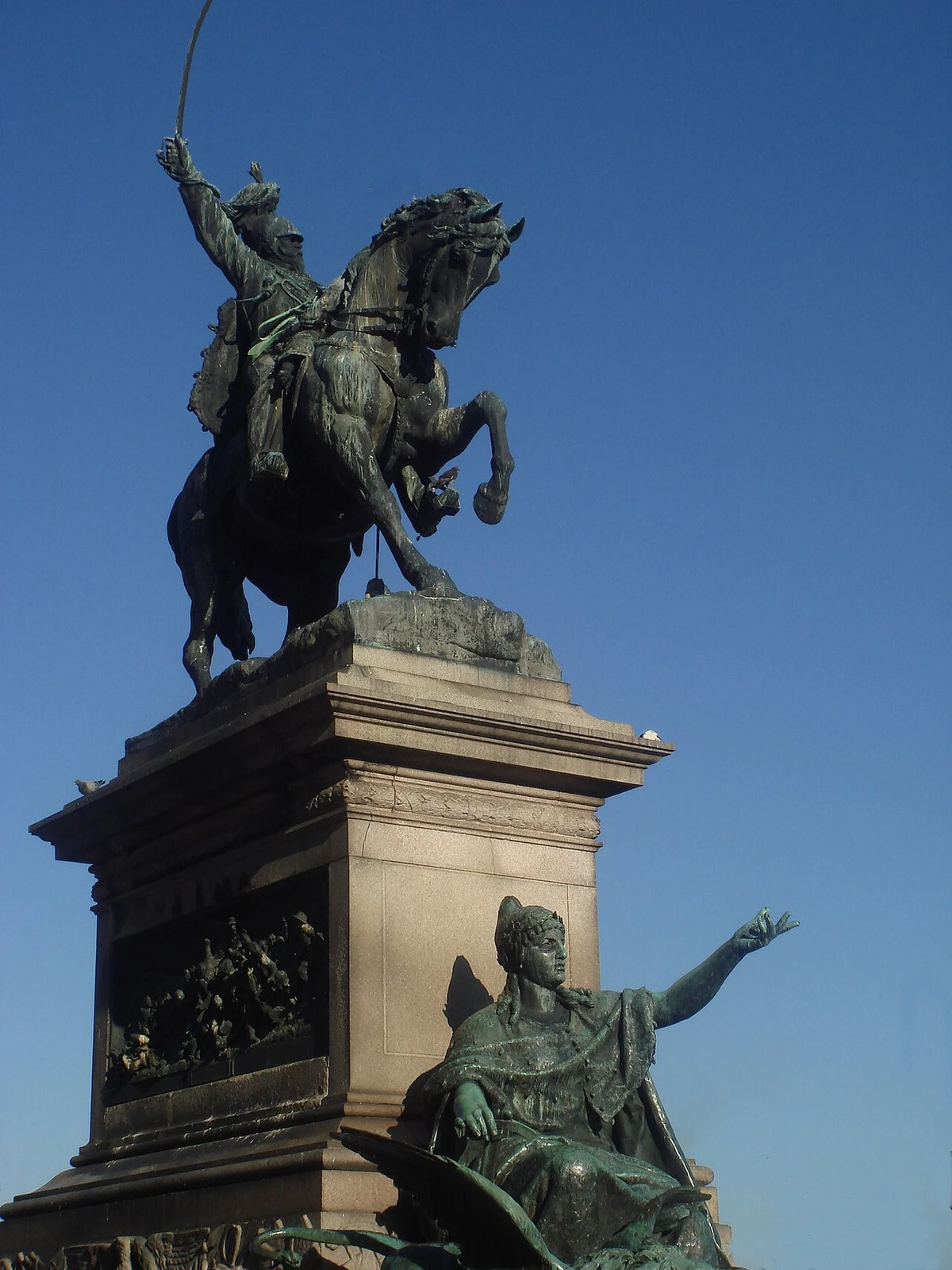
Venice · 1 km
Monumento a Vittorio Emanuele II
Content & sources
Photo: G.dallorto · Attribution
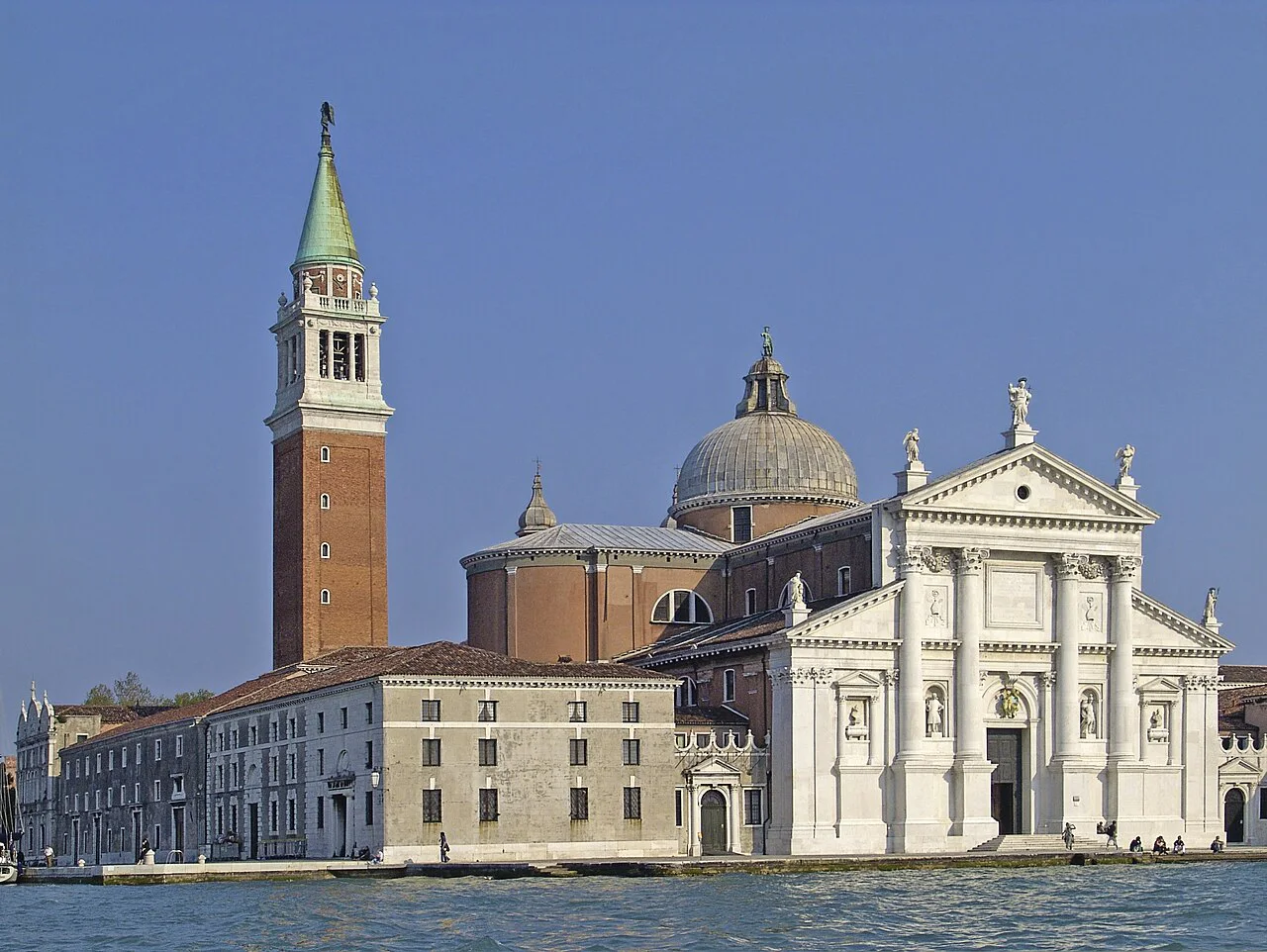
Venice · 1 km
Basilica di San Giorgio Maggiore
Content & sources
Didier Descouens · CC BY-SA 4.0
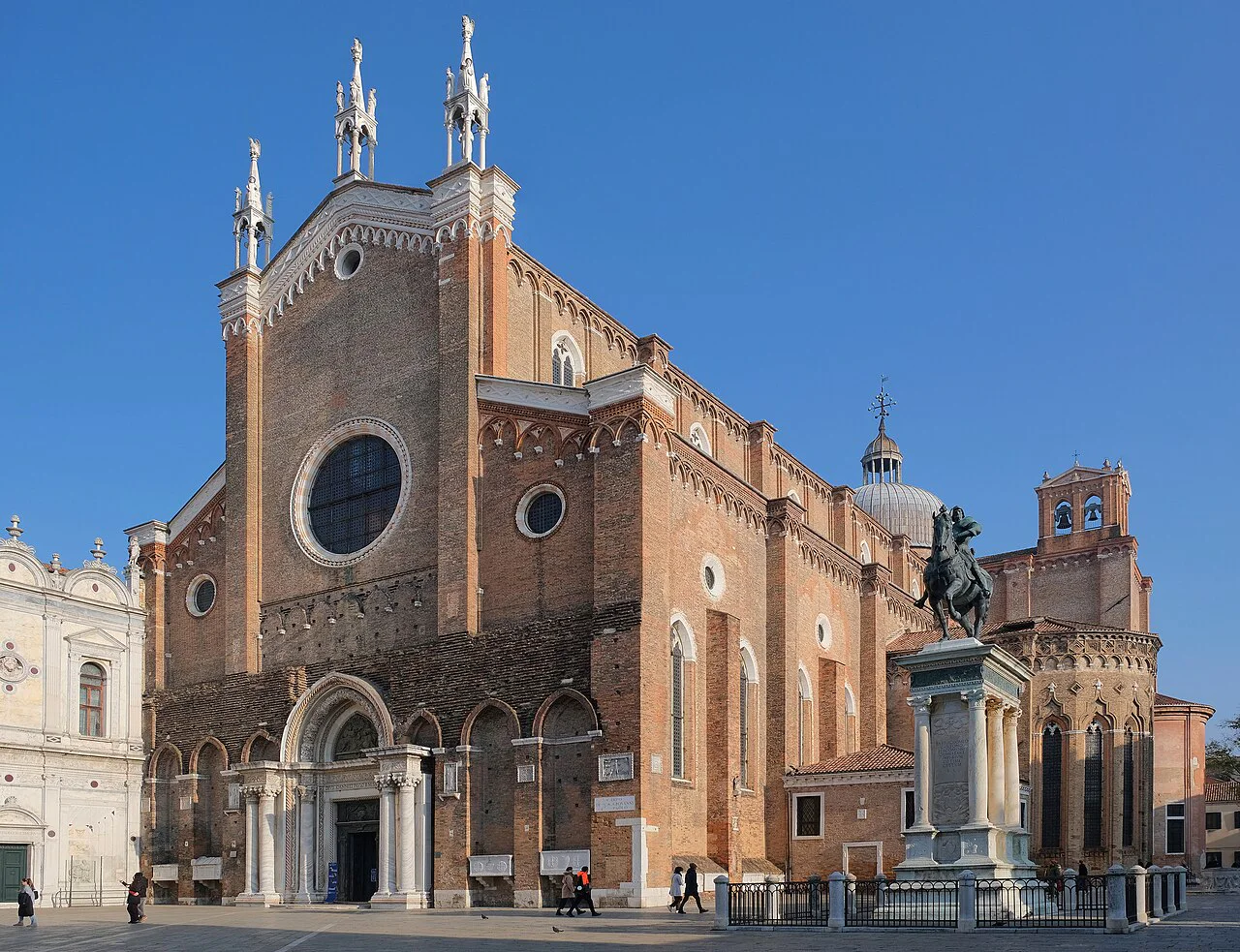
Venice · 1 km
Basilica dei Santi Giovanni e Paolo
Content & sources
kallerna · CC BY-SA 4.0
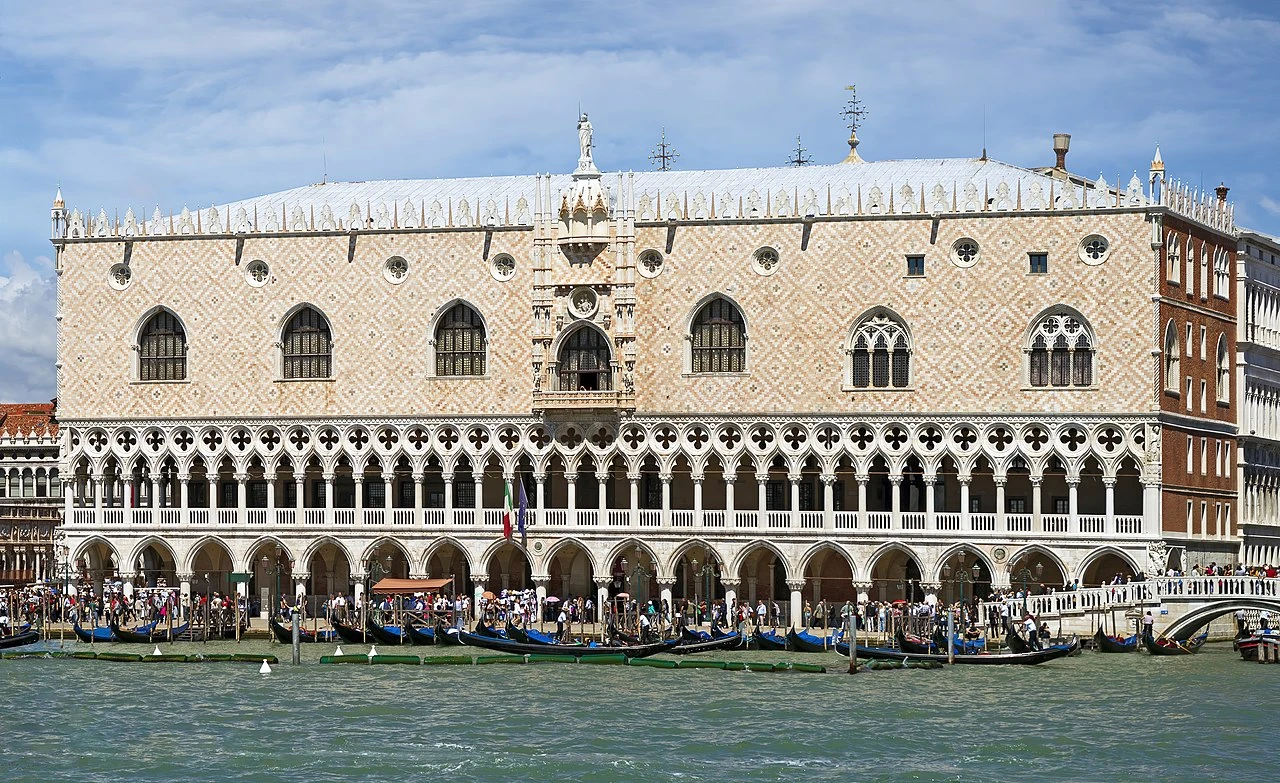
Venice · 2 km
Doge's Palace
Content & sources
Didier Descouens · CC BY-SA 4.0