Stanza · Audio guide
Monumento a Vittorio Emanuele II Audio Guide
A place to remember. A story to take with you.
This monument by Ettore Ferrari in Venice, Italy, is dedicated to Victor Emmanuel II. It commemorates the first King of unified Italy.
Download Stanza, then search for “Monumento a Vittorio Emanuele II”.
About the tour
One guide. Your kind of visit.
This monument by Ettore Ferrari in Venice, Italy, is dedicated to Victor Emmanuel II. It commemorates the first King of unified Italy.
Ready when you are.
- 01Get the free Stanza app.
iOS & Android
- 02Find your guide.
“Monumento a Vittorio Emanuele II”
- 03Download before you go.
Works offline
Audio guide / 14 narrated stops
Inside the guide
Get to know a few of the stories before you go. Open a stop to read more.
01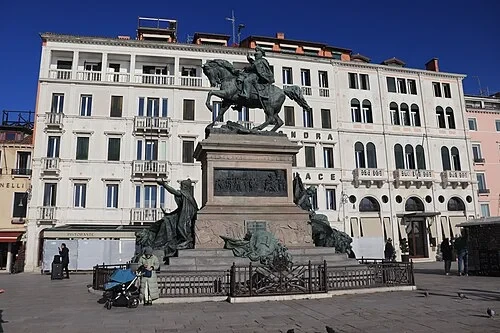 Arrival at Riva degli Schiavoni
Welcome to the Riva degli Schiavoni, a historic promenade that serves as the setting for one of Venice's most dominant landmarks. As you approach, the first thing you'll notice is the grand scale of this monument, which rises nearly ten meters above the lagoon's edge. This height ensures it is visible from across the water, making it a permanent fixture of the city's skyline. Before this structure was permanently fixed in place, its location was a subject of significant debate. To ensure the visual impact was correct, a full-scale wooden mock-up was constructed and moved to various high-profile locations throughout the city, including the prestigious St. Mark's Square. After careful testing, planners decided on this specific waterfront site, allowing the figure to gaze out toward the Adriatic Sea. The foundation of the monument is as sturdy as its history, featuring a massive base composed of pink Baveno granite and white Istrian stone. These materials were chosen not just for their beauty, but for their ability to withstand the salty, damp environment of the Venetian lagoon. As you look at the structure, imagine the logistical feat of transporting such heavy stone blocks across the water to assemble this towering tribute in the late 19th century.
Andrzej Otrębski · CC BY-SA 4.0
02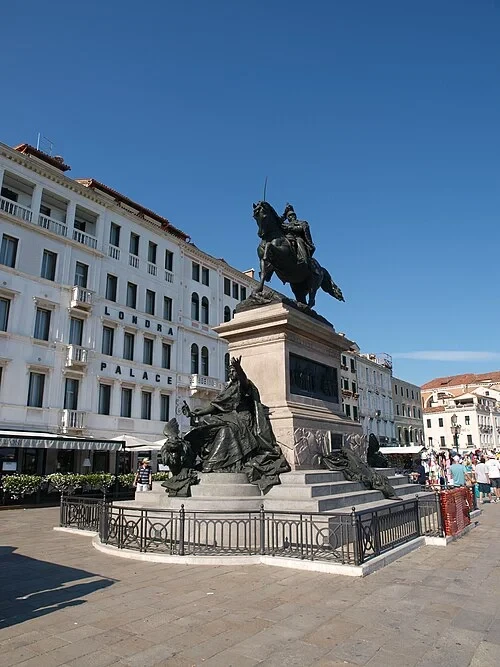 Arrival at Riva degli Schiavoni
Monument to Victor Emmanuel II
This monument is dedicated to Victor Emmanuel II, the first King of a united Italy. His reign marked the culmination of the Risorgimento, the social and political movement that consolidated the different states of the Italian Peninsula into the single Kingdom of Italy. Because of this, he is often celebrated as a foundational hero of the modern nation. The creation of this site was a long and deliberate process. It was designed by the Roman sculptor Ettore Ferrari, a figure known for his strong political convictions and his contributions to public art across Italy. To bring Ferrari's vision to life, the metalwork was cast by Alessandro Nelli, a prominent founder based in Rome. The project was not an overnight success; it took a full nine years from the initial design competition to the final unveiling. This long timeline reflects the care taken in the artistic process and the immense scale of the bronze casting involved. As you explore the different levels of the monument, you are seeing the result of nearly a decade of labor by Italy's finest craftsmen, intended to solidify the legacy of the monarchy in the heart of Venice, a city that was among the last to join the unified kingdom.
Kaz Ish · CC BY-SA 3.0
03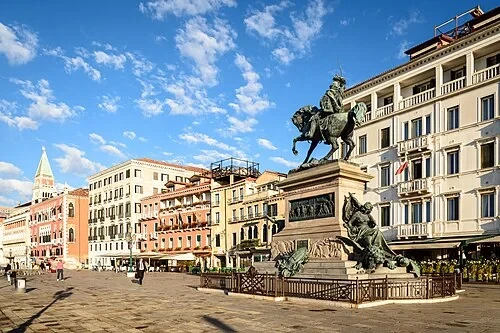 Arrival at Riva degli Schiavoni
A Royal Inauguration
On May 1, 1887, this square was the center of national attention as the monument was officially unveiled to the public. The timing of the ceremony was highly symbolic; it was scheduled to occur exactly ten years after the death of Victor Emmanuel II, turning the inauguration into a solemn act of remembrance as well as a celebration of the state. The event was a major state affair, attended by the successor to the throne, King Umberto I, and his wife, Queen Margherita. Their presence in Venice for the unveiling served to reinforce the ties between the House of Savoy and the Venetian people. At the time, Italy was still a relatively young nation, and events like this were crucial for building a sense of shared national identity. Imagine the crowds of locals and dignitaries filling the Riva degli Schiavoni, the harbor filled with decorated boats, and the air of patriotic fervor that accompanied the dropping of the veil. This wasn't just about revealing a statue; it was a carefully choreographed performance of national pride, designed to show that Venice was now, and would remain, a vital part of the unified Italian kingdom.
Listen in the appdconvertini · CC BY-SA 2.0
04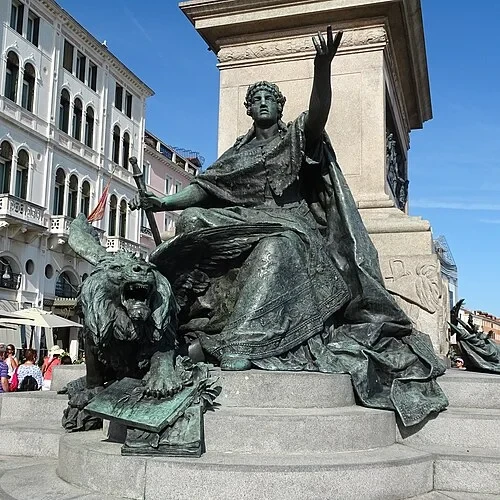 Triumphant Venice and the Winged Lion
Triumphant Venice
Facing the open water of the lagoon is one of the most important allegorical figures of the monument: Venice Liberated. This female personification of the city is depicted with a determined and forward-looking posture, her gaze fixed on the horizon as if looking toward the future of the nation. If you look closely at her hands, you will see her performing a highly symbolic act: she is tearing up the 1815 Treaty of Vienna. This document was signed after the Napoleonic Wars and had effectively placed Venice and much of northern Italy under the control of the Austrian Empire. By showing her destroying this paper, the sculptor is depicting the literal and figurative shredding of foreign rule. Her posture is one of strength and agency, moving away from a period of subjugation and into a new era of freedom. This specific allegory was designed to resonate deeply with the local population, many of whom had lived through the struggle for independence. The figure stands as a defiant reminder that the era of foreign domination had officially ended, replaced by a self-governed Italian state.
Listen in the appPhoto: Abxbay · CC BY-SA 4.0
05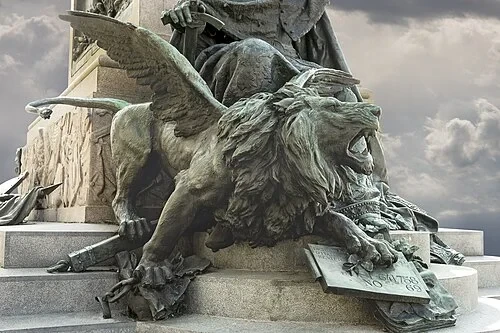 Triumphant Venice and the Winged Lion
The Roaring Lion
The winged lion is the most recognizable symbol of Venice, but the version you see here at the front of the monument is quite different from the peaceful 'Lion of St. Mark' found elsewhere in the city. Instead of resting a paw calmly on an open book, this lion is shown in a state of high emotion, roaring in a moment of absolute triumph. The lion's purpose here is to document a specific turning point in history. It holds a stone record of the 1866 plebiscite, the public vote that confirmed Venice's desire to join the Kingdom of Italy. If you look closely at the inscriptions, you can see the lopsided results carved forever into the stone: 641,758 votes for 'Yes' and a mere 69 for 'No.' This overwhelming margin was a point of immense pride for the new Italian state, used to prove that the annexation of Venice was not just a military conquest, but a genuine expression of the will of the people. The roaring lion serves as the vocal, powerful witness to this democratic landslide, guarding the record of the moment the city chose its own destiny.
Listen in the appDidier Descouens · CC BY-SA 4.0
06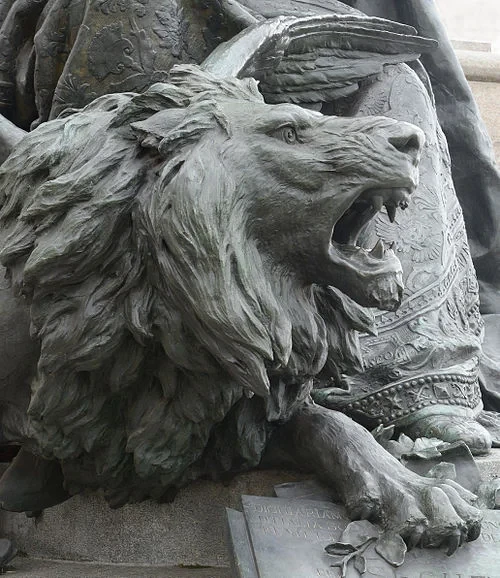 Triumphant Venice and the Winged Lion
The Winged Lion Detail
Take a moment to look at the fine details of the bronze work on the winged lion's head and mane. The sculptor, Ettore Ferrari, used dynamic, almost jagged textures to bring the creature to life. Rather than a smooth, idealized coat, the mane is rendered in deep, swirling layers that suggest motion and raw energy. This artistic choice was intentional. The goal was to convey the passion and 'fervor' of the Risorgimento—the period of Italian unification characterized by revolutionary spirit and intense nationalist sentiment. The rough, textured surface catches the sunlight differently as you move around it, giving the lion a sense of being in mid-action. This style of sculpture was part of a broader trend in the late 19th century that moved away from the stillness of Neoclassicism toward a more expressive, emotional realism. By giving the lion such a wild and energetic appearance, the artist captured the spirit of a city and a people who had just fought through decades of conflict and political turmoil to achieve their freedom. The bronze itself seems to vibrate with the same intensity that drove the movement for a united Italy.
Listen in the appThis Photo was taken by Wolfgang Moroder. Feel free to use my photos, but please mention me as the author and send me a message. This image is not in the public domain. Please respect the copyright protection. It may only be used according to the rules mentioned here. This specifically excludes use in social media, if applicable terms of the licenses listed here not appropriate. Please do not upload an updated image here without consultation with the Author. The author would like to make corrections only at his own source. This ensures that the changes are preserved.Please if you think that any changes should be required, please inform the author.Otherwise you can upload a new image with a new name. Please use one of the templates derivative or extract. · CC BY-SA 3.0
07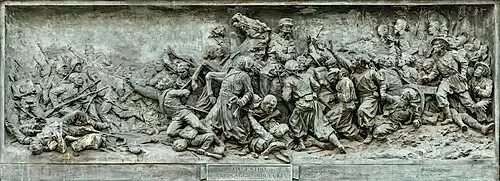 The Battle of Palestro Relief
The Battle of Palestro
On the side of the stone base, you will find a high-relief panel that transports you to the heat of conflict. This scene depicts the Battle of Palestro, fought in May 1859. This was a critical engagement during the Second Italian War of Independence, and it was particularly significant as the first major victory won by the joint forces of the Kingdom of Sardinia and France against the occupying Austrian army. The sculptor has captured the scene with a sense of chaotic, realistic energy. You can see soldiers mid-stride, horses rearing, and the smoke and confusion of the battlefield rendered in deep bronze. Notice the overlapping figures and the varying depths of the carving, which create a three-dimensional effect that makes the battle feel alive. King Victor Emmanuel II himself was famously present on the front lines during this battle, earning the respect of his troops and his allies. By including this scene on the monument, the artist highlights the military sacrifice and the hard-won victories that were necessary to remove foreign forces from Italian soil. It serves as a gritty, active counterpoint to the more formal, symbolic figures seen elsewhere on the structure.
Listen in the appDidier Descouens · CC BY-SA 4.0
08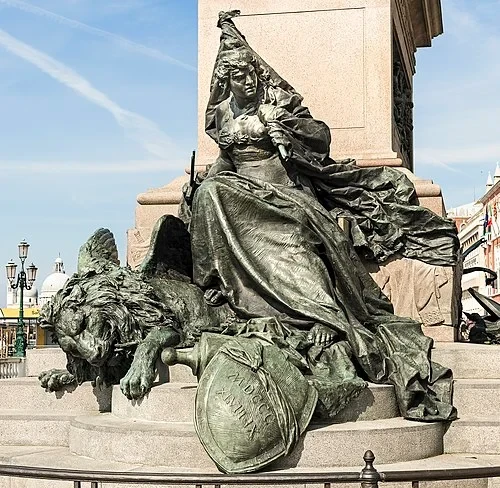 Subjugated Venice
As you walk around to the rear of the monument, the mood shifts from triumph to sorrow. Here, you encounter the second great female allegory, representing Venice in a state of subjugation. Unlike the defiant figure at the front, this woman's posture is collapsed and heavy with grief, capturing the city's despair during the long decades it spent under foreign occupation. Her expression is one of deep mournfulness, reflecting the human cost of the failed 1848 revolution and the subsequent years of strict Austrian rule. Take a look at the symbolic items gathered at her feet. You will see a broken sword, a clear sign of military defeat and the loss of sovereignty. Her clothing is draped in a way that feels stifling rather than heroic. This side of the monument tells the 'before' story of the unification—the pain and the longing that fueled the eventual drive for independence. By placing this figure at the back, the artist creates a narrative loop: you must see the suffering of the past to truly understand the value of the liberty celebrated at the front. It is a somber reminder that the peace and unity currently enjoyed by the city were preceded by a long and difficult struggle.
Listen in the appDidier Descouens · CC BY-SA 4.0
09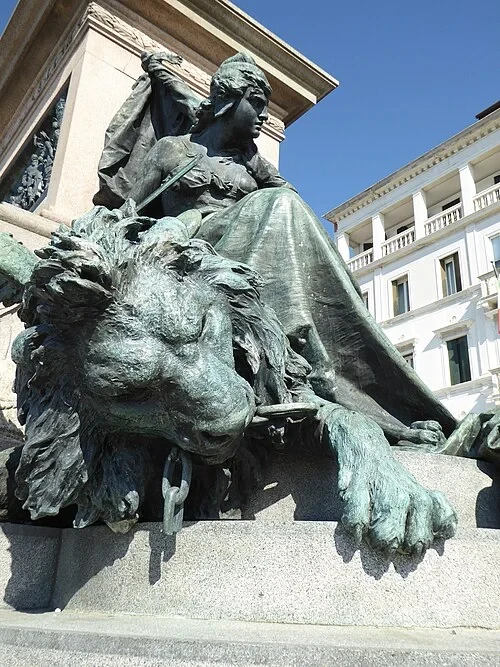 Subjugated Venice
The Captive Lion
Beneath the mournful figure of Subjugated Venice lies a second winged lion, but its appearance is strikingly different from the triumphant beast on the lagoon-facing side. This lion is shown in a state of captivity, its body coiled with tension as it literally bites at the heavy metal chains that bind it. This represents the city's frustration and its fierce, but then-thwarted, desire for freedom. Specifically, it alludes to the pain of the 1848-1849 revolution. During that time, Venice declared itself an independent republic once again, but after a heroic year-long siege, it was forced to surrender to the Austrians due to famine and disease. The image of the lion gnawing at its bonds symbolizes that revolutionary spirit that refused to be truly broken, even when suppressed by overwhelming force. The contrast between this captive, struggling animal and the roaring, free lion on the other side is the central theme of the entire monument. It creates a powerful visual metaphor for the transition from a city in chains to a city that has finally found its voice within the new Italian nation.
Listen in the appPhoto: Abxbay · CC BY-SA 4.0
10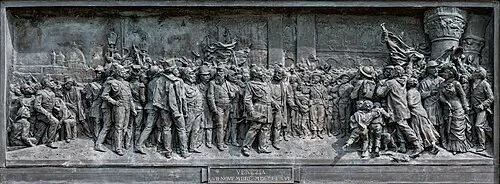 The Triumphal Entry into Venice
The Triumphal Entry
On the opposite side of the base from the battle scene, the narrative of the monument reaches its peaceful resolution. This high-relief panel depicts the actual entry of King Victor Emmanuel II into Venice on November 7, 1866. This moment occurred shortly after the city was officially handed over to the new Kingdom of Italy, marking the definitive end of Austrian control. In contrast to the chaotic energy of the Battle of Palestro, this scene is one of celebration and civic order. You can see the King welcomed by crowds of citizens, emphasizing the popular support for the new government. The relief captures a sense of relief and optimism; the war is over, and a new era has begun. This panel serves as the historical 'bookend' to the battle scene on the other side. While the first relief focused on the violence and conflict required to win independence, this one focuses on the peaceful integration of the city into the national fold. It highlights the King not just as a conqueror, but as a liberator who was welcomed by the very people he sought to unite. It is a scene of reconciliation and the birth of a shared national future.
Listen in the appDidier Descouens · CC BY-SA 4.0
- 11
Statue of Victor Emmanuel II
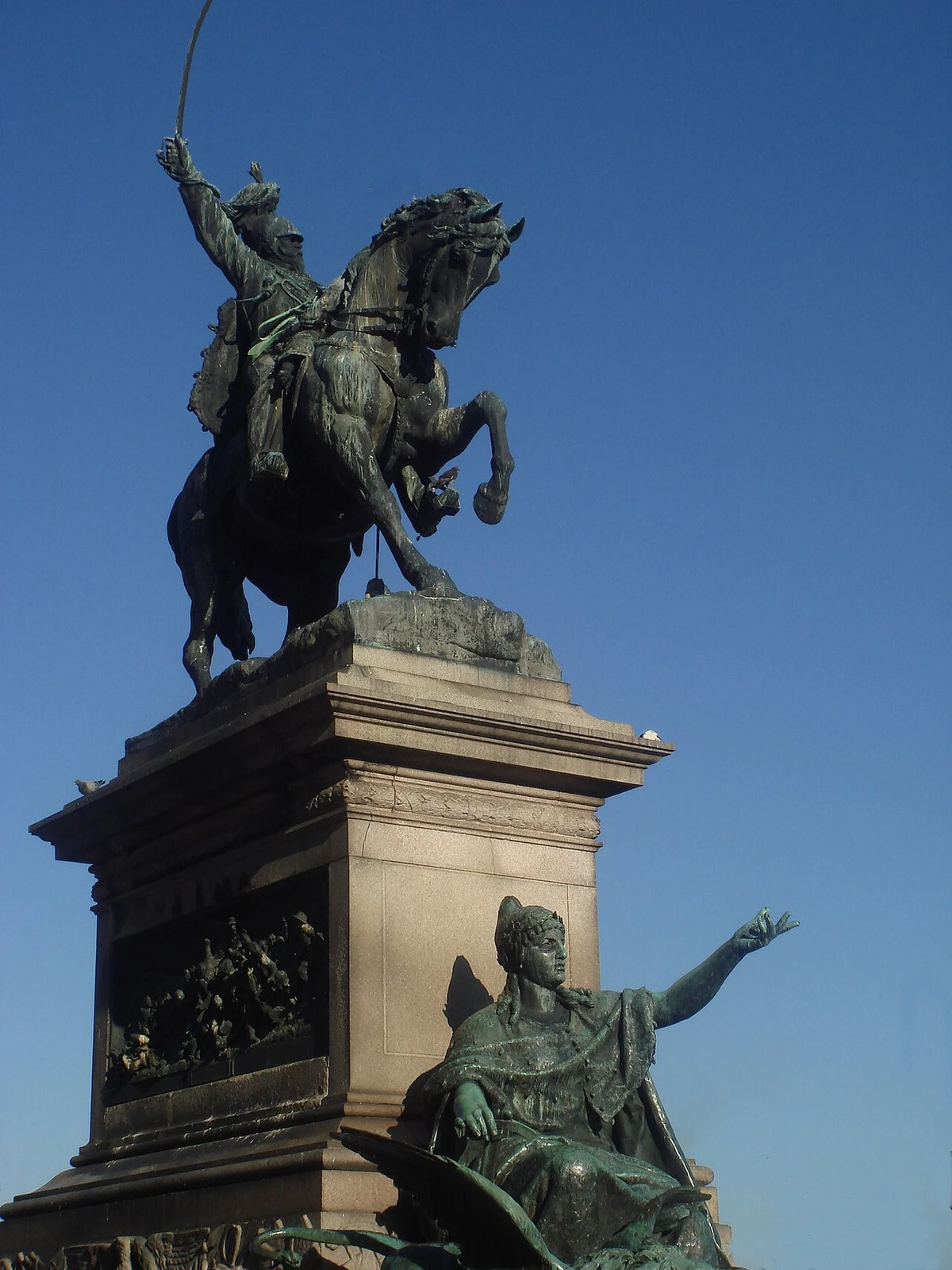
Towering above the base, the King is depicted as a powerful military leader, leading his country into a new era.
- 12
Portrait in Bronze
Detailed features and military dress highlight the King's reputation as the 'Father of the Fatherland.'
- 13
The Military Fence
The low fence surrounding the monument is a unique artwork made of interwoven weapons, representing the struggle for freedom.
- 14
Commemorative Symbols
From bronze shields to Roman lettering, the smallest details of the base serve to anchor the memory of Italy's unification.
Monumento a Vittorio Emanuele II
Frequently asked questions
How much does the guide cost?
Free app download. Listed guide price: $0.99. Guide price shown in the app. Audio guide only. Venue admission is separate.
Can I listen without internet?
Yes. Download the guide’s audio, images, and maps in the app before your visit. Your downloaded content is then available offline.
Can I listen in my language?
This audio guide is available in 15 languages, including English.
Do I need to follow a schedule?
No. This is a self-guided experience. Choose your stops, pause whenever you like, and return to a story at your own pace.
At your own pace
Explore Monumento a Vittorio Emanuele II.
Download Stanza, then search for “Monumento a Vittorio Emanuele II”.
Free app download · Guide price shown in the app
Keep exploring
Nearby audio guides
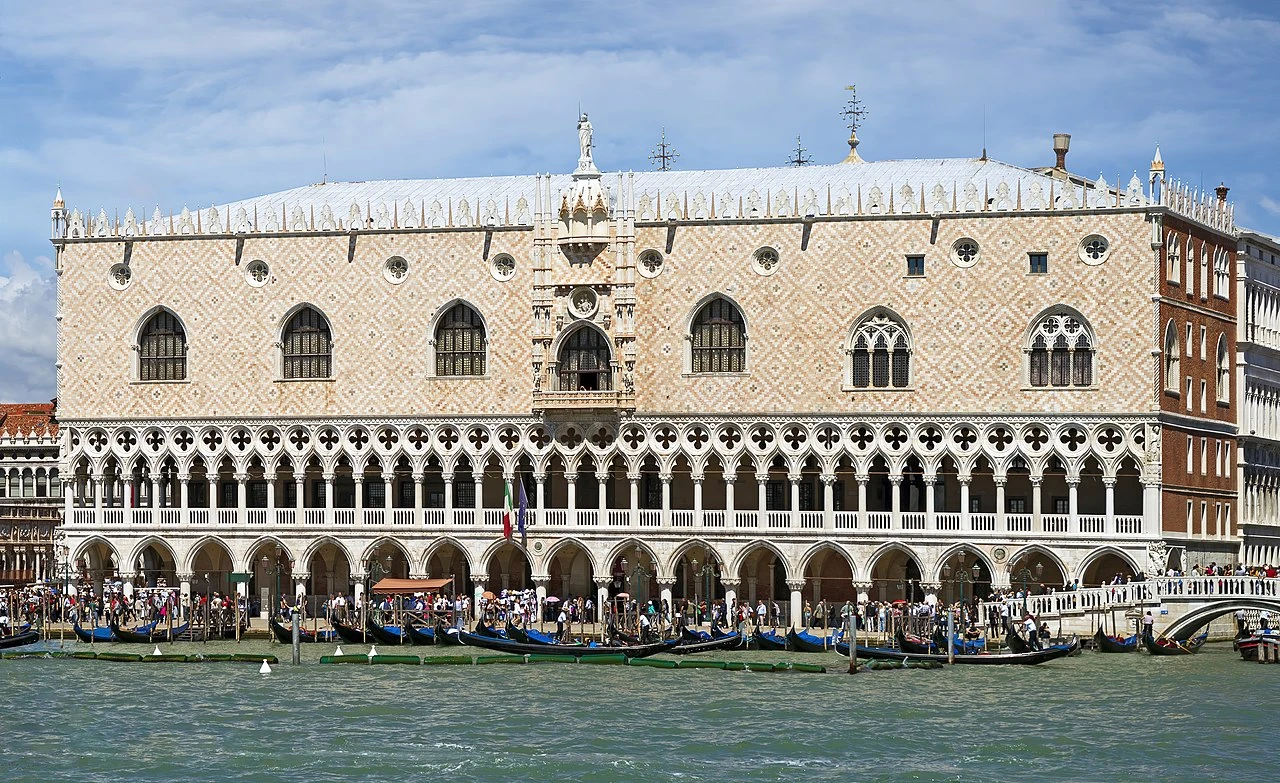
Venice · 1 km
Doge's Palace
Content & sources
Didier Descouens · CC BY-SA 4.0
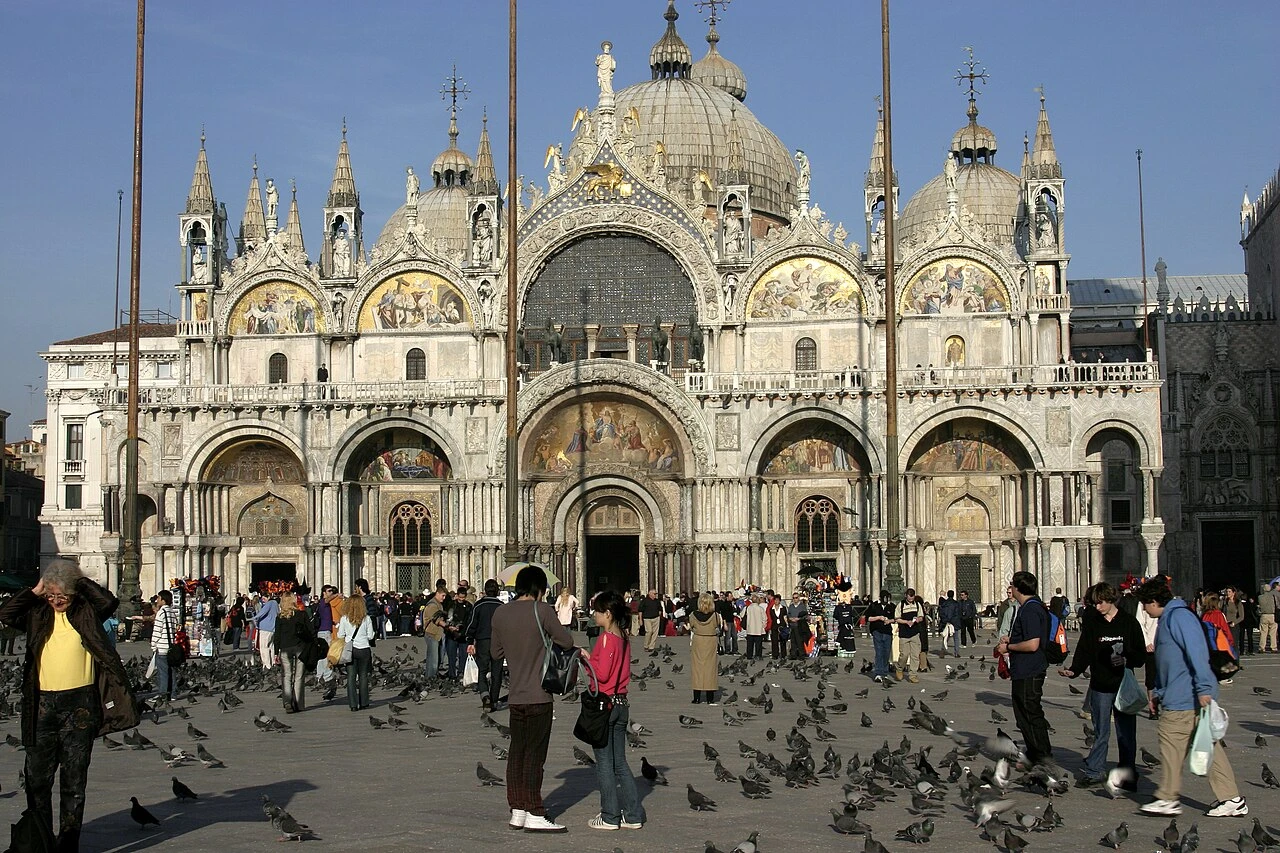
Venice · 1 km
St Mark's Basilica
Content & sources
Photo: Nino Barbieri · CC BY-SA 2.5
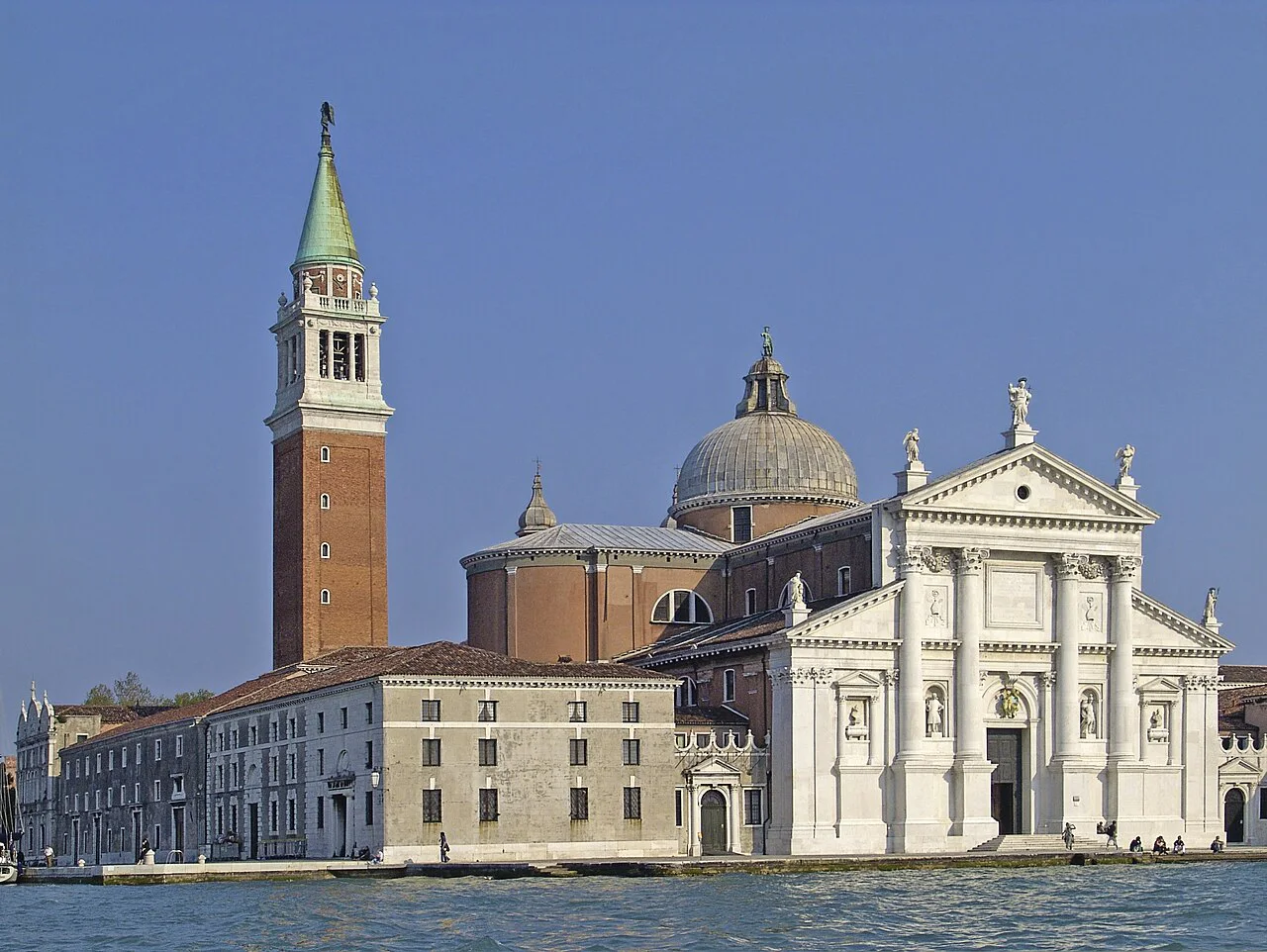
Venice · 1 km
Basilica di San Giorgio Maggiore
Content & sources
Didier Descouens · CC BY-SA 4.0
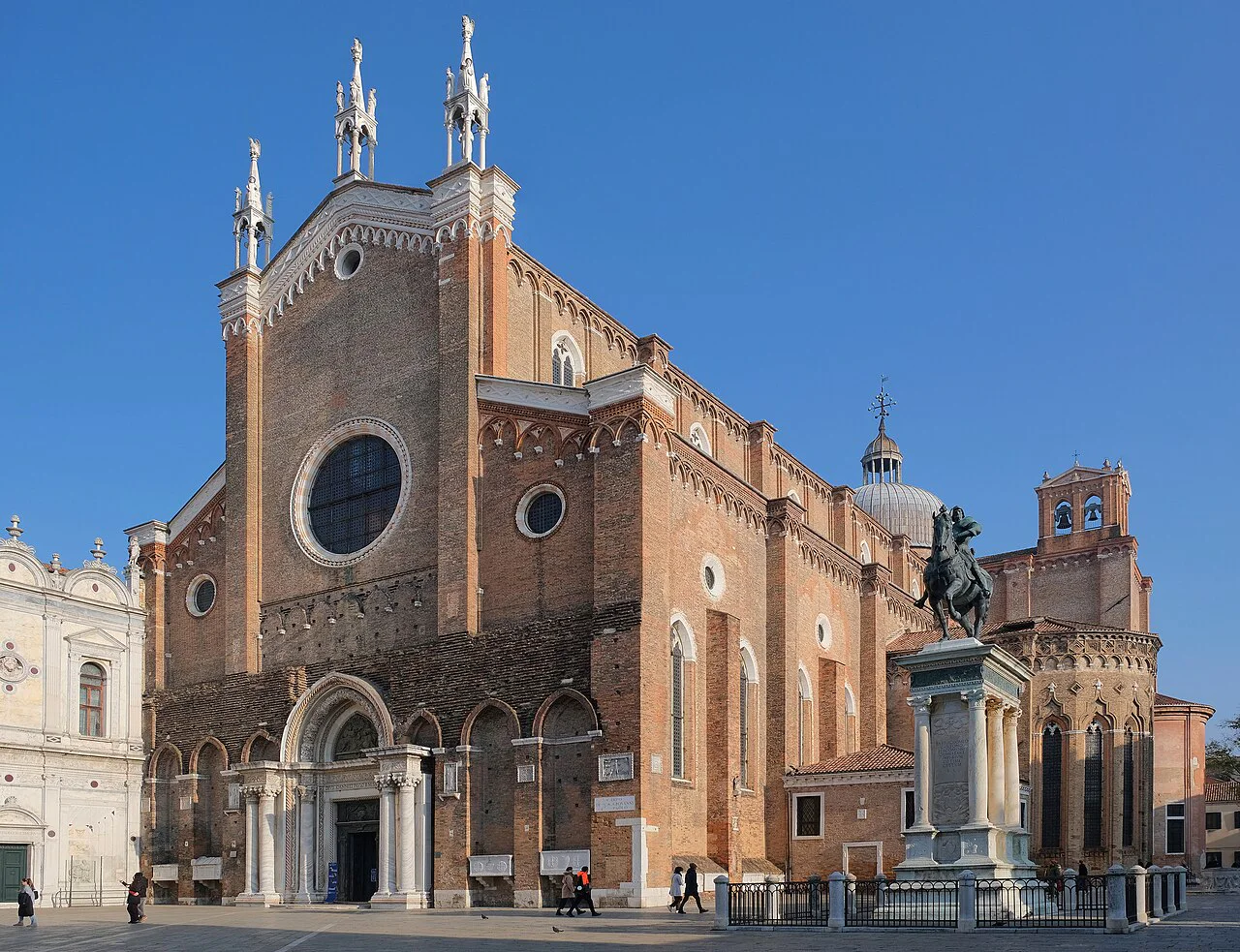
Venice · 1 km
Basilica dei Santi Giovanni e Paolo
Content & sources
kallerna · CC BY-SA 4.0