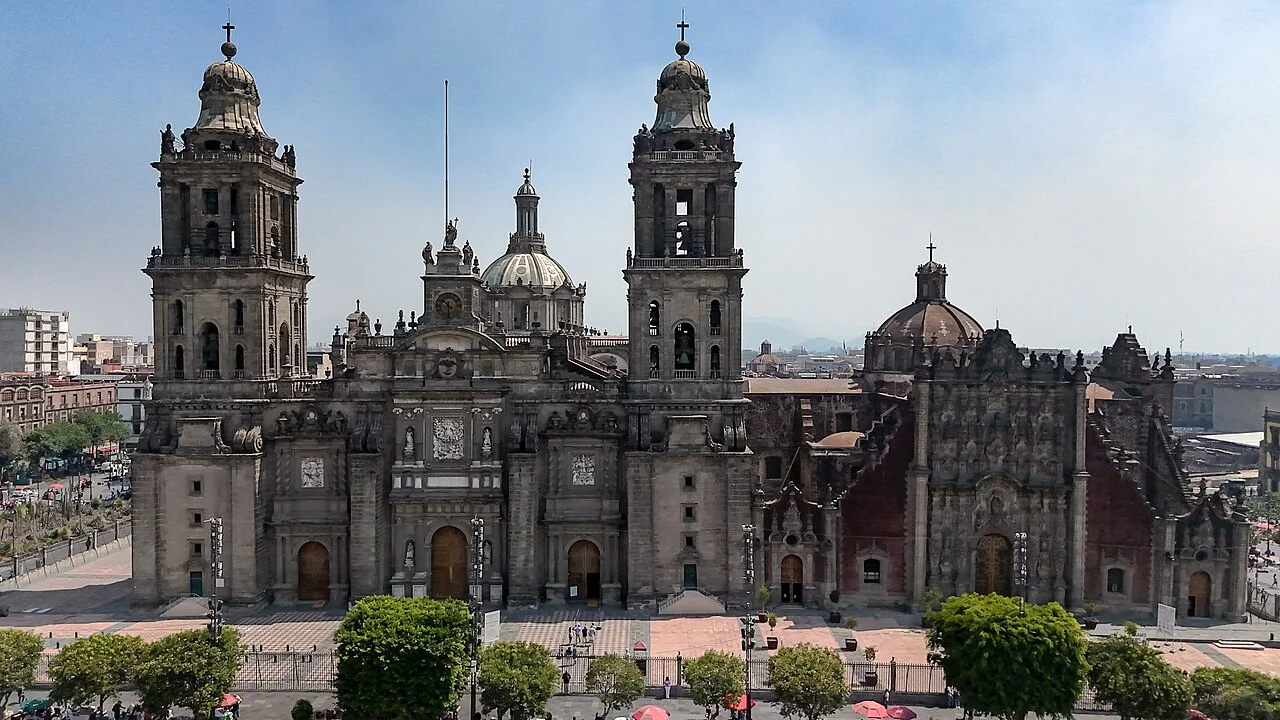
Stanza · Audio guide
Catedral Metropolitana de la Ciudad de México Audio guide
A place to remember. A story to take with you.
The Mexico City Metropolitan Cathedral is the cathedral church of the Catholic Archdiocese of Mexico. It was built in sections from 1573 to 1813 on top of the former Aztec sacred precinct.
Download Stanza, then search for “Catedral Metropolitana de la Ciudad de México”.
About the tour
One guide. Your kind of visit.
The Mexico City Metropolitan Cathedral is the cathedral church of the Catholic Archdiocese of Mexico. It was built in sections from 1573 to 1813 on top of the former Aztec sacred precinct.
Ready when you are.
- 01Get the free Stanza app.
iOS & Android
- 02Find your guide.
“Catedral Metropolitana de la Ciudad de México”
- 03Download before you go.
Works offline
Audio guide / 14 narrated stops
Inside the guide
Get to know a few of the stories before you go. Open a stop to read more.
01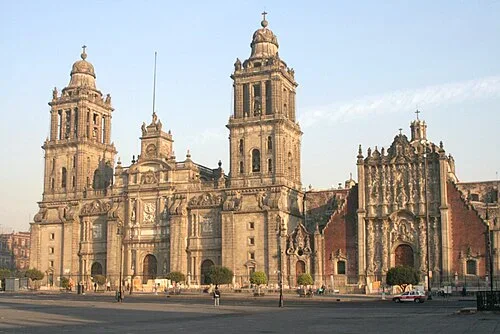 The Main Southern Facade and Zócalo PlazaThe Cathedral from the Zócalo
Welcome to the Metropolitan Cathedral of Mexico City, the seat of the Catholic Archdiocese of Mexico. It fills the whole northern side of the Zócalo, the great square of the old capital. Work began in 1573 under the Spanish architect Claudio de Arciniega, who took his inspiration from the Gothic cathedrals of Spain. The building rose in sections over nearly two and a half centuries, wrapping around an earlier church until it replaced it entirely. The ground itself carries the deepest story. The cathedral stands on the former sacred precinct of the Aztecs, close by the Templo Mayor. The researcher Manuel Rivera Cambas wrote that the Spaniards built here with the very stones of the temples, so they could lay claim to the land and its people. The first church did use stones from the destroyed temple of Huītzilōpōchtli, the war god. The story even goes that Hernán Cortés himself laid its first stone. In 1978, excavations nearby uncovered the great Coyolxauhqui monolith, which confirmed where the Templo Mayor truly stood. The cathedral, it turns out, sits just southwest of it, not directly on top. The red building beside the towers is the Sagrario, and it closes this tour.
Photo: Tetraktys · CC BY 2.5
02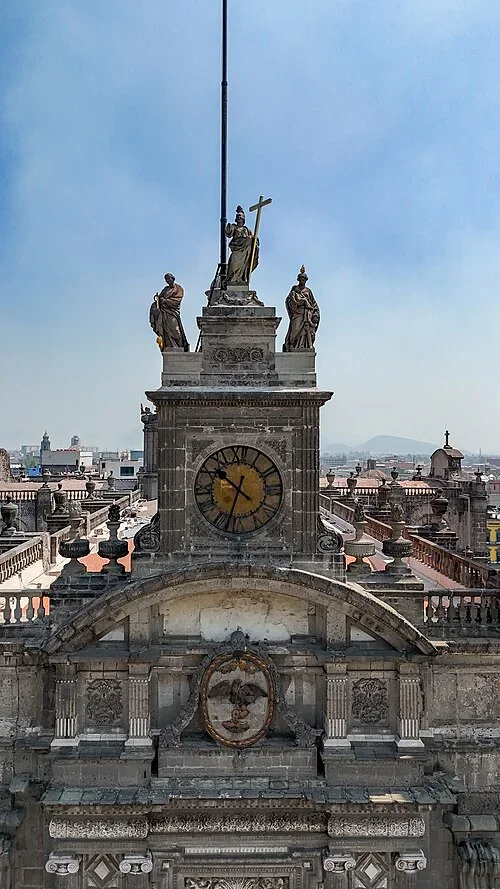 The Main Southern Facade and Zócalo PlazaThe Clock Tower and the Theological Virtues
By the late eighteenth century, the cathedral had been under construction for over two hundred years and still lacked its crowning pieces. In 1787 the Mexican architect José Damián Ortiz de Castro won the competition to direct the work on the bell towers, the main facade and the dome. He designed the towers to stand up to earthquakes, with open upper bodies and bell-shaped roofs of tezontle covered in white chiluca stone. He directed the project until his death in 1793. Manuel Tolsá, an architect and sculptor from Valencia, arrived in the country in 1791 and took over. He rebuilt a dome he found low and disproportionate, raising a much higher lantern on a circular platform. He added the high balustrade, the structure holding the clock, and the figures of the three theological virtues crowning the facade. Faith, Hope and Charity finished the job, and the cathedral was completed in 1813, two hundred and forty years after work began. The virtues had one more trial. They were taken down after the earthquake of 2017, and Hope, the only one that fell, was fully restored. All three went back in place in February 2024, with ornaments lost over two centuries replaced.
Photo: ProtoplasmaKid · CC BY-SA 4.0
03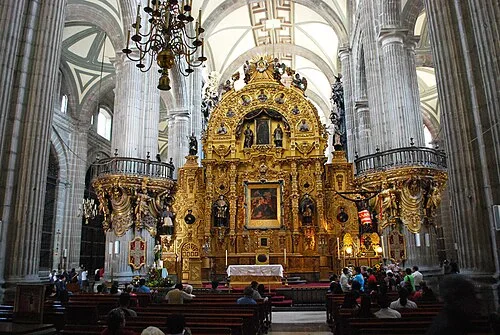 The Altar of Forgiveness and EntrywayThe Altar of Forgiveness
The gilded altar at the head of the central nave is the Altar of Forgiveness, the first one a visitor meets on entering. It was the work of the Spanish architect Jerónimo de Balbás, and it carries a first. Its estípite columns, pilasters shaped like inverted tapering triangles, appeared here for the first time in the Americas. The name has two explanations attached to it. One tradition holds that people condemned by the Spanish Inquisition were brought to this altar to ask forgiveness in the next world before their execution. The other story belongs to a painting nearby, and it comes next. The altar has also survived its own disaster. On the evening of 17 January 1967, an electrical short circuit started a fire that did extensive damage through the cathedral. Here, much of the structure and decoration was harmed, and three paintings were lost, including works by Alonso López de Herrera and Simón Pereyns. The altar was restored after the fire.
Listen in the appPhoto: AlejandroLinaresGarcia · CC BY-SA 4.0
04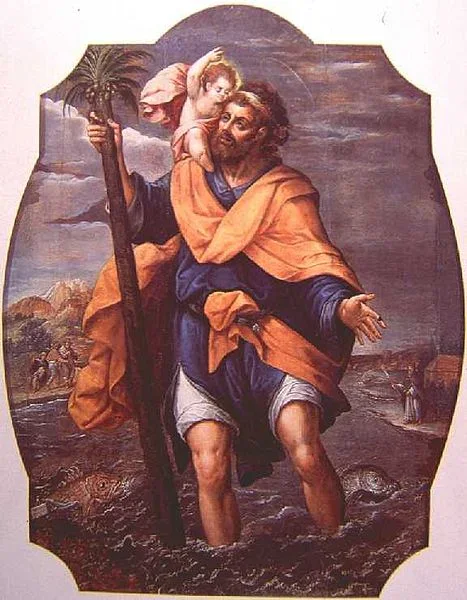 The Altar of Forgiveness and EntrywaySaint Christopher by Simón Pereyns
Simón Pereyns painted many of the works of this cathedral, and this Saint Christopher dates from 1588. The saint wades through the water carrying the Christ child on his shoulder, a palm staff in his hand. Pereyns is remembered here for something stranger than his paintings. Despite all his work for the cathedral, he was accused of blasphemy. The story is told that while he sat in jail, he painted an image of the Virgin Mary so beautiful that his crime was forgiven. That, people say, is the second reason the Altar of Forgiveness carries its name, and it stands just beside that altar's gilded columns.
Listen in the appSimon Pereyns · Public domain
05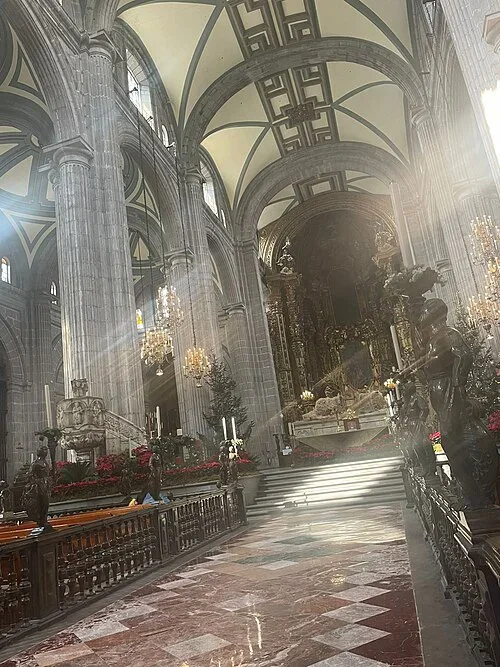 The Central Nave and Sinking FoundationThe Central Nave
The central nave runs the length of the building, and it reads like a textbook of styles. Construction took just under two hundred and fifty years, so nearly every major architect, painter, sculptor and gilding master of the viceroyalty worked on the cathedral at some point. Each generation built in the style of its day. The ribbed Gothic vaults belong to the earliest plans, and Baroque, Churrigueresque and Neoclassical work joined them as those fashions arrived. The result is a single building wearing four centuries of taste at once. The long project also pulled people together. It drew on generations and social classes, from church and government authorities to the different religious orders, all with a share in the work.
Listen in the appPhoto: Elynmd3 · CC BY 4.0
06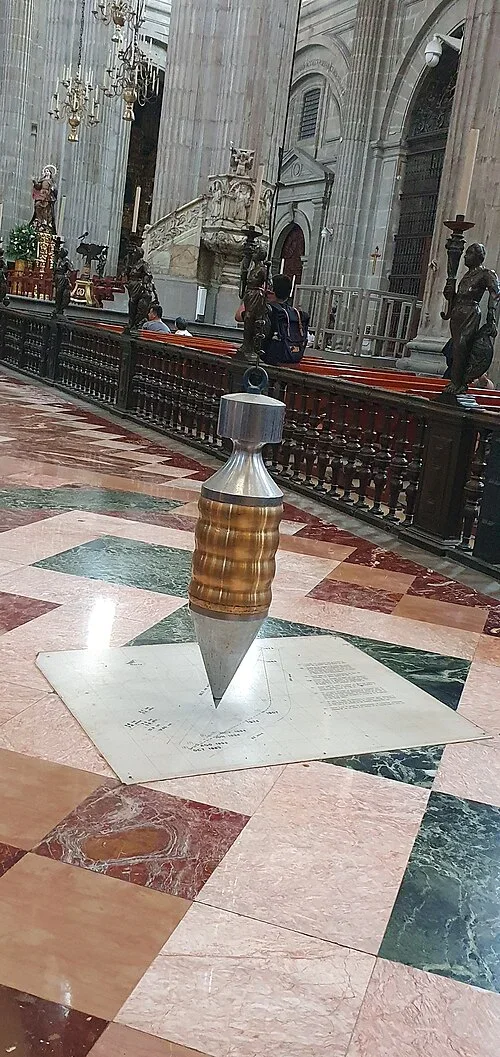 The Central Nave and Sinking FoundationThe Pendulum and the Sinking Cathedral
The heavy brass pendulum resting on the marked marble plate points at the cathedral's quiet battle with the ground. The building has been sinking into the old lakebed from the day it was built, along with the rest of the city. Then the sinking sped up. A megalopolis of over eighteen million people drew its water from underground, the water tables dropped, and in the late twentieth century the descent accelerated. Worse, different sections sank at different rates, and the bell towers tilted dangerously despite work done in the 1970s. The World Monuments Fund put the cathedral on its 1998 Watch list. Between 1993 and 1998, engineers excavated beneath the building, dug shafts into the soft ground and filled them with concrete to give the whole structure a firmer base. The work did not stop the sinking. It did correct the tilting towers and left the cathedral sinking evenly, as one piece. The Spaniards had understood the soft soil from the start. Simply laying the foundation took forty-two years.
Listen in the appJosé Luiz · CC BY-SA 4.0
07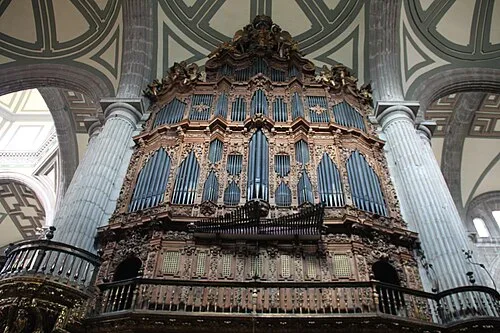 The Central Choir and Nassarre OrgansThe Nassarre Organ
Above the walls of the choir stand two of the great musical machines of the Americas. Both organs were made in Mexico by José Nassarre, a Spaniard by birth, and completed by 1736, incorporating parts of a 17th-century instrument. Together they are the largest 18th-century organs in the Americas, one on the epistle side and one on the gospel side. The fire of 1967 severely damaged both, partially melting their pipes, and they were restored in 1978. Time caught up with them again, and both fell into disrepair. The gospel organ went back to the workshop from 2008 to 2009, and the epistle organ followed, both restored by Gerhard Grenzing. Today both are playable. The restorations of those decades also turned up surprises. Restorers rescued fifty-one paintings from behind the Altar of Forgiveness, and inside one of the organs they found a copy of Hernán Cortés's 1529 nomination as Governor General of New Spain.
Listen in the appGary Todd from Xinzheng, China · CC0
08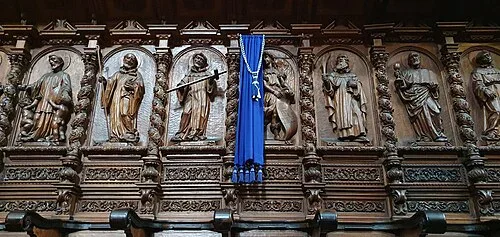 The Central Choir and Nassarre OrgansThe Choir Stalls
The choir sits in the central nave between the main door and the high altar, built in a semicircle like the choirs of Spanish cathedrals. This is where the priests and the choral group sing the psalms. Juan de Rojas built it between 1696 and 1697. Its sides carry fifty-nine reliefs of saints, carved in mahogany, walnut, cedar and tepehuaje, a wood native to Mexico. The carved figures in these stalls each hold the marks of their office, from keys to books to staffs. The railing around the choir traveled farther than any of them. It was made in 1722 by Sangley Queaulo in Macao, at the edge of China, and placed in the cathedral eight years later.
Listen in the appJosé Luiz · CC BY-SA 4.0
09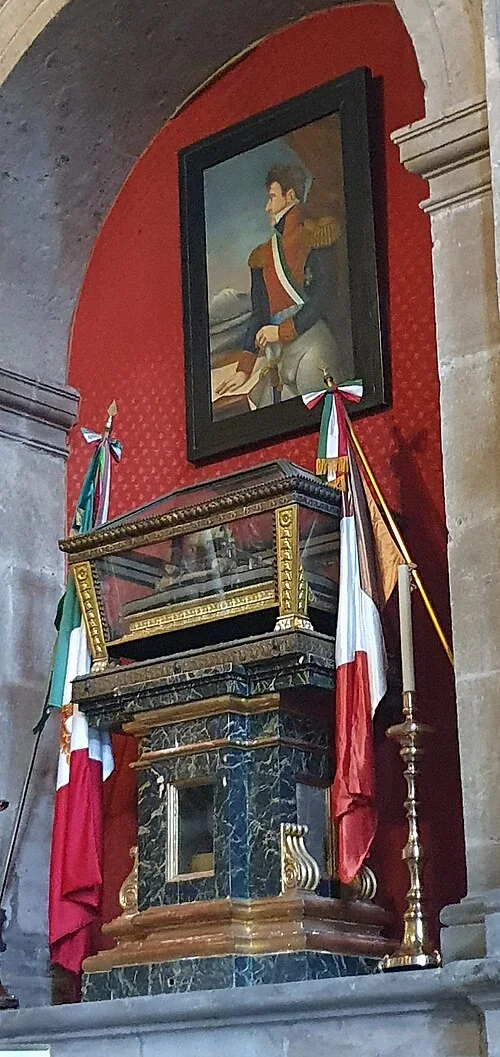 The Lateral Chapels of Saint Joseph and San FelipeThe Urn of Agustín de Iturbide
This chapel was finished during one of the earliest stages of the cathedral's construction, and it is dedicated to Philip of Jesus. He was a friar from New Spain crucified in Japan, and the only martyr the land produced. The chapel holds a second kind of history in the glass urn beneath the portrait. Agustín de Iturbide ruled Mexico as emperor from 1822 to 1823, and he was crowned emperor in this cathedral in 1822, in the presence of the bishops of Puebla, Guadalajara, Durango and Oaxaca. His remains rest here. In 1838 they were brought back in a state funeral, parading across the whole plaza to reach this chapel. In September 2010, during the bicentennial of the War of Independence, a liturgical celebration was held in the cathedral with his remains present. The Mexican flags flanking the urn honor his part in winning the country's independence.
Listen in the appJosé Luiz · CC BY-SA 4.0
10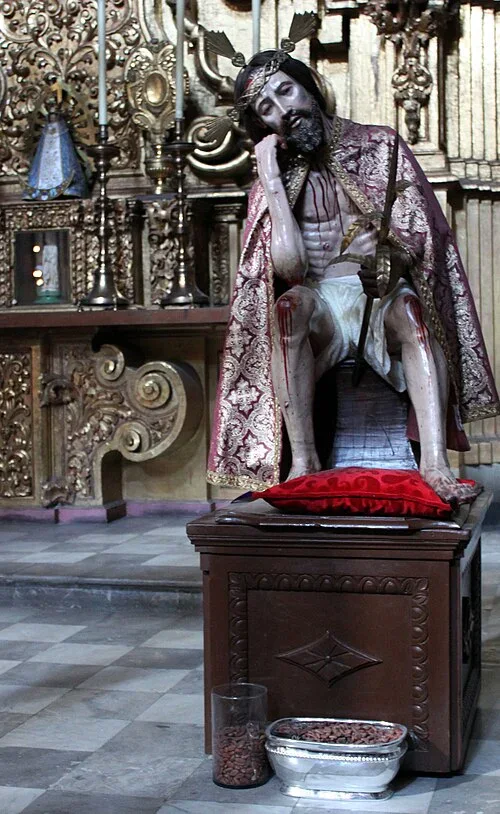 The Lateral Chapels of Saint Joseph and San FelipeThe Lord of the Cacao
In the Chapel of Saint Joseph stands an image of Christ known as the Lord of the Cacao, most likely from the 16th century. The name comes from a colonial-era practice. Many indigenous worshippers left their alms in cacao beans, which gave the statue its name. The small trays of beans set at the base of the statue carry on the memory of that custom. Behind the figure, the gilded altarpiece once belonged to the Church of Our Lady of Monserrat, and the chapel itself was built between 1654 and 1660.
Listen in the appPhoto: Anagoria · CC BY 3.0
Catedral Metropolitana de la Ciudad de México
Frequently asked questions
How much does the guide cost?
Free app download. Listed guide price: $0.99. Guide price shown in the app. Audio guide only. Venue admission is separate.
Can I listen without internet?
Yes. Download the guide’s audio, images, and maps in the app before your visit. Your downloaded content is then available offline.
Can I listen in my language?
This audio guide is available in 15 languages, including English.
Do I need to follow a schedule?
No. This is a self-guided experience. Choose your stops, pause whenever you like, and return to a story at your own pace.
At your own pace
Explore Catedral Metropolitana de la Ciudad de México.
Download Stanza, then search for “Catedral Metropolitana de la Ciudad de México”.
Free app download · Guide price shown in the app
Keep exploring
Nearby audio guides
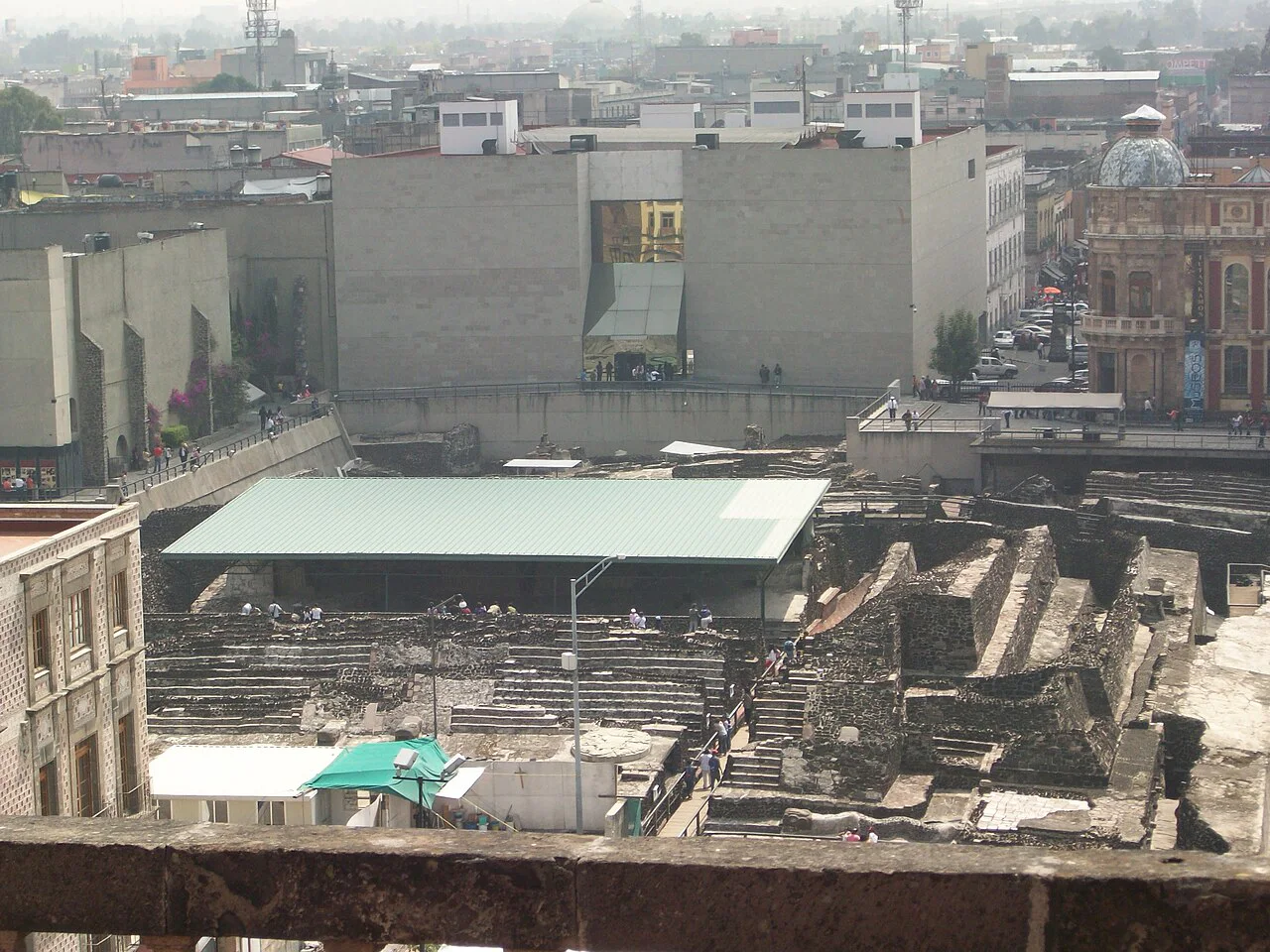
Mexico City · 1 km
Templo Mayor
Content & sources
Photo: GAED · CC BY-SA 3.0
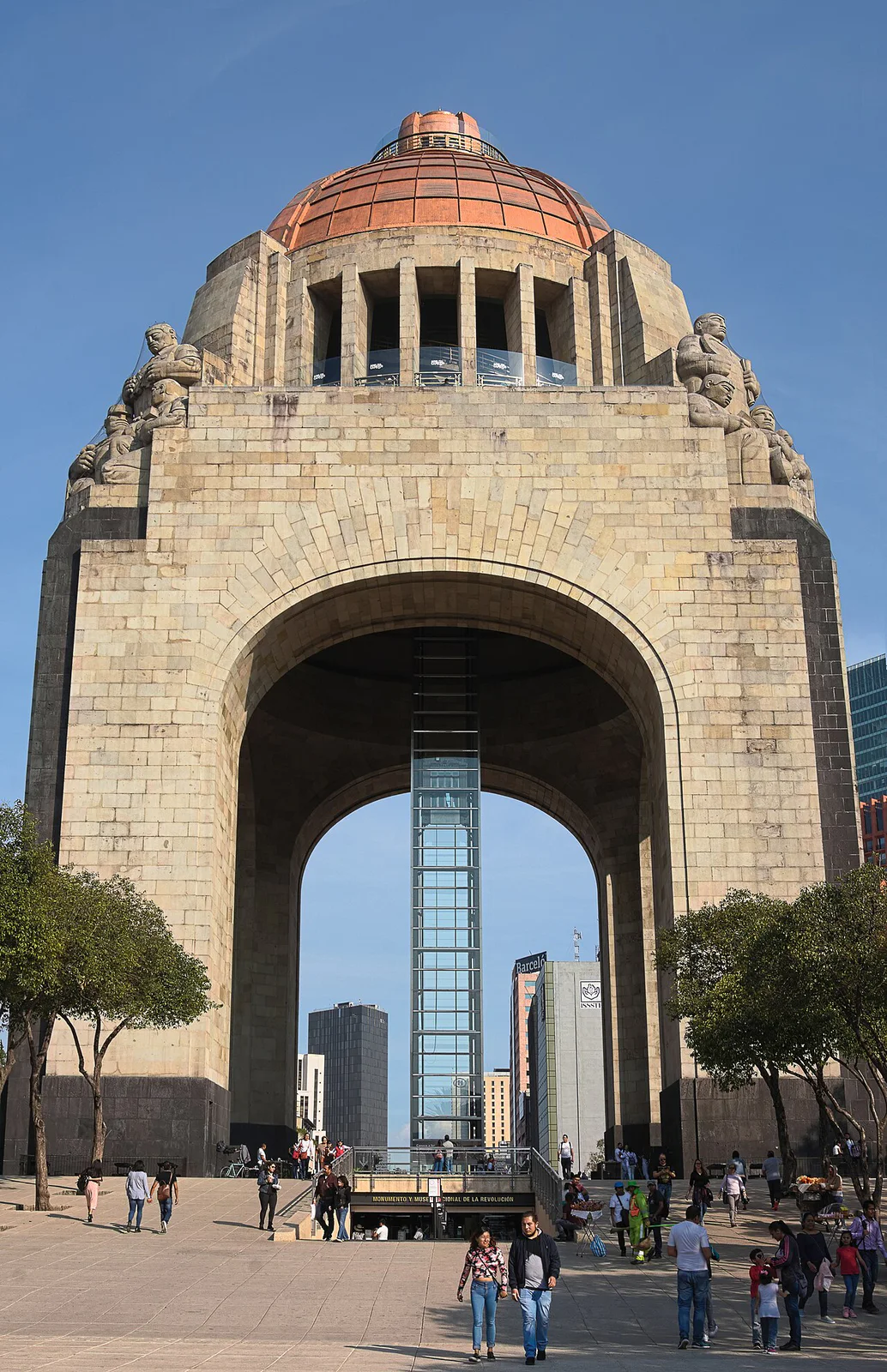
Mexico City · 2 km
Monumento a la Revolución
Content & sources
Carlos Valenzuela · CC BY-SA 4.0
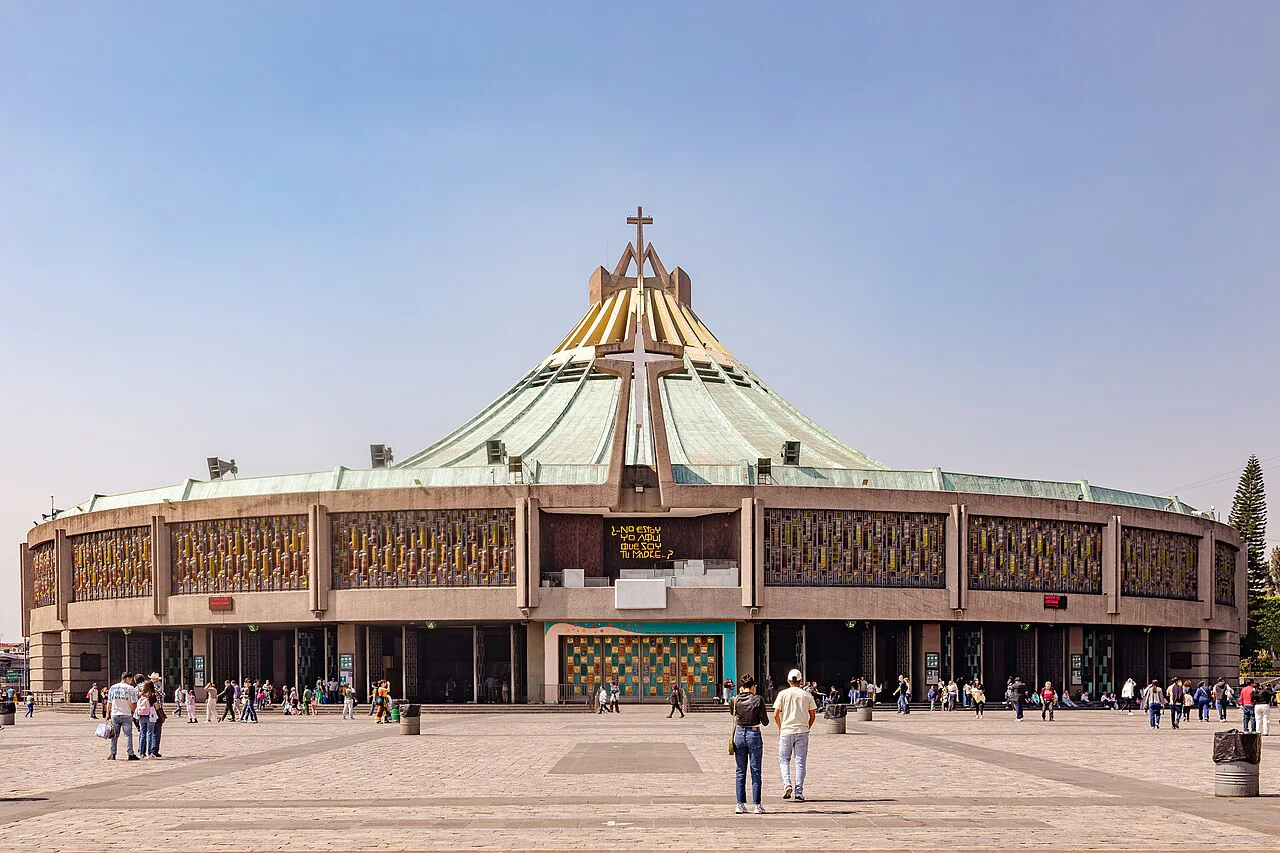
Mexico City · 6 km
Basílica de Santa María de Guadalupe
Content & sources
Photo: Arne Müseler · CC BY-SA 3.0 de
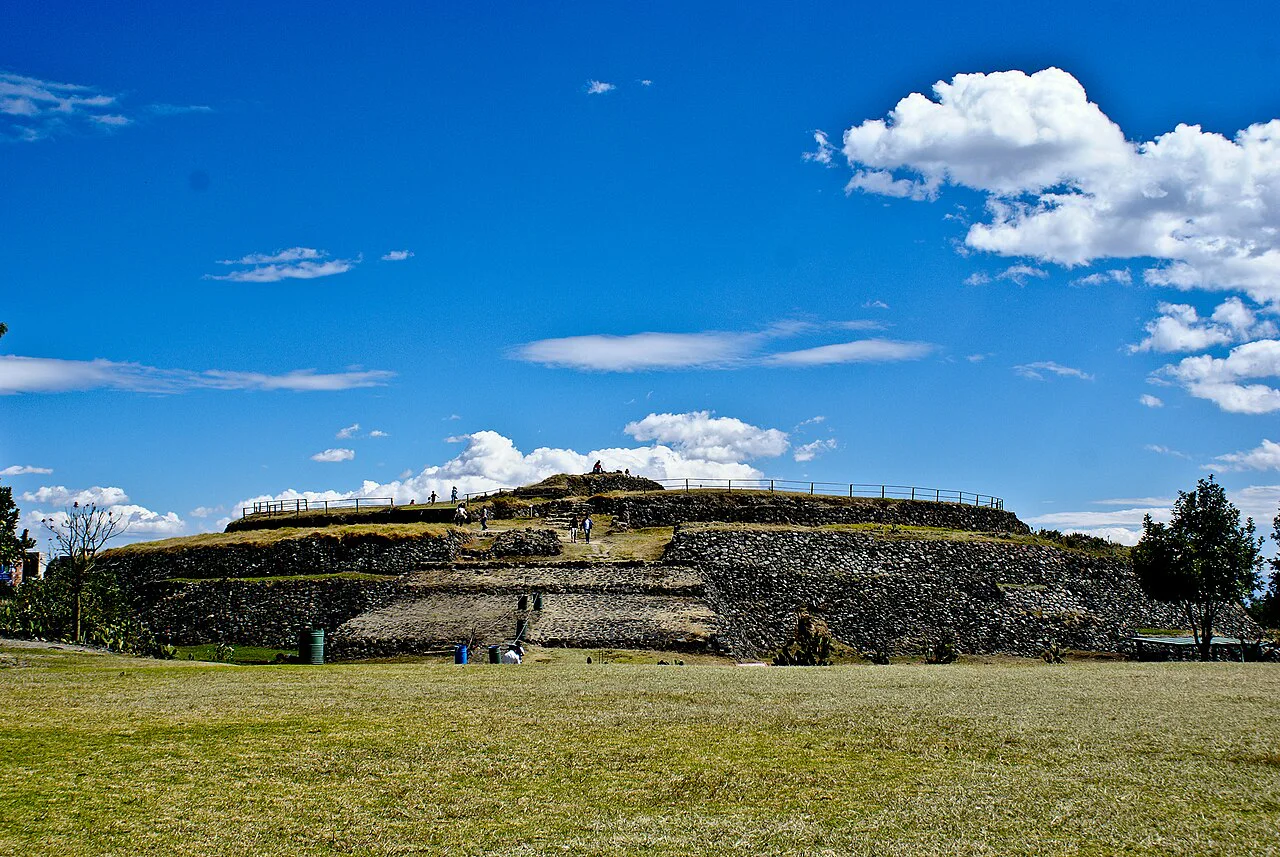
Mexico City · 16 km
Cuicuilco
Content & sources
Photo: Felipe huerta hdez · CC BY-SA 3.0