Stanza · Audio guide
Monumento a la Revolución Audio guide
A place to remember. A story to take with you.
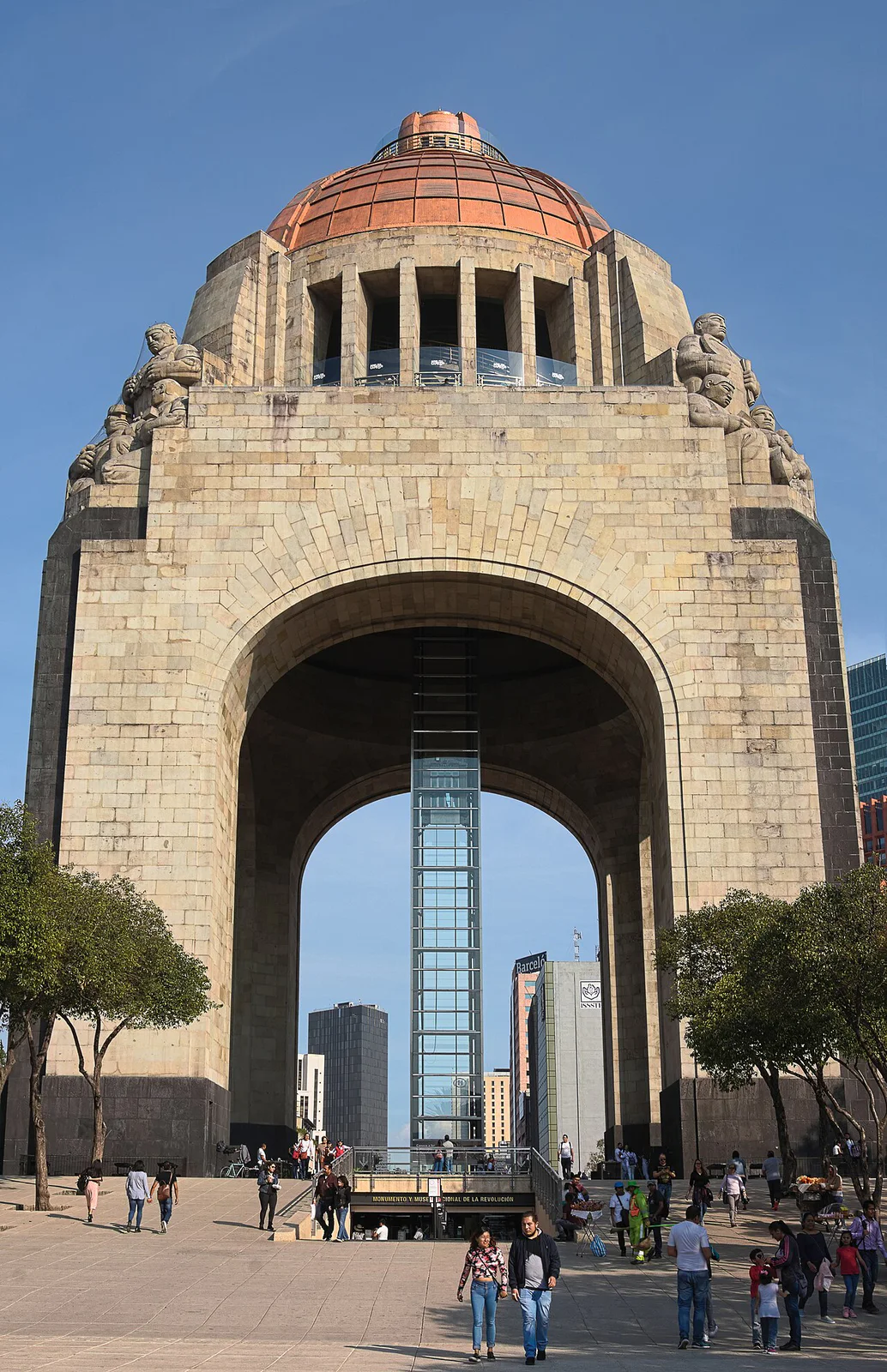
The Monument to the Revolution is a memorial arch commemorating the Mexican Revolution. It is the tallest triumphal arch in the world, standing 67 meters high.
Download Stanza, then search for “Monumento a la Revolución”.
About the tour
One guide. Your kind of visit.
The Monument to the Revolution is a memorial arch commemorating the Mexican Revolution. It is the tallest triumphal arch in the world, standing 67 meters high.
Ready when you are.
- 01Get the free Stanza app.
iOS & Android
- 02Find your guide.
“Monumento a la Revolución”
- 03Download before you go.
Works offline
Audio guide / 11 narrated stops
Inside the guide
Get to know a few of the stories before you go. Open a stop to read more.
01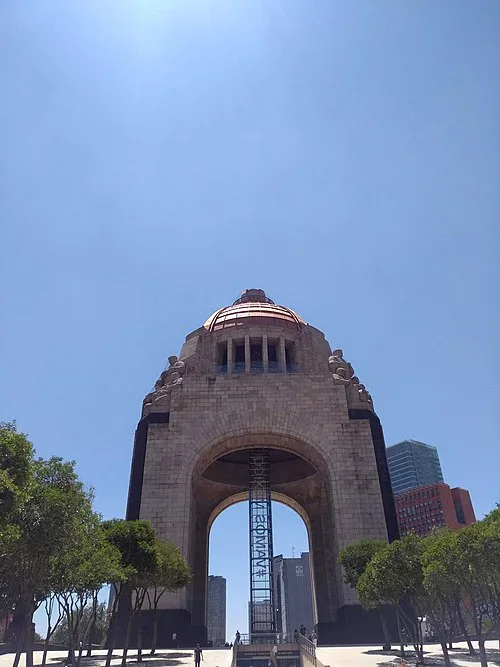 Plaza de la República & Grand ArchThe Monument from Plaza de la República
Welcome to the Monumento a la Revolución, in Mexico City's Plaza de la República. At sixty-seven meters, this is the tallest triumphal arch in the world. The arch took twenty-eight years to build, from 1910 to 1938, and its story runs in two halves. It began as a legislative palace for Porfirio Díaz, the dictator who ruled Mexico for decades. Then the revolution overthrew him, and his unfinished palace became a monument to the men who brought him down. Today it is also a mausoleum, holding several presidents of Mexico in its pillars. Below ground there is a museum devoted to the revolution itself, and at the top a dome and an observation deck. This tour follows the whole arc, from the palace dream to the fountains in the plaza.
Photo: Ale.49paez · CC BY-SA 4.0
02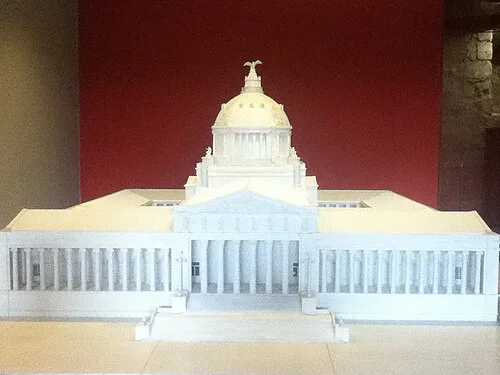 Underground National Museum of the RevolutionModel of the Federal Legislative Palace
Under the monument, in the museum, sits a white model of a palace that never existed. This is the Federal Legislative Palace, the building this monument was first meant to be. President Porfirio Díaz laid the first stone on the twenty-third of September, 1910, during the centennial celebrations of Mexican Independence. He had hired a French architect, Émile Bénard, who designed a neoclassical palace with what the plans called characteristic touches of the French Renaissance. The message was deliberate. Mexico wanted to show itself as an advanced nation, so the facades were to be Italian marble and Norwegian granite, over an internal structure of iron. The building would have held the chambers of the deputies and senators. Díaz was ousted in May 1911, but President Francisco Madero kept the project alive. When Madero was murdered in 1913, the work was cancelled and left to stand unfinished.
Photo: Luicheto · CC BY-SA 3.0
03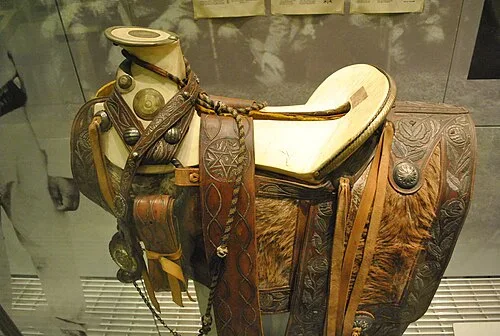 Underground National Museum of the RevolutionNational Museum of the Revolution - Villa's Riding Saddle
The basement of this monument hides a full museum of Mexican history. The National Museum of the Revolution opened on the twentieth of November, 1986. Its permanent exhibition is called Sixty-three Years in the History of Mexico, and it runs from 1857 to 1920. That span takes in the Constitution of 1857 at one end and the presidency of Venustiano Carranza at the other, with the revolutionary years at its heart. More than four hundred pieces fill the galleries, among them insignias, uniforms, flags and official documents. One of the most striking objects is a riding saddle that belonged to Francisco Villa, tooled leather and metal fittings, the gear of a man who commanded armies from horseback. Villa's own story reaches further than this display case. It returns later in the tour, in one of the monument's pillars.
Listen in the appPhoto: ProtoplasmaKid · CC BY-SA 3.0
04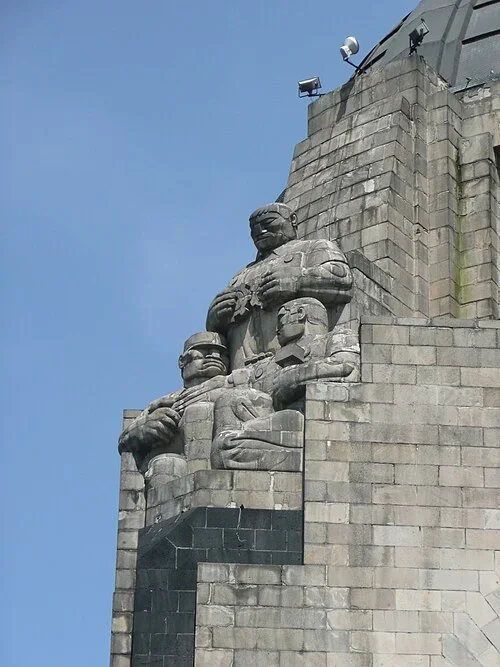 Art Deco Sculptures & The Revolutionary CryptsOliverio Martínez's Monumental Sculptures
The great stone figures at the base of the arch follow a rule that sounds strange at first. No person appears in them. When the sculptural program was called for, on the twelfth of September, 1933, the architect Carlos Obregón Santacilia set down exactly what the groups should represent. Two social processes, the Independence and the Reform Laws. And two achievements of the Revolution, the agrarian laws and the labor laws. The instruction was explicit: no individual character was to be depicted. The Mexican sculptor Oliverio Martínez designed the four groups, with Francisco Zúñiga working as one of his assistants. Their figures are heavy, stylized and monumental, carved in the severe manner the era demanded. The Revolution was to be remembered as a set of principles, not as a gallery of heroes. The mausoleum beneath these stones would quietly break that rule.
Listen in the appRandal Sheppard · CC BY-SA 2.0
05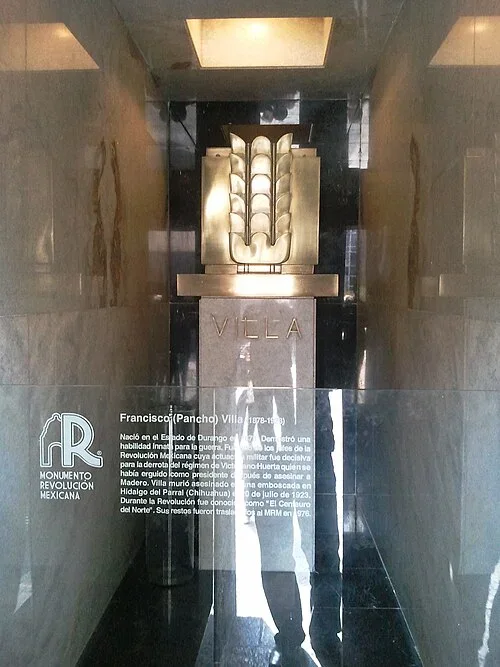 Art Deco Sculptures & The Revolutionary CryptsThe Crypt of Pancho Villa
Inside each of the four pillars of this monument lie the remains of men who fought the Revolution, and sometimes each other. Francisco Madero, Venustiano Carranza, Pancho Villa, Plutarco Elías Calles and Lázaro Cárdenas all rest here. Villa is the only one who was never president. He was assassinated in 1923 in Parral, in the state of Chihuahua, and his remains were brought here in 1976 in a large public ceremony. The company he keeps is remarkable. Carranza and Villa fought each other bitterly during the Revolution. Calles hated Villa, and he likely ordered the assassination. Cárdenas, in turn, sent Calles into exile. Men who hated one another in life now share a mausoleum, part of the state's effort to unify the Revolution into a single story. One hero is missing. Emiliano Zapata lies in Cuautla, in his home state of Morelos, because his family has resisted every effort to move him. Carranza, buried in these very columns, ordered the ambush that killed him.
Listen in the appRicardo Cubias · CC BY-SA 3.0
06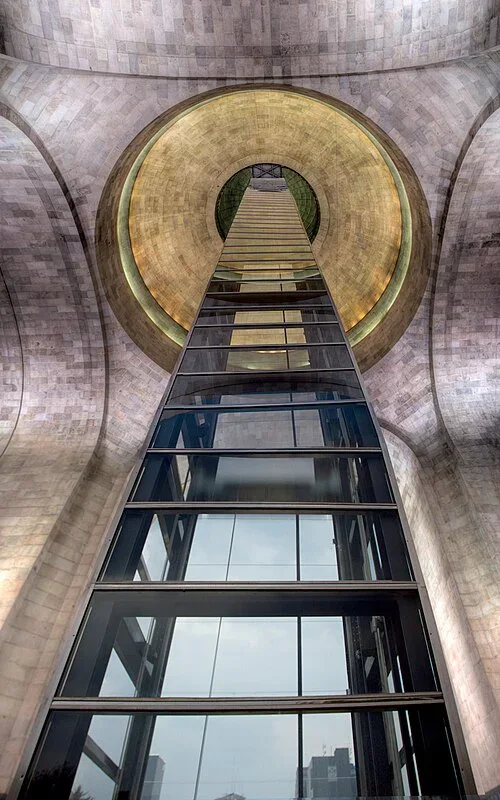 Central Panoramic Glass ElevatorThe Central Glass Elevator
The glass elevator rising through the open center of the arch is the newest way up. It was installed in 2010, when the observation deck reopened to the public, and it climbs straight through the vault toward the dome. It was not the first lift here, and not nearly the strangest. One of the columns still preserves the so-called presidential elevator, which once carried visitors up to the first and second cupolas. And there was another, built by Otis, that made a journey no ordinary elevator could. It started at the top of the presidential staircase, stopped at the exterior mirador and at the level of the aspilleras, and then curved upward on wooden rollers, riding along the steel structure between the two copper domes. Its destination was the small lantern at the very top of the monument.
Listen in the appCarlos Adampol Galindo from DF, México · CC BY-SA 2.0
07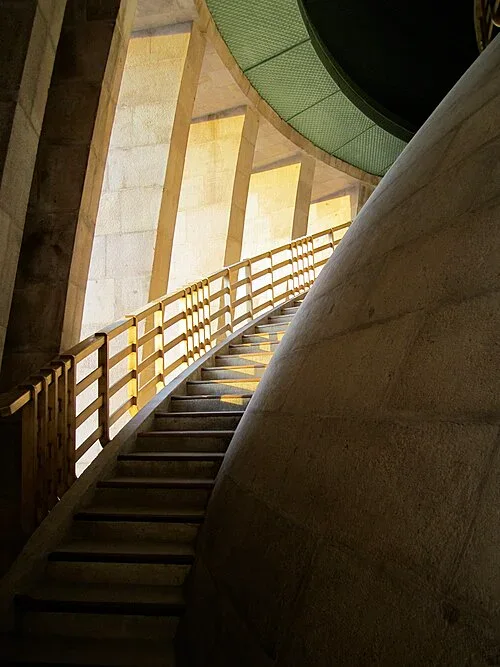 The Double Dome & Steel SkeletonThe Helical Staircase and Inner Dome
The dome of this monument is really two domes, one inside the other. Four great arches carry the whole structure at a height of twenty-six meters. The inner dome is clad in cantera, the pale Mexican volcanic stone, while the outer one is covered in copper, weathered to a green patina. A double helicoidal staircase winds around the inner stone dome, and climbing it feels like walking between the two shells. The stair ends at a deambulatorio, a walkway that leads onto a terrace serving as an internal mirador. Below that terrace, the aspilleras open into the cupola, tall openings eight meters high that let daylight pour down into the heart of the monument. From the walkway, the underside of the copper dome is visible at close range, hammered sheet by sheet.
Listen in the appMonumento a la Revolución Mexicana · FAL
08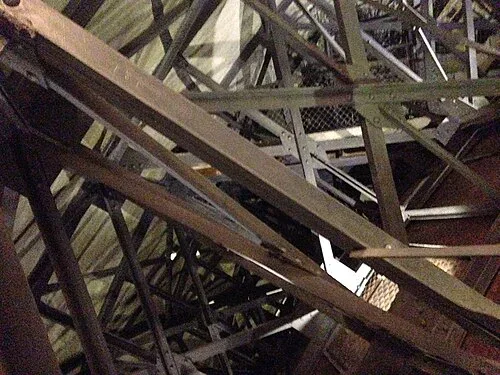 The Double Dome & Steel SkeletonThe Repurposed Steel Skeleton
The raw steel ribs visible between the two domes are the oldest part of this monument, and they tell the whole story of its second life. The structure was fabricated in the United States and shipped to Mexico, where it was set on a bed of seventeen thousand wooden piles, driven down through the unstable ground of the old lakebed. Then the Revolution came, and the half-built palace stood abandoned for two decades. During the presidency of Lázaro Cárdenas, the architect Carlos Obregón Santacilia proposed converting the empty shell of Bénard's dome into a monument to the heroes of the Revolution. The plan was approved, and the conversion began, building over the existing cupola in a blend of Art Deco and Mexican socialist realism. Twenty-nine steel ribs hold six hundred copper panels, each hammered by hand and made to be removable. A steel ring at the top compresses the whole system. The work was completed in 1938.
Listen in the appPhoto: ProtoplasmaKid · CC BY-SA 4.0
09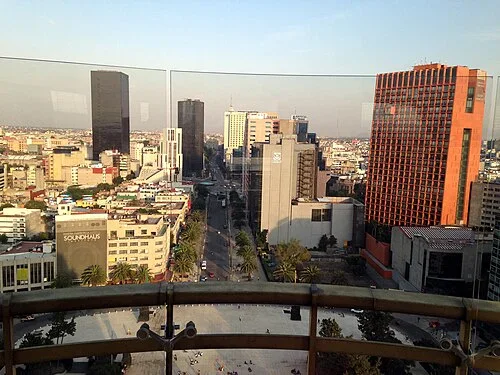 Observation Deck & Copper LanternThe Mirador - Mexico City from the Lantern
From the top of the arch, the city opens out in every direction, and the view toward the east takes in the great avenue and the towers of the center. This mirador has had two lives. It stayed open to the public for three decades, then closed, and reopened again in 2010. Painters have prized this vantage point too. From here, Juan O'Gorman took the perspective for his painting La ciudad de México, completed in 1949, a sweeping portrait of the capital seen from above. It is a rare thing to stand where a painter stood and see the same city spread out, more than seventy years of growth included.
Listen in the appPhoto: ProtoplasmaKid · CC BY-SA 4.0
10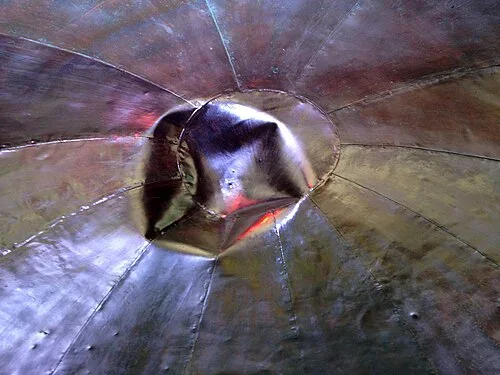 Observation Deck & Copper LanternThe Lantern and the Lightning Dent
At the very top of the monument sits the linternilla, the little lantern that crowns the whole structure. In Carlos Obregón Santacilia's original project, it had a job to do. It was meant to work as a lighthouse for the city, throwing an enormous beam of light over Mexico City. That plan was never carried out. The lantern does carry one mark of the sky, though. A lightning bolt struck the monument back when it had no lightning rod, and it left a dent in the copper that is still there, a soft dimple pressed into the metal near the crown. The scar has outlasted the lighthouse dream.
Listen in the appPhoto: ProtoplasmaKid · CC BY-SA 4.0
Monumento a la Revolución
Frequently asked questions
How much does the guide cost?
Free app download. Listed guide price: $0.99. Guide price shown in the app. Audio guide only. Venue admission is separate.
Can I listen without internet?
Yes. Download the guide’s audio, images, and maps in the app before your visit. Your downloaded content is then available offline.
Can I listen in my language?
This audio guide is available in 15 languages, including English.
Do I need to follow a schedule?
No. This is a self-guided experience. Choose your stops, pause whenever you like, and return to a story at your own pace.
At your own pace
Explore Monumento a la Revolución.
Download Stanza, then search for “Monumento a la Revolución”.
Free app download · Guide price shown in the app
Keep exploring
Nearby audio guides
Mexico City · 2 km
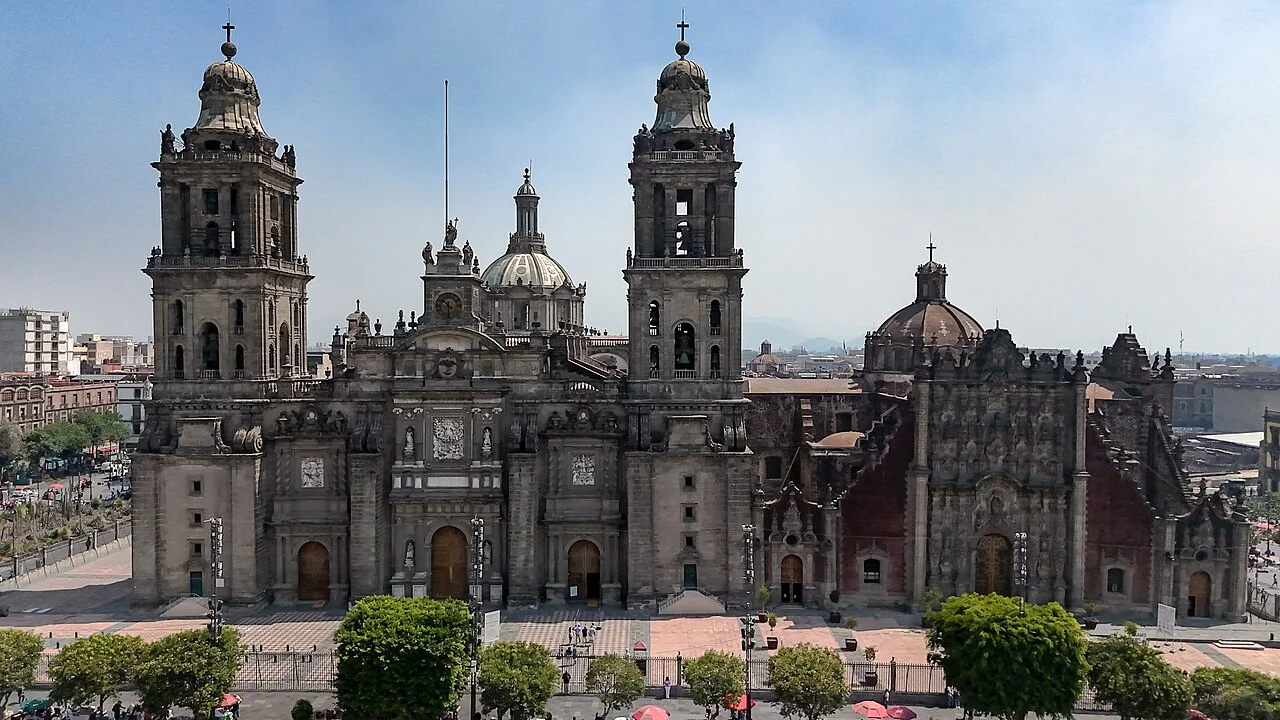
Catedral Metropolitana de la Ciudad de México
Content & sources
Photo: ProtoplasmaKid · CC BY-SA 4.0
Mexico City · 2 km
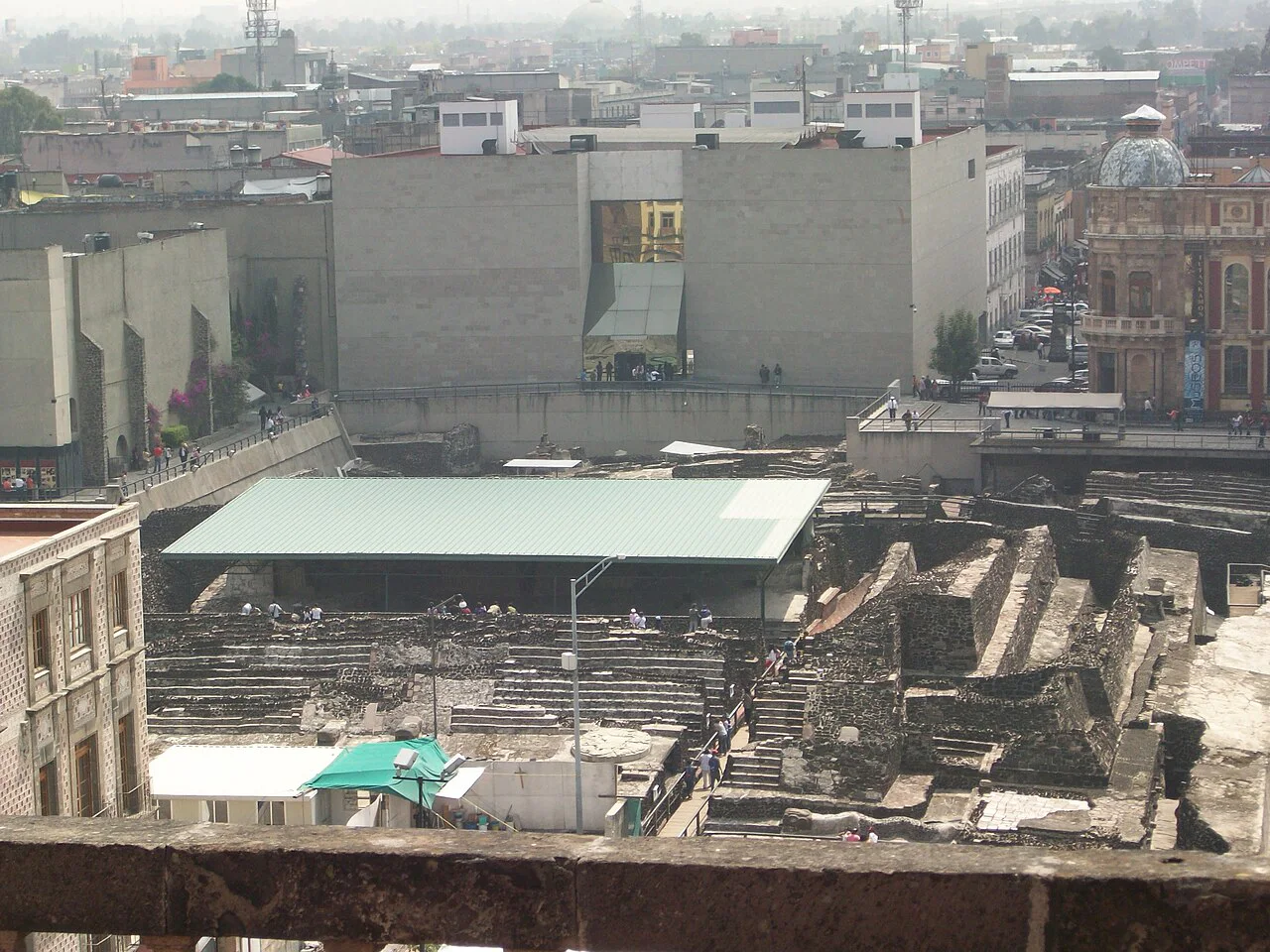
Templo Mayor
Content & sources
Photo: GAED · CC BY-SA 3.0
Mexico City · 7 km
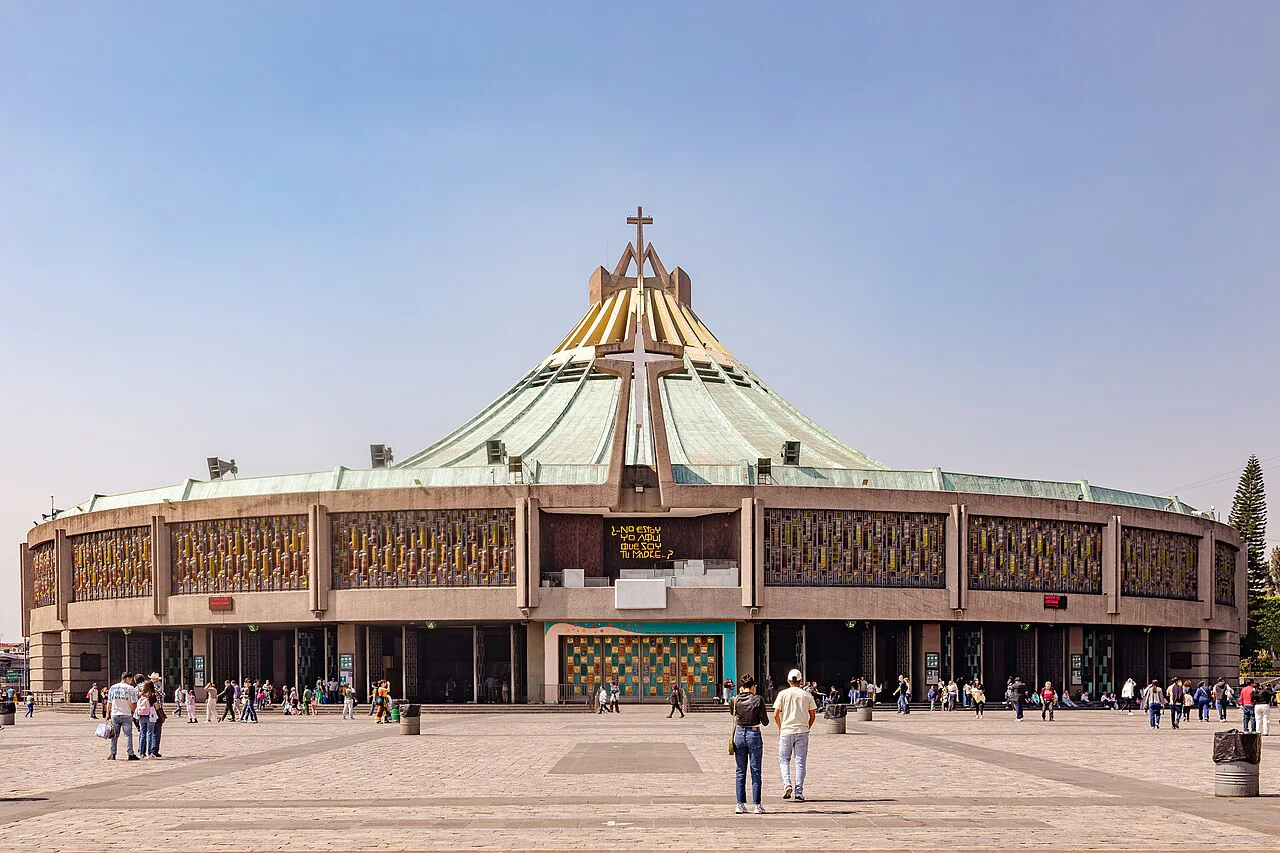
Basílica de Santa María de Guadalupe
Content & sources
Photo: Arne Müseler · CC BY-SA 3.0 de
Mexico City · 15 km
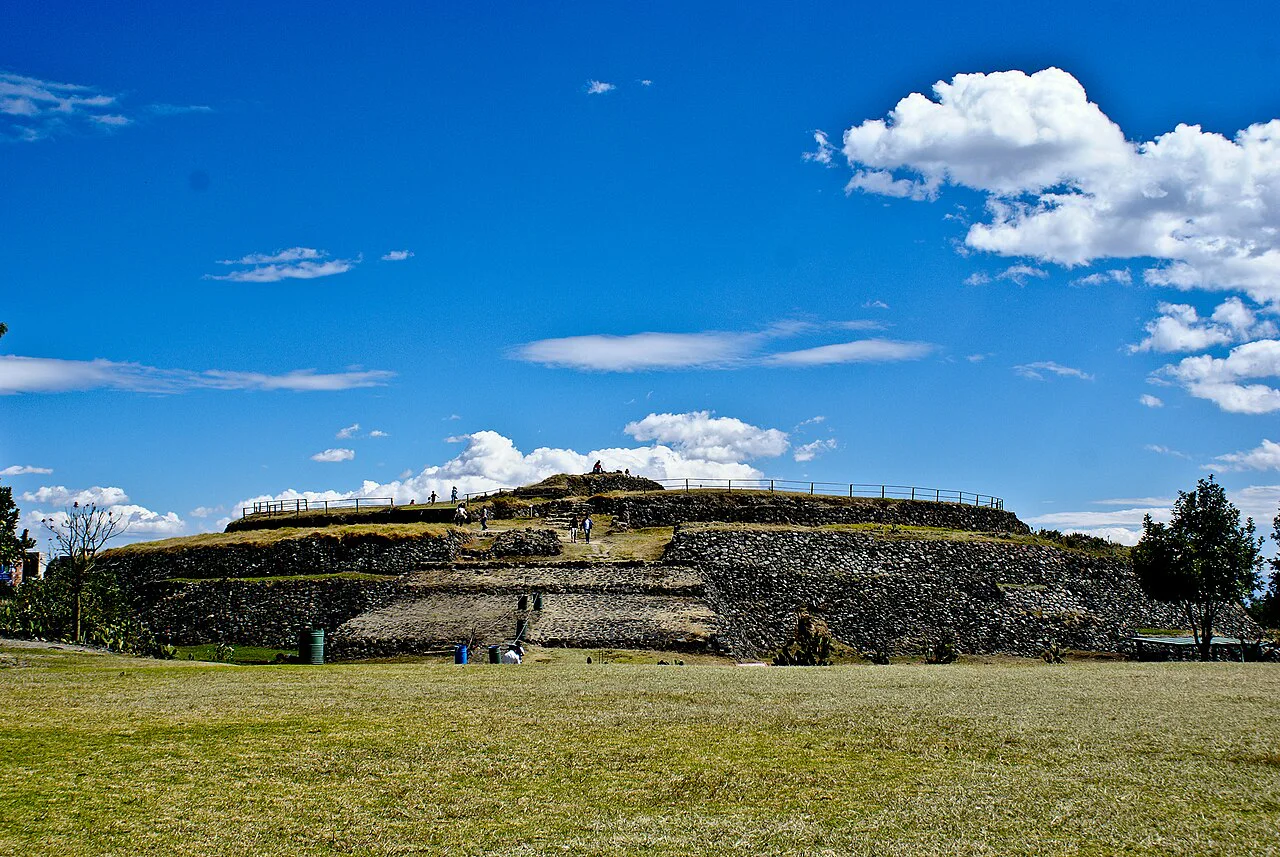
Cuicuilco
Content & sources
Photo: Felipe huerta hdez · CC BY-SA 3.0