Stanza · Audio guide
Mileševa Monastery Audio Guide
A place to remember. A story to take with you.
The Mileševa Monastery is a Serbian Orthodox monastery located near Prijepolje in southwest Serbia. It was founded by King Stefan Vladislav I between 1234 and 1236.
Download Stanza, then search for “Mileševa Monastery”.
About the tour
One guide. Your kind of visit.
The Mileševa Monastery is a Serbian Orthodox monastery located near Prijepolje in southwest Serbia. It was founded by King Stefan Vladislav I between 1234 and 1236.
Ready when you are.
- 01Get the free Stanza app.
iOS & Android
- 02Find your guide.
“Mileševa Monastery”
- 03Download before you go.
Works offline
Audio guide / 9 narrated stops
Inside the guide
Get to know a few of the stories before you go. Open a stop to read more.
01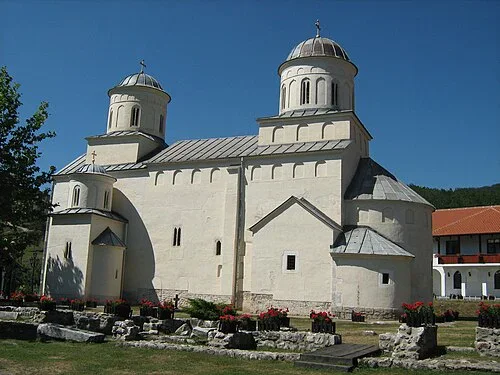 Monastery Courtyard and Church Architecture
The Church of the Ascension
Welcome to Mileševa, a Serbian Orthodox monastery in the valley of the Mileševa river, near Prijepolje in southwest Serbia. King Stefan Vladislav founded it in the twelve-thirties as his royal endowment and his burial church. The church is dedicated to the Ascension of Our Lord and belongs to the Raška school of building. Its ground plan is unique. The single nave widens steadily from west to east, and the eastern bay is left out altogether. Because of that, the three altar apses lean directly on the domed east wall. Inside, the dome rests on several arches set in a stairway-like arrangement. The narthex at the west end was added in 1236. A restoration in the 1860s changed the church's appearance considerably and gave the narthex a dome of its own. Those white walls have now stood in this valley for almost eight hundred years. Through the doorway wait the tombs and frescoes that the rest of this tour follows.
Djordje Stakić · CC BY-SA 3.0
02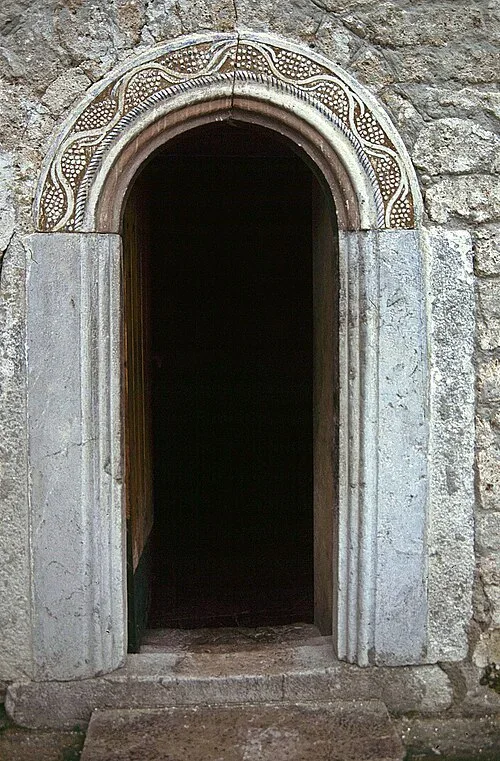 Monastery Courtyard and Church Architecture
The Carved Stone Portal
Carved bands of waves and dots run around the arch of this stone portal, and slender columns flank the opening on either side. The doorway leads into the monastery's later life as much as its first. Under Ottoman rule, Mileševa did not fall silent. In the first half of the sixteenth century, its printing house produced illuminated service books, and one of the oldest schools of its time worked within these walls. Then came a thorough renovation in the middle of the century, under Patriarch Makarije, after the Serbian Patriarchate was restored in 1557. A new external narthex was built and painted, and the wall between narthex and nave was probably cut through. The carved portal belongs to that long life of learning and renewal, not only to the medieval founding.
Photo: Ziegler175 · CC BY-SA 3.0
03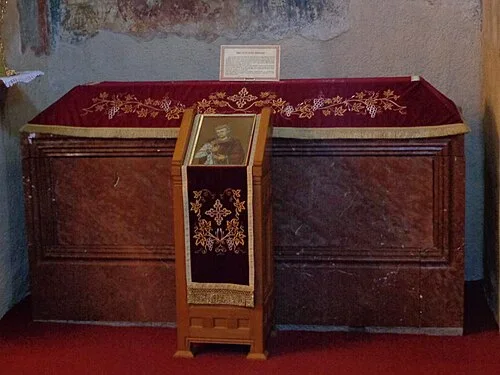 The Inner Narthex and Saint Sava's Shrine
Saint Sava's Sarcophagus
In 1236, King Vladislav brought the relics of his uncle, Saint Sava, from Trnovo in Bulgaria, where Sava had died, and laid them here. Sava was the founder of the Serbian Orthodox Church, and his grave made Mileševa one of the most important Serbian sanctuaries and spiritual centers. Pilgrims and travellers came for centuries, among them the traveller Cornelis de Schepper, and some left written accounts of their visits. Donations arrived too, from Russia's Ivan the Fourth and from Wallachian and Moldavian rulers. Then, in 1594, the Ottomans removed the relics from the monastery and burned them publicly on Vračar hill in Belgrade. The burning was meant to break the Serbian spirit. Instead it made Sava a martyr in death, and his veneration only grew. Church tradition says one relic was saved from that fire, and you will meet it at the altar.
Listen in the appPhoto: Andrija12345678 · CC BY-SA 4.0
04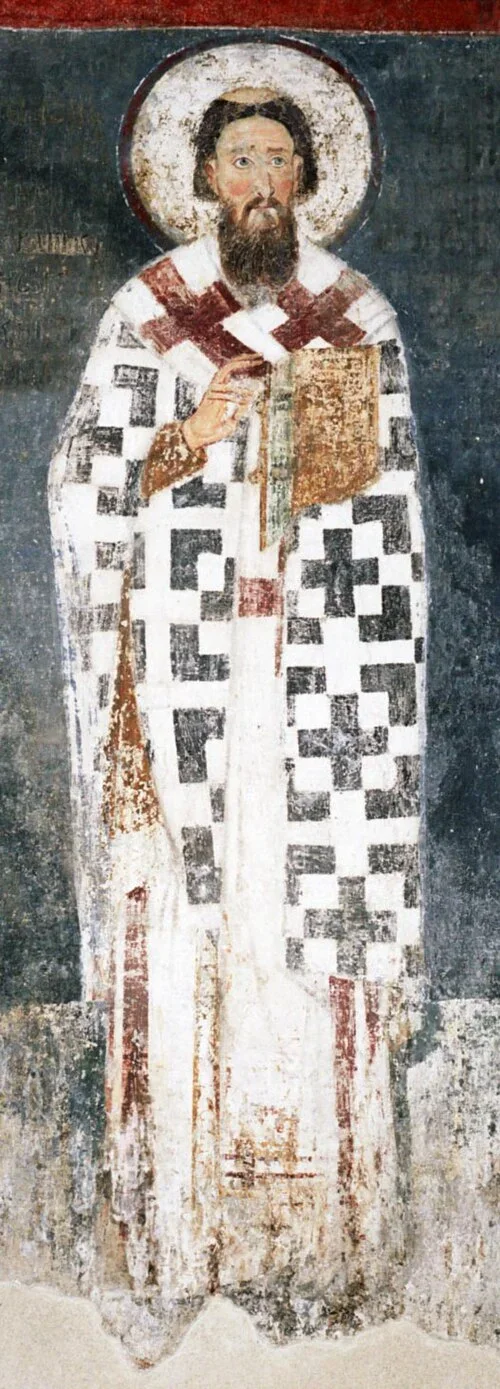 The Inner Narthex and Saint Sava's Shrine
Fresco of Saint Sava
Near the sarcophagus, a painted figure stands nearly full length, in white vestments patterned all over with dark crosses. It is Saint Sava, shown as the first Serbian archbishop. He belongs to a family portrait group in the northeastern part of the narthex. Stefan Nemanja appears there as the monk Simeon. Then comes Stefan the First-Crowned as king, with his sons Radoslav and Vladislav, the founder of Mileševa among them. The group was presumably painted in the twelve-thirties and the years just after. What makes it rare is that some of these figures were portrayed in their own lifetimes, so the features were not left to a later painter's memory. The man in the white crosses is the saint whose relics drew pilgrims here for centuries.
Listen in the appFresco painter of Mileševa · CC BY-SA 3.0
05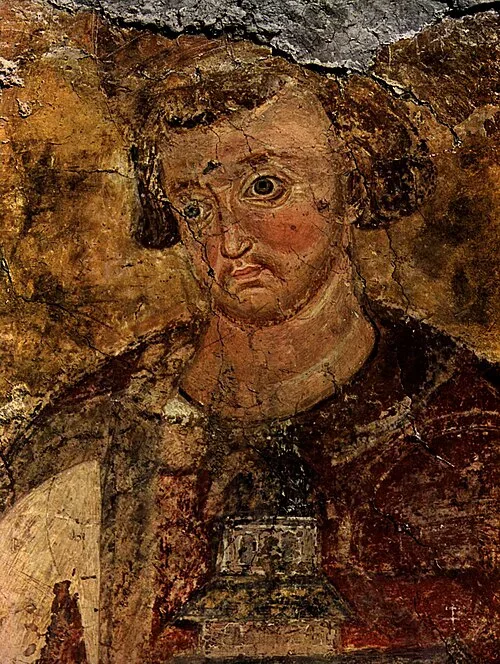 The Nave and Founder's Memorial
Founder's Portrait of King Vladislav
On the south wall of the west bay, just beneath the Resurrection scene, a king walks toward Christ, led by the Mother of God. He carries a small model of a church, the very building these frescoes adorn. The king is Stefan Vladislav, who founded Mileševa. A donor portrait like this was a claim: the founder presenting his offering in paint, and taking his place in salvation history before every generation that followed. Mileševa's royal pull outlived his dynasty. Some historians believe that in 1377 Tvrtko the First of Bosnia was crowned King of the Serbs and Bosnia in this church, choosing the resting place of Saint Sava to give weight to his title. And in 1446, Stefan Vukčić Kosača proclaimed himself Herzeg of Saint Sava here, and Herzegovina took its name from that title.
Listen in the appboban markovic · Public domain
06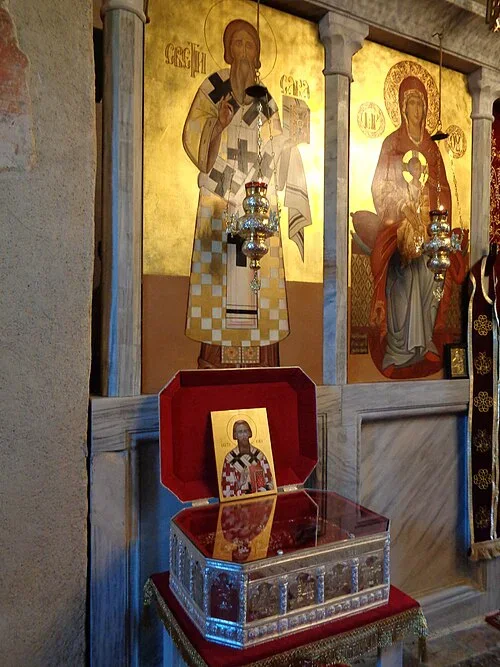 The Altar and Sacred Relics
The Iconostasis and the Saint Sava Reliquary
Gold icons glow on the iconostasis, the screen of icons that separates the altar from the nave, and before them stands a silver reliquary on red. Church tradition holds that the hand of Saint Sava, saved from the fire, rests here, and pilgrims have long come to venerate it. The silver chest carries that story forward, beneath the gilded figures of saints watching from the wall.
Listen in the appPhoto: Andrija12345678 · CC BY-SA 4.0
07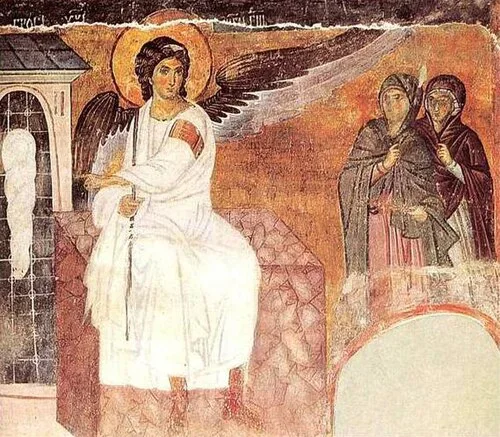 The West Bay and The White Angel Fresco
The White Angel
An angel in white sits on the stone slab of Christ's tomb, calm and still, the discarded burial cloths behind him. He was painted in the twelve-thirties on the south wall of the west bay. He belongs to the Resurrection composition of the myrrhbearers, the women who came to anoint Christ's body at the tomb. Serbian culture counts this White Angel among its most famous images. The painters of the age worked with broad, plastic forms and fresh color harmonies, treating figures like mosaics on gold, a departure from the rigid styles that came before. That is why the thirteenth-century paintings here are judged among the supreme achievements of European painting of their century. And the angel is one masterpiece among several, beside the Virgin of the Annunciation and the royal portrait nearby.
Listen in the appSnežana Trifunović · CC BY-SA 3.0
08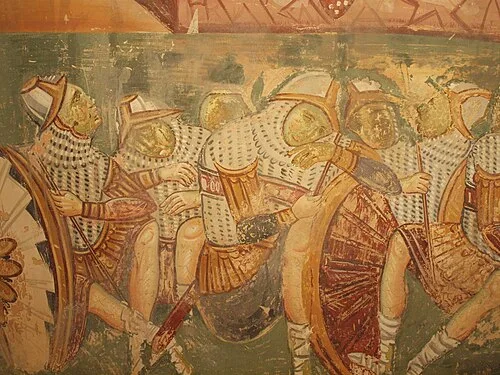 The West Bay and The White Angel Fresco
The Sleeping Soldiers at Christ's Tomb
Christ's tomb had guards, and this fresco shows how they ended: struck down, asleep in their chain mail among their shields, while the angel keeps watch nearby. The thirteenth-century cycle is the work of a small team, six or seven painters whose individual styles can still be told apart. Short Cyrillic notes beside figures such as the warrior saints were long taken for painters' signatures. They are really remnants of the original thematic arrangement of the walls, and they are the only evidence pointing to the artists' probable Serbian origin. Centuries later the church was repainted, and the new layer suffered fire damage. Only fragments of that repaint survive, a Last Supper under the dome and the Forty Martyrs in the north choir. Yet the damaged layer acted as a shield, and the more valuable thirteenth-century paintings beneath it came through intact.
Listen in the appPhoto: Orjen · CC BY-SA 3.0
09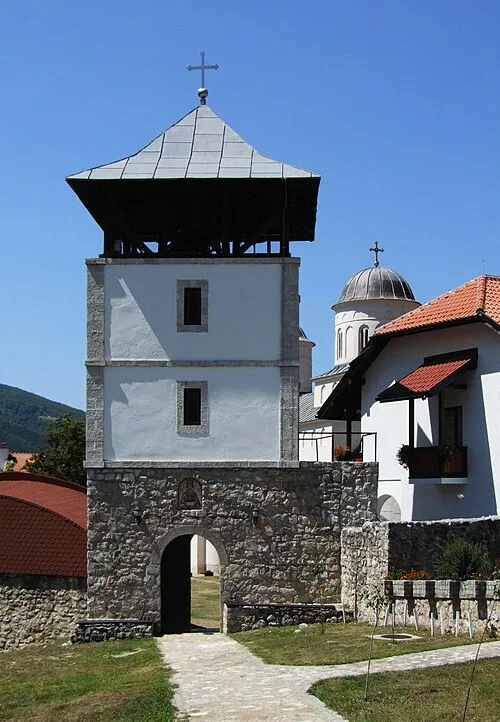 Monastery Grounds and Historic Bell Tower
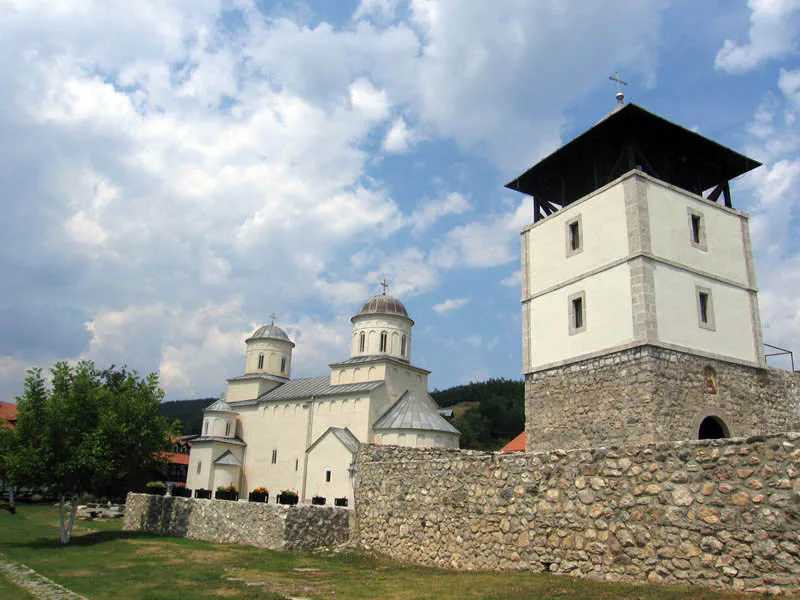
The Bell Tower
A stone tower with a pyramidal roof and a cross on top rises over the arched gateway into the monastery. After long years in ruins, the monastery was restored in 1868, with a two-storey convent building beside the church. It held thirty rooms for monks and guests. In 1875, during a local uprising, the monastery stood in real danger, and it was spared through the efforts of the Muslims of Prijepolje, who held the sanctuary in high regard. The great bell, a gift of King Aleksandar, was consecrated on 24 August 1935, and it has hung over the restored monastery ever since. In 1979 Serbia declared Mileševa a Monument of Culture of Exceptional Importance. A royal burial church, a martyr's shrine and a masterpiece of painting, kept alive through the centuries in one quiet valley.
Listen in the appPudelek (Marcin Szala) · CC BY-SA 3.0 rs
Mileševa Monastery
Frequently asked questions
How much does the guide cost?
Free app download. Listed guide price: $0.99. Guide price shown in the app. Audio guide only. Venue admission is separate.
Can I listen without internet?
Yes. Download the guide’s audio, images, and maps in the app before your visit. Your downloaded content is then available offline.
Can I listen in my language?
This audio guide is available in 15 languages, including English.
Do I need to follow a schedule?
No. This is a self-guided experience. Choose your stops, pause whenever you like, and return to a story at your own pace.
At your own pace
Explore Mileševa Monastery.
Download Stanza, then search for “Mileševa Monastery”.
Free app download · Guide price shown in the app
Keep exploring
Nearby audio guides
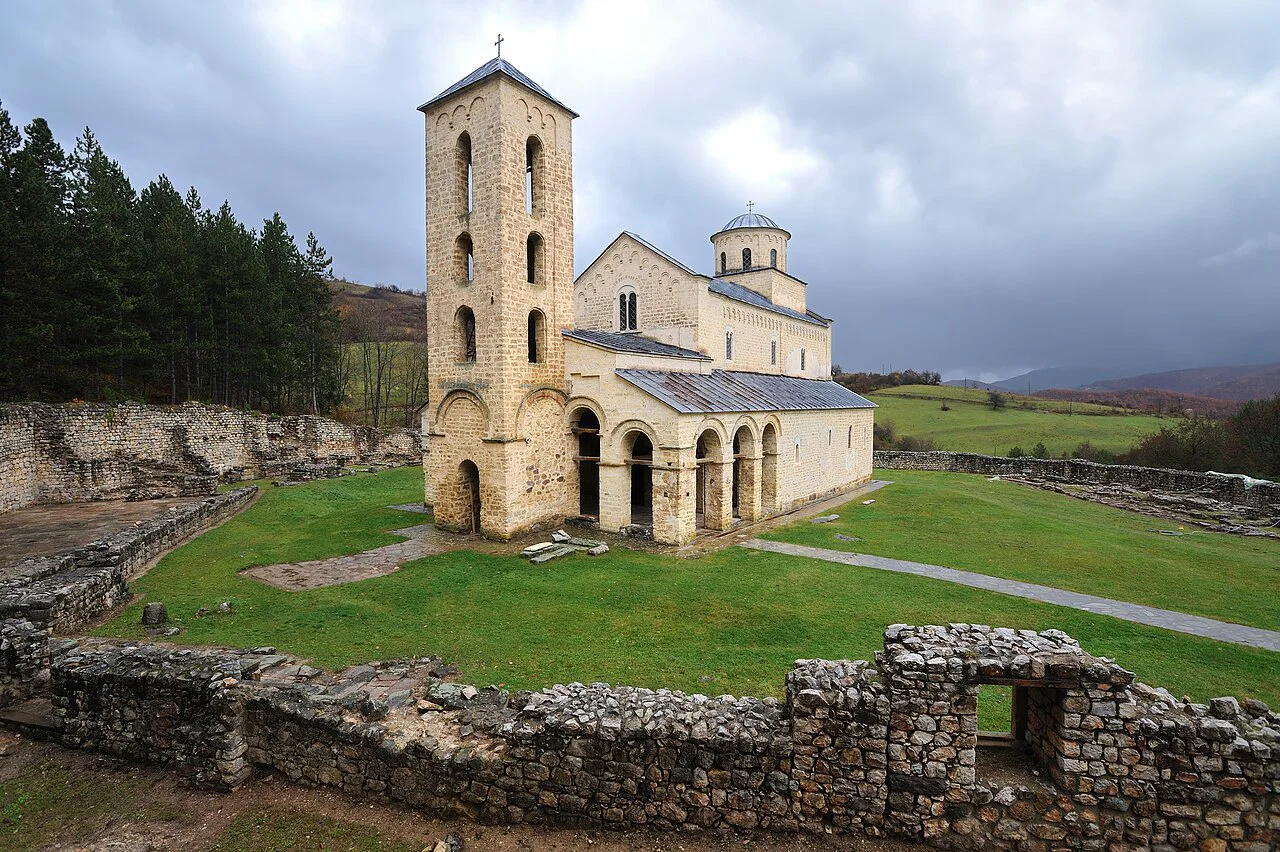
Novi Pazar City · 69 km
Sopoćani
Content & sources
Photo: Pavle Marjanovic · CC BY-SA 3.0
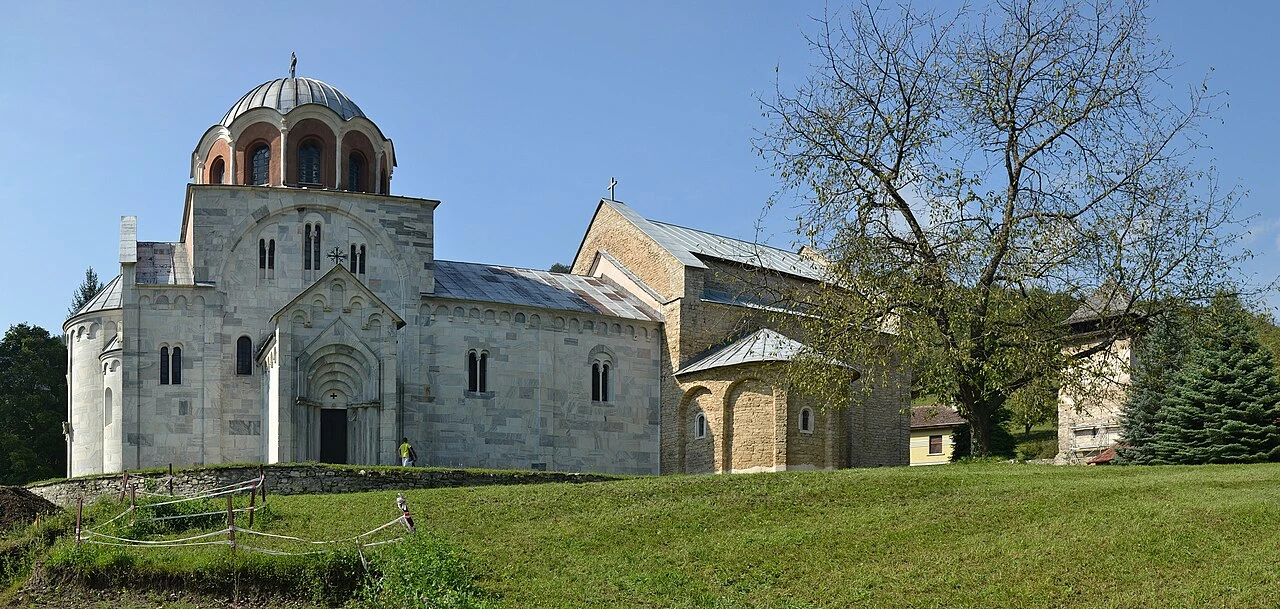
Brezova · 71 km
Studenica Monastery
Content & sources
Pudelek (Marcin Szala) · CC BY-SA 3.0
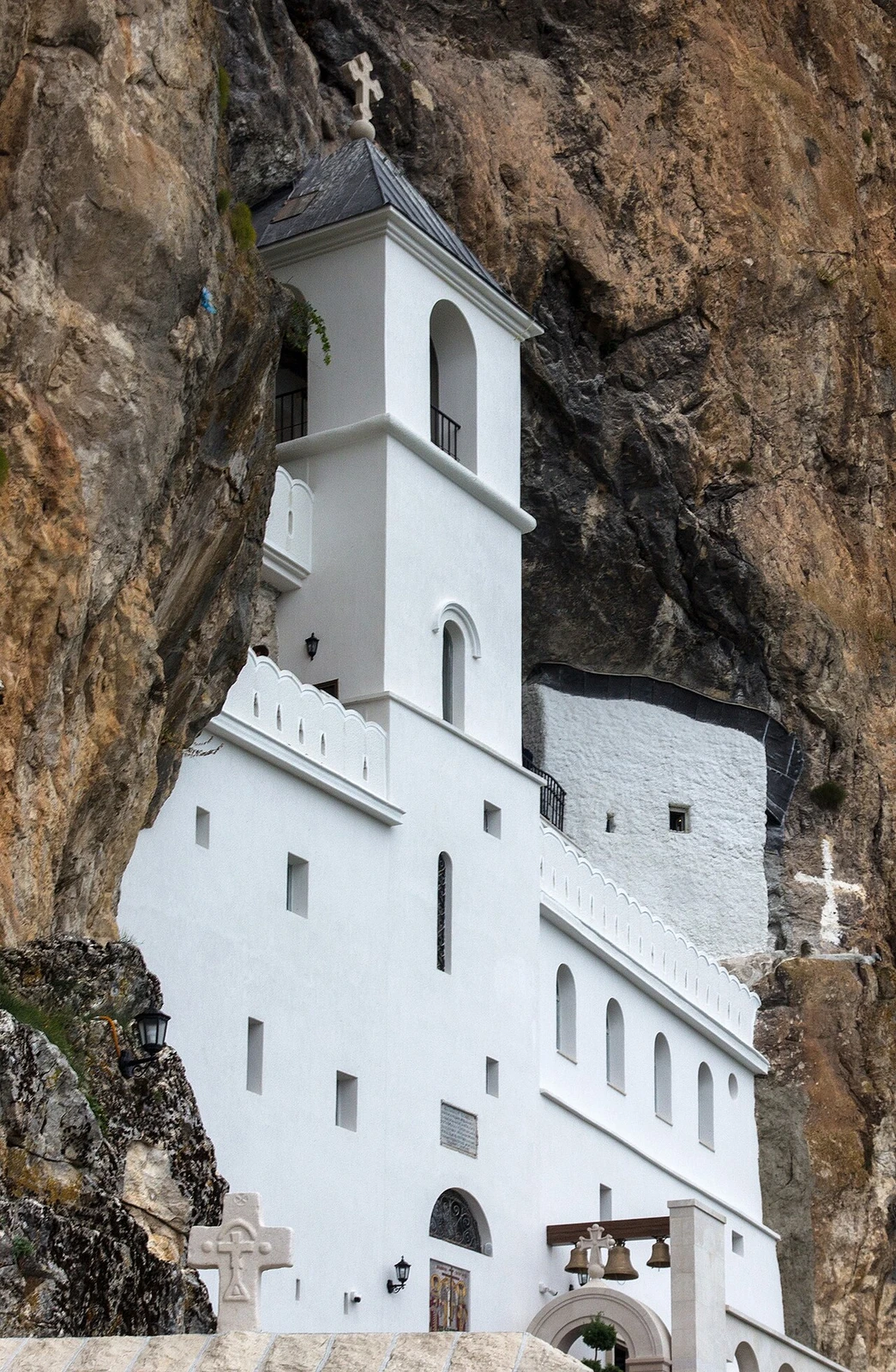
Danilovgrad Municipality · 95 km
Ostrog Monastery
Content & sources
Alexey Komarov · CC BY 3.0
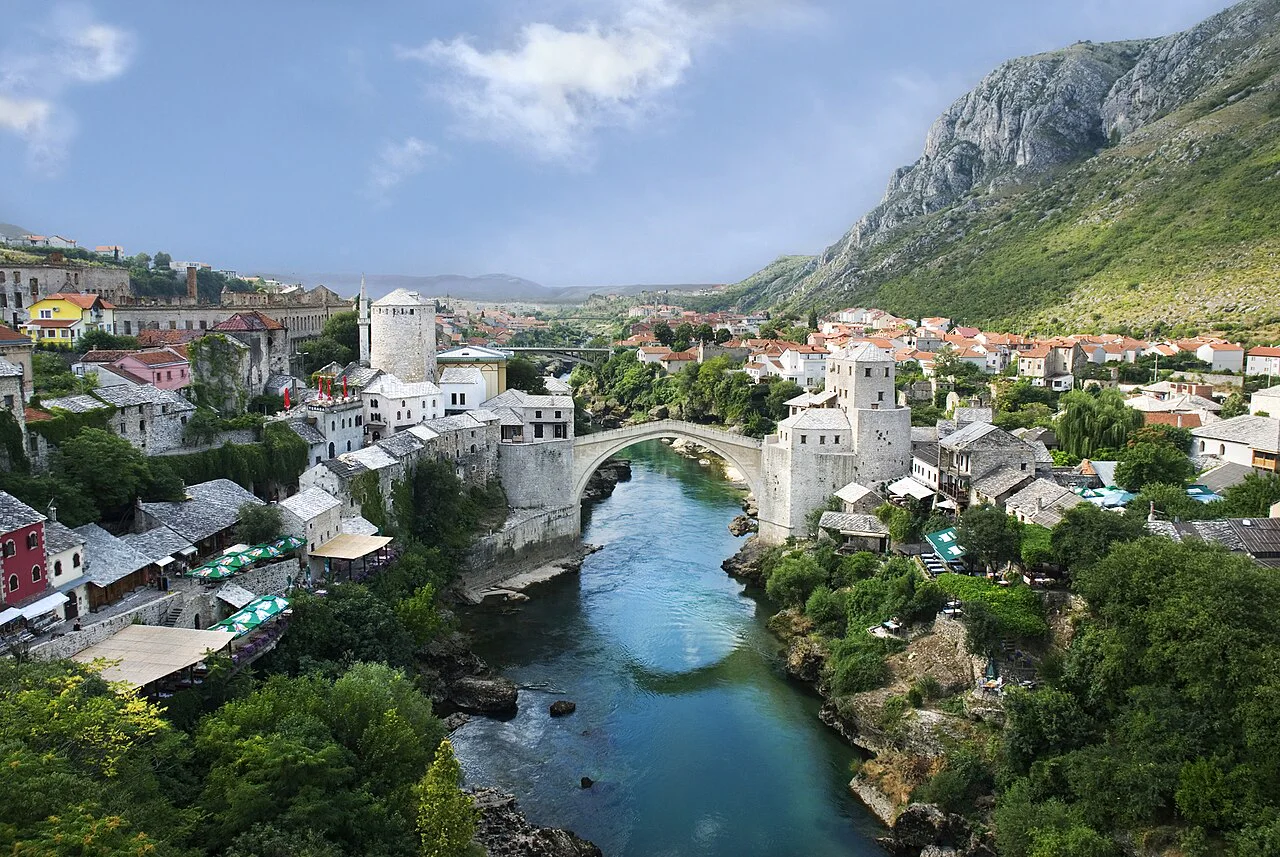
Mostar · 149 km
Stari Most
Content & sources
Ramirez · CC BY-SA 4.0