Stanza · Audio guide
Byllis Audio Guide
A place to remember. A story to take with you.
Byllis was an ancient city and the chief settlement of the Illyrian tribe of the Bylliones. It is an archaeological site located in Hekal, Albania.
Download Stanza, then search for “Byllis”.
About the tour
One guide. Your kind of visit.
Byllis was an ancient city and the chief settlement of the Illyrian tribe of the Bylliones. It is an archaeological site located in Hekal, Albania.
Ready when you are.
- 01Get the free Stanza app.
iOS & Android
- 02Find your guide.
“Byllis”
- 03Download before you go.
Works offline
Audio guide / 15 narrated stops
Inside the guide
Get to know a few of the stories before you go. Open a stop to read more.
01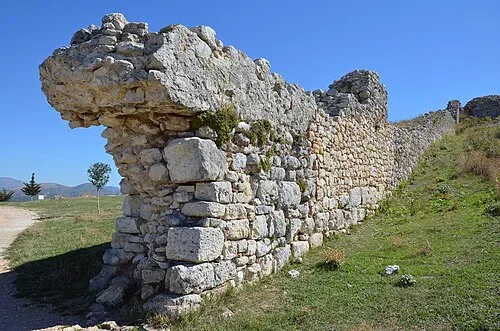 The Fortification Walls and Main Gate
The Hellenistic Fortification Walls
Welcome to Byllis, an ancient city on a high hill in southern Albania. Around 350 BC the Illyrian people called the Bylliones raised their capital here, on high ground their ancestors had already settled. This was one of several fortified hilltops in the region of Mallakastër, and Byllis became the chief among them. The wall in front of you was the city's first great statement. Its builders set the stone blocks in even, level courses, a Greek masonry style known as ashlar. The whole circuit ran about two and a half kilometers around the steep hill. It was three and a half meters thick, and it enclosed roughly thirty hectares of ground. That was a serious city, built to be seen and hard to attack. Over the centuries that followed, Byllis took on layer after layer: Illyrian at its heart, Greek in culture, Roman in administration, Christian in its last centuries. Each layer has left its mark on this hill, and the walls are where the story begins.
Pasztilla aka Attila Terbócs · CC BY-SA 4.0
02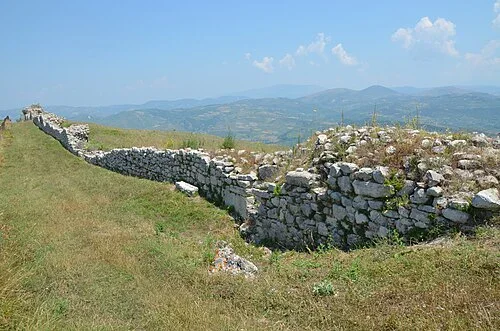 The Fortification Walls and Main Gate
The Justinianic Refortifications
The rough, small stones of this wall tell a very different story from the neat blocks of the old fortifications. In the years between 547 and 551 AD, Slavic raiders swept through and destroyed the city. The emperor in Constantinople, Justinian the First, ordered Byllis refortified. The work was directed by an engineer named Victorinus, and his name survives because it was written into Greek inscriptions set into the walls. More than four of those inscriptions record the construction he carried out. The builders used a technique of irregular stones set in heavy mortar, quicker than the old ashlar work and suited to an emergency. This was the last great act of building at Byllis, and it did not save the city for long. After these walls went up, the occupation that had lasted close to a thousand years came to its end.
Carole Raddato from FRANKFURT, Germany · CC BY-SA 2.0
03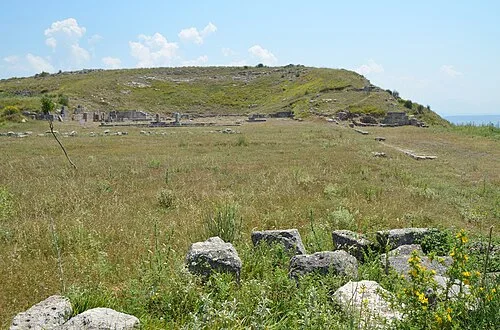 The Ancient Agora and Monumental Gate
The Agora
This open ground was the agora, the public heart of Byllis. The city was the chief settlement of the koinon of the Bylliones, a league of Illyrian communities in the lower Vjosa valley. In time the league came to include a neighbor called Nikaea, which Byllis counted almost as one of its own districts. In the middle of the third century BC, the whole center was laid out in a single plan. Theater, covered stoas, stadium and other public buildings were all arranged to work together, on the Greek model. There is an earlier glimpse of these people, though. On a lead tablet from the sanctuary of Dodona, from the fourth century BC, the Bylliones asked the oracle which deity they should sacrifice to, to keep their possessions safe. It is the earliest record of them anywhere, a community already in conversation with the Greek gods.
Listen in the appCarole Raddato from FRANKFURT, Germany · CC BY-SA 2.0
04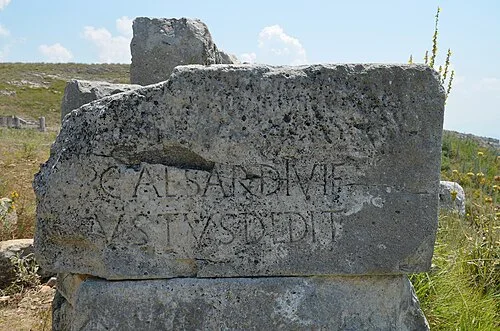 The Ancient Agora and Monumental Gate
The Gate of the Deified Augustus
The stone here carries an inscription to the Deified Augustus, and it marks a turning point. After the sack of the city in the war against Rome, Byllis fell into a long decline. Then, in 30 BC, it rose again as a Roman colony. The Roman writer Pliny the Elder recorded its new official name, Colonia Bullidensis. That meant settlers of Roman status, Roman administration, and a place in the empire's order. The inscription on this gate is the physical evidence of that new allegiance, carved into the civic heart of the old league capital. A city that had once spoken Greek in its public inscriptions now answered to an emperor in Rome.
Listen in the appCarole Raddato from FRANKFURT, Germany · CC BY-SA 2.0
05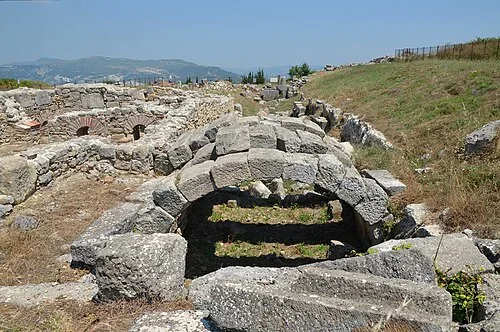 The Great Stoa and Subterranean Cistern
The Underground Cistern
A city on a high plateau has one stubborn problem: no river reaches the top. The answer here was to catch the rain. In the third century BC the builders sank a cistern deep into the rock, about six meters down. It could hold roughly twelve hundred cubic meters of water. The clever part was the source. Water ran off the roof of the Great Stoa, the big covered colonnade beside the agora, and was collected below. The vaulted stonework here is part of that system, buried out of sight while the grand buildings stood above. It is a reminder that behind every fine Hellenistic city there was plumbing. Defense mattered, ceremony mattered, but without stored water nobody could have lived on this hill at all.
Listen in the appCarole Raddato from FRANKFURT, Germany · CC BY-SA 2.0
06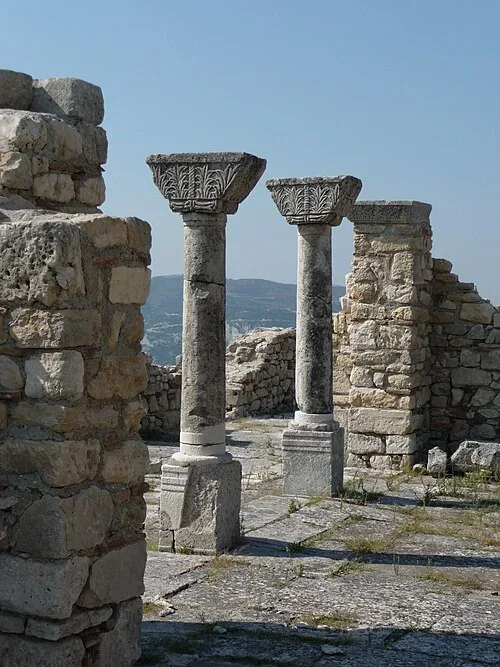 The Great Stoa and Subterranean Cistern
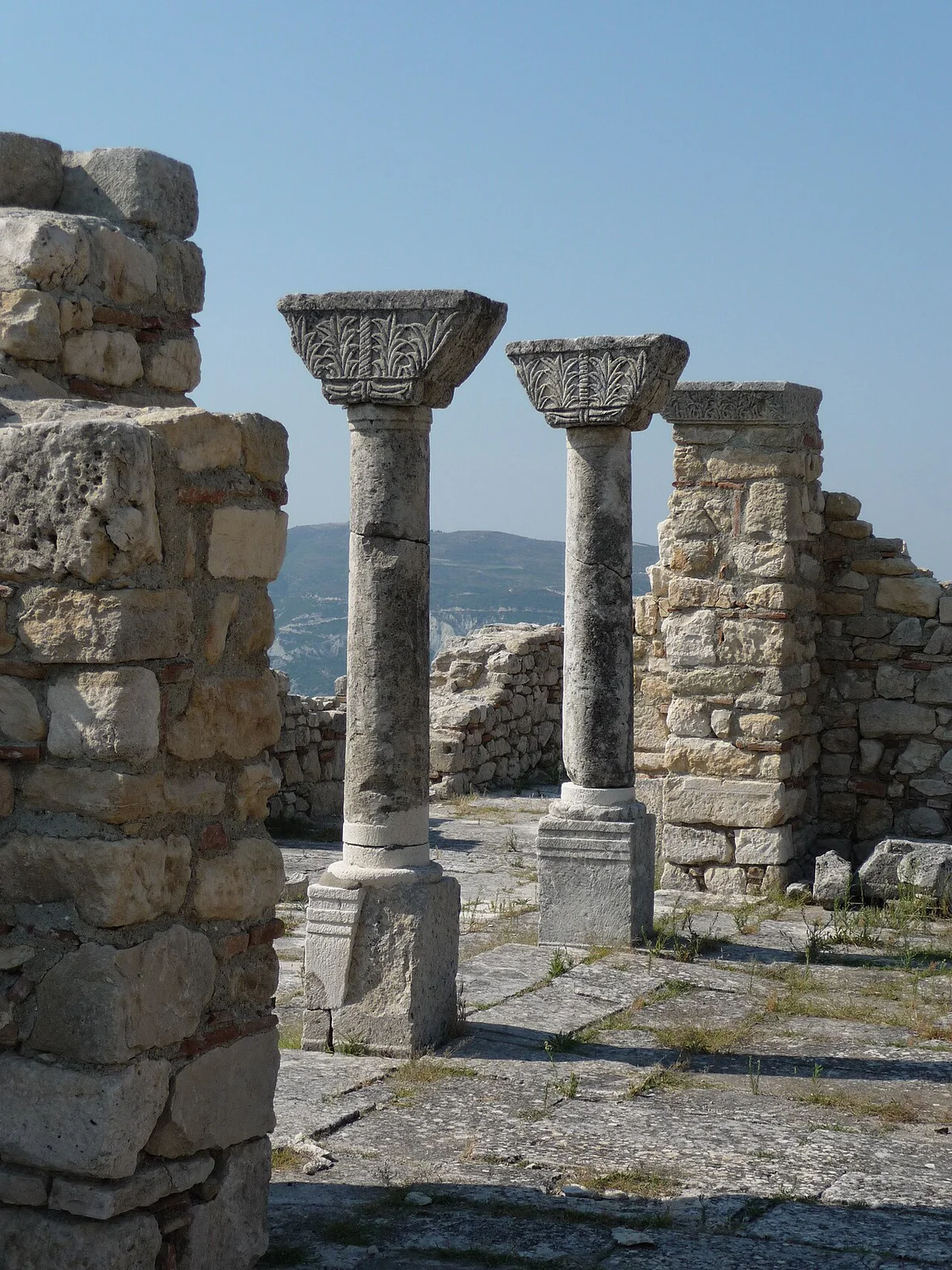
The Great Stoa
These columns belonged to the Great Stoa, a long roofed colonnade opening onto the agora. A stoa was the workhorse of a Hellenistic city: shade for meetings, shelter for trade, a place for daily business. The capitals crowning the columns carry fine carved ornament, from a later phase of the building's long life. Here is what the stoa's world says about Byllis. In the early second century BC, sacred envoys from Delphi, called theoroi, came to the city. Only cities considered Greek were eligible to receive them. So by then, the descendants of Illyrian tribesmen were being treated as a Greek-speaking people. The southern Illyrians, the Bylliones among them, had become bilingual, Illyrian at home and Greek in public life. And the sources are clear that this was gradual, a slow blending over generations rather than a single change.
Listen in the appRiet PRINS · CC BY 3.0
07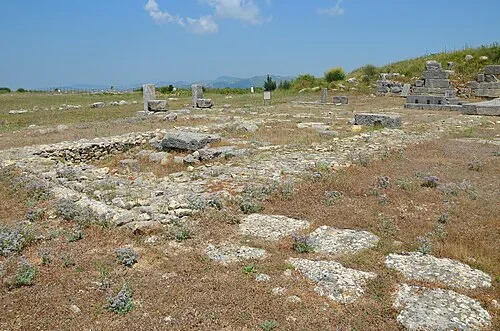 The Hellenistic Theater
The theater was the most important monument of ancient Byllis. Built in the third century BC as part of the unified plan, it served two purposes at once. Performances played here, and the political assemblies of the Illyrian league met here too. The seating, the cavea, was carved into the natural slope of the ground, stretching more than forty meters across. Thousands of spectators could fill it, many of them country people from the koinon's territory, close to the city wall. What the foundations and scattered Doric blocks show today is the stage building, once dressed in that severe Greek order. This civic stage also heard the city's darkest chapter. In the war of 169 and 168 BC, the Bylliones first fought on the Roman side against their own Illyrian king, Gentius. Then Byllis switched, allying with the Molossians and the Macedonians. The Roman army answered by sacking and destroying the city.
Listen in the appCarole Raddato from FRANKFURT, Germany · CC BY-SA 2.0
08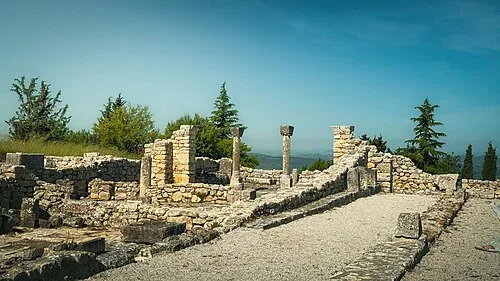 The Episcopal Complex and Cathedral
The Episcopal Complex
Byllis ended its life as a Christian town, and this was the center of that world. The episcopal complex here covers about eight thousand square meters, an entire quarter of the late antique city. Roughly half of it has been excavated so far, which means the other half still lies unopened. Digging on the cathedral area began as early as 1984. The complex has three parts: a church, a baptistery, and the palace where the bishop lived and worked. Together they formed the administrative seat of a city that had shrunk since its Roman heyday but still mattered in the province of Epirus Nova. The scale alone says something. In its final centuries, Byllis was organized around the church.
Listen in the appPhoto: Xhesian · CC BY-SA 4.0
09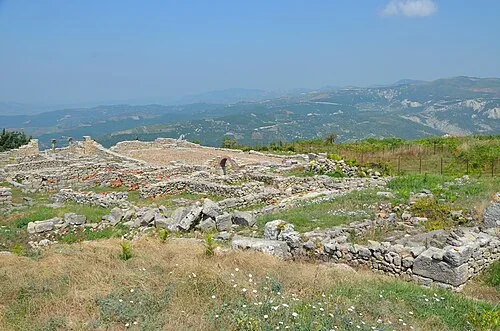 The Episcopal Complex and Cathedral
The Cathedral and the Bishop's Palace
This was the cathedral of Byllis, built at the end of the fourth or the beginning of the fifth century. Beside the church stood a baptistery for the rites of entry into the faith, and the bishop's palace. In the sixth century, the church here became a major landowner in the city. The bishop played an important part in administration and in the economy alike, holding power that reached well beyond the altar. The palace was his seat for all of it, part residence and part office. And the wealth behind that power left physical traces, which the Late Antique Winery makes very concrete: a working wine estate run on the church's behalf.
Listen in the appCarole Raddato from FRANKFURT, Germany · CC BY-SA 2.0
10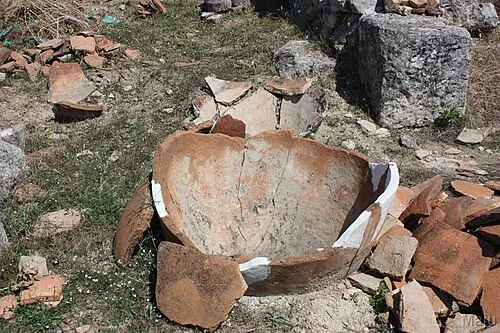 The Late Antique Winery
The Winery's Storage Vessel
Here is the humble, tangible side of the late antique economy. This is a big ceramic storage vessel, lying in fragments where it was found, its cracks held together with plaster. Jars of this kind were the warehouses of the ancient world. Once the grapes had been trodden and pressed, the wine went into vessels like this one, and so did oil and grain. A jar this size represents a serious harvest, far beyond a single household's needs. It belongs to the production quarter that served the bishopric, where the church's goods were processed and kept. The next stop shows the machinery that filled it.
Listen in the appPhoto: Maju603 · CC BY-SA 4.0
- 11
The Late Antique Winery
Inside a sixth-century church winery, where treading vats, presses and storage jars traced the whole harvest.
- 12
Basilica C
A modest three-aisled church of the city's last decades, built while new walls were still going up.
- 13
The Mosaic Floor
The mosaic floors of Byllis's early Christian basilicas, and the artistry of Byllis's last centuries.
- 14
The City on the Plateau
Why this hilltop was chosen: trade roads, rival neighbors, bitumen mines and an oracle of the nymphs.
- 15
The Vjosa Valley Viewpoint
The Trojan legend of Byllis, and a thousand years of Illyrian, Greek, Roman and Christian life on one hill.
Byllis
Frequently asked questions
How much does the guide cost?
Free app download. Listed guide price: $1.99. Guide price shown in the app. Audio guide only. Venue admission is separate.
Can I listen without internet?
Yes. Download the guide’s audio, images, and maps in the app before your visit. Your downloaded content is then available offline.
Can I listen in my language?
This audio guide is available in 15 languages, including English.
Do I need to follow a schedule?
No. This is a self-guided experience. Choose your stops, pause whenever you like, and return to a story at your own pace.
At your own pace
Explore Byllis.
Download Stanza, then search for “Byllis”.
Free app download · Guide price shown in the app
Keep exploring
Nearby audio guides
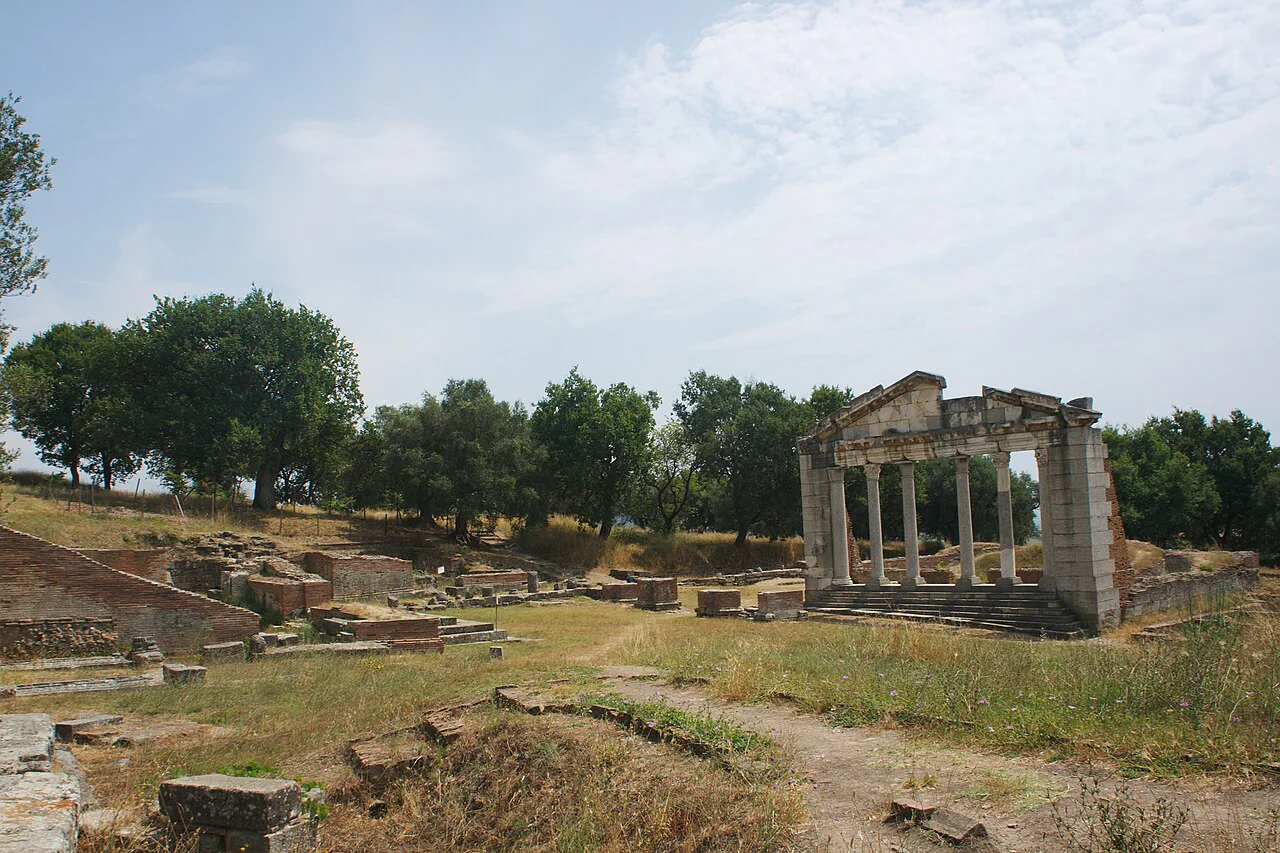
Dërmenas · 29 km
Apollonia
Content & sources
Photo: Inkey · CC BY-SA 3.0
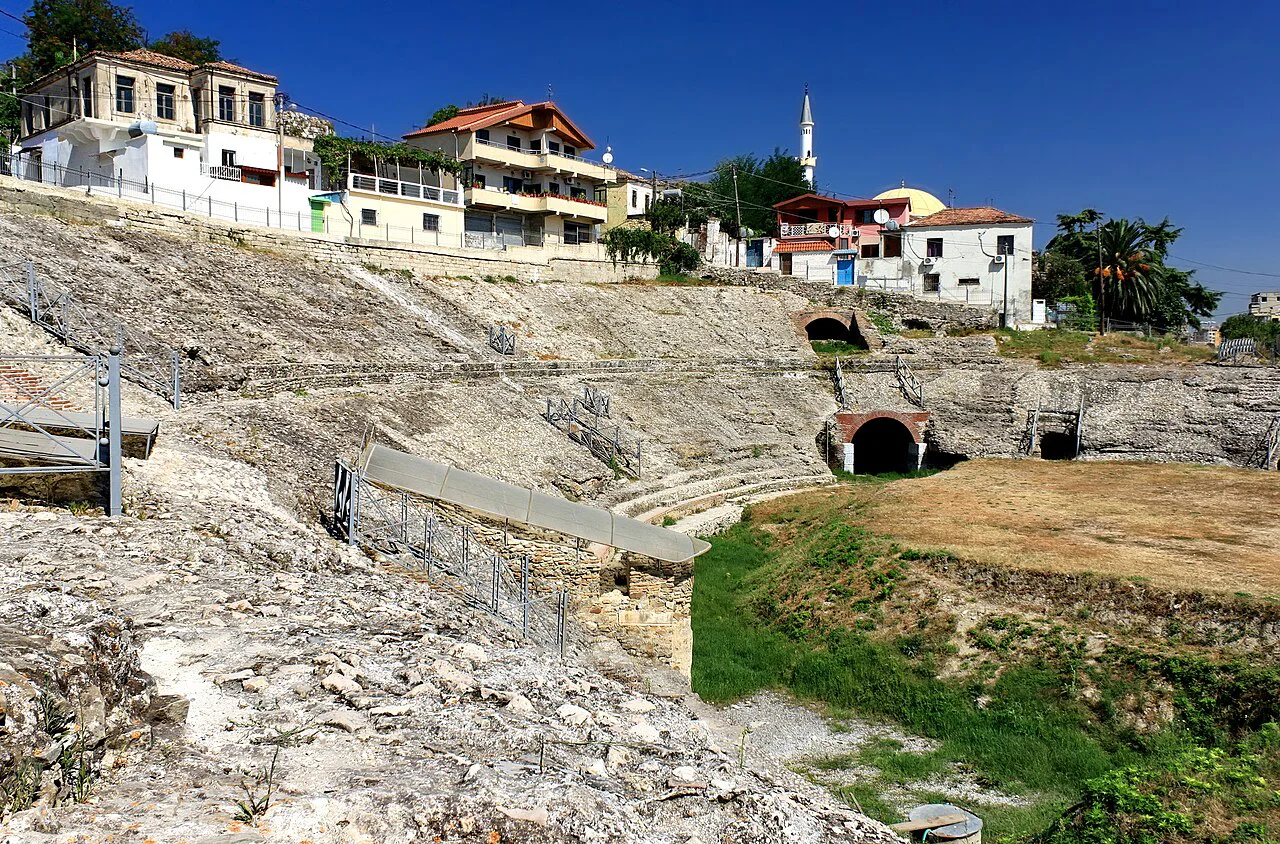
Bashkia Durrës · 88 km
Amphitheatre of Durrës
Content & sources
Marcin Konsek · CC BY-SA 3.0
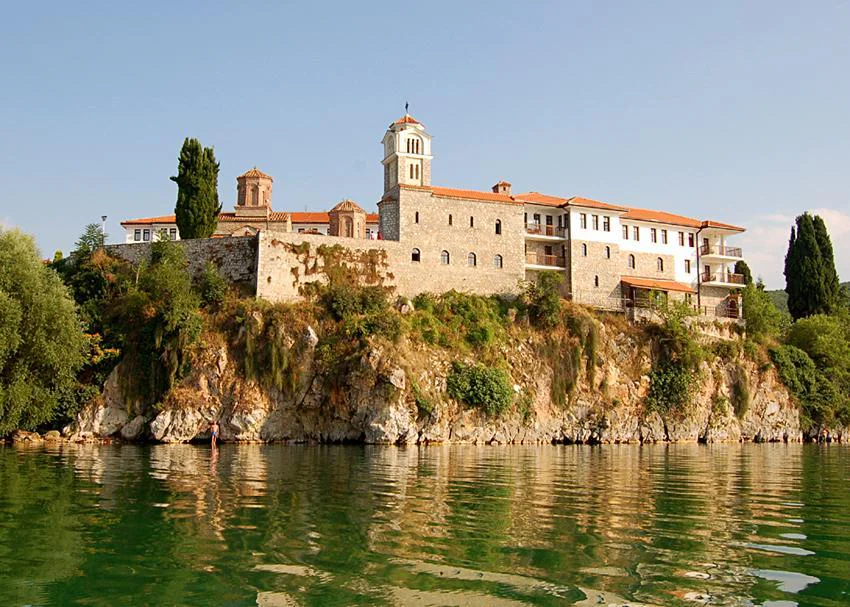
Ohrid · 94 km
Monastery of Saint Naum
Content & sources
Poppit2 · Public domain
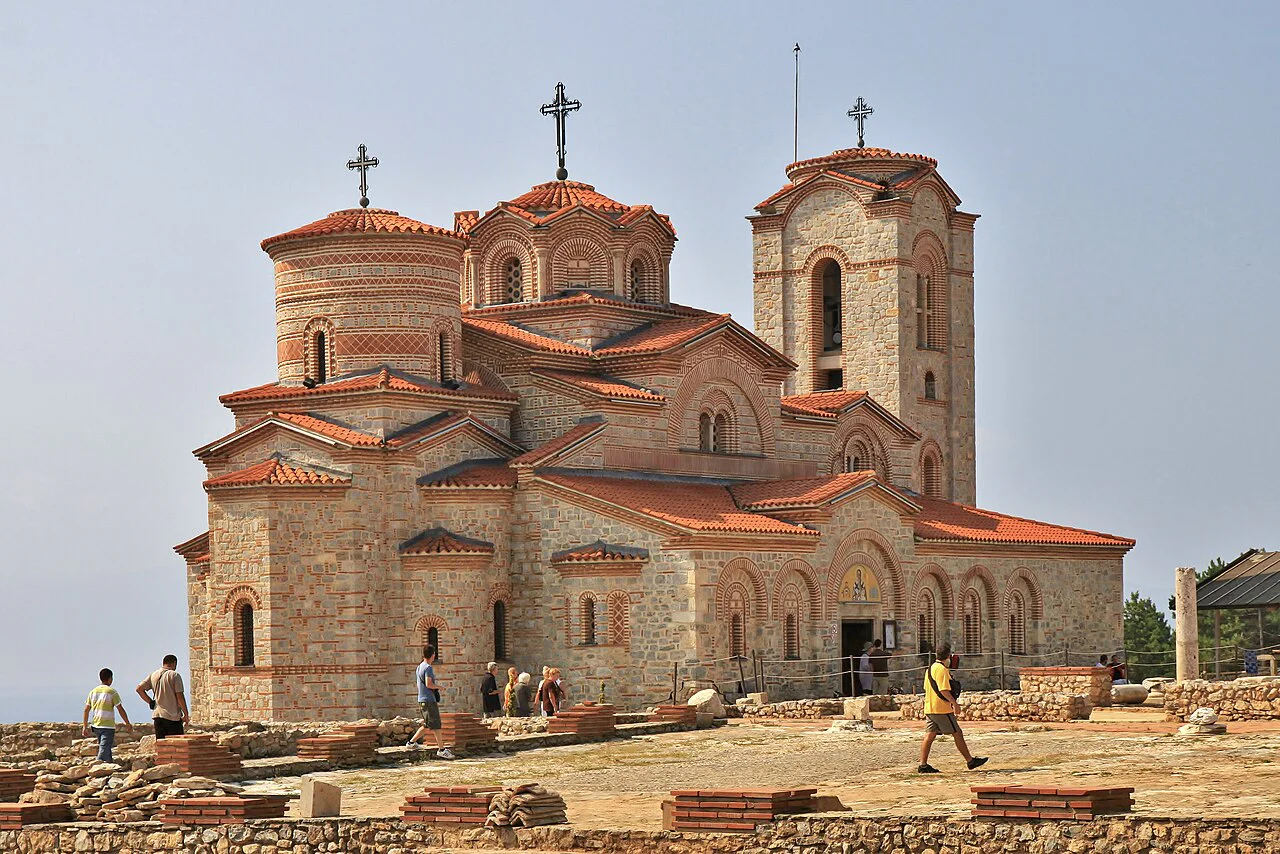
Ohrid · 109 km
Church of Saints Clement and Panteleimon
Content & sources
Marcin Konsek · CC BY-SA 4.0