Stanza · Audio guide
Monastery of Saint Naum Audio Guide
A place to remember. A story to take with you.
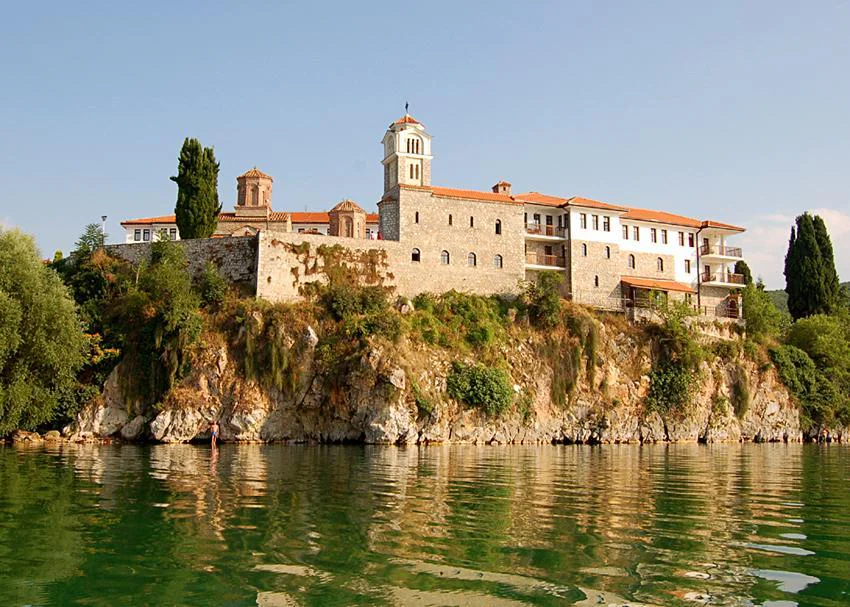
The Monastery of Saint Naum is a Macedonian Orthodox monastery located along Lake Ohrid. It is named after the medieval writer and enlightener Saint Naum who founded the site.
Download Stanza, then search for “Monastery of Saint Naum”.
About the tour
One guide. Your kind of visit.
The Monastery of Saint Naum is a Macedonian Orthodox monastery located along Lake Ohrid. It is named after the medieval writer and enlightener Saint Naum who founded the site.
Ready when you are.
- 01Get the free Stanza app.
iOS & Android
- 02Find your guide.
“Monastery of Saint Naum”
- 03Download before you go.
Works offline
Audio guide / 9 narrated stops
Inside the guide
Get to know a few of the stories before you go. Open a stop to read more.
01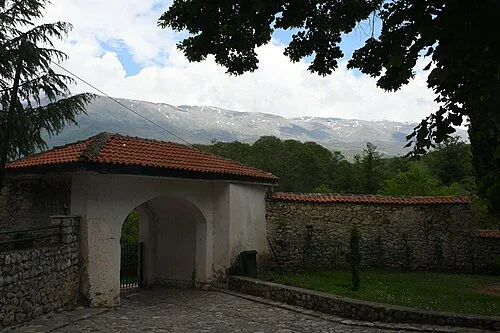 Outer Gate & Walled Courtyard
The Monastery Gate
Welcome to the monastery of Saint Naum, founded in the year 905 on a high rock at the southernmost tip of Lake Ohrid. The man who built it was Naum of Ohrid, a disciple of Saints Cyril and Methodius, the two brothers who created the Slavic script. He worked alongside Saint Clement, and together they spread learning and faith across these shores. The stone gateway in front of you carries a story of its own. Until 1941, the monks baked two ovens of bread every day, and one of the monastery's men always sat by the gate, handing a loaf to each person who passed. Whoever took the bread shared a piece with the household where he lodged, and with strangers he met along the road. Travelers bound for Albania had a particular use for it. If outlaws stopped them on the mountain roads, they showed the loaf stamped with the monastery's mark, and were let pass at once. And when the abbot sent monks out to collect donations, he gave them extra loaves to hand to the hungry.
Herbert Frank from Wien (Vienna), AT · CC BY 2.0
02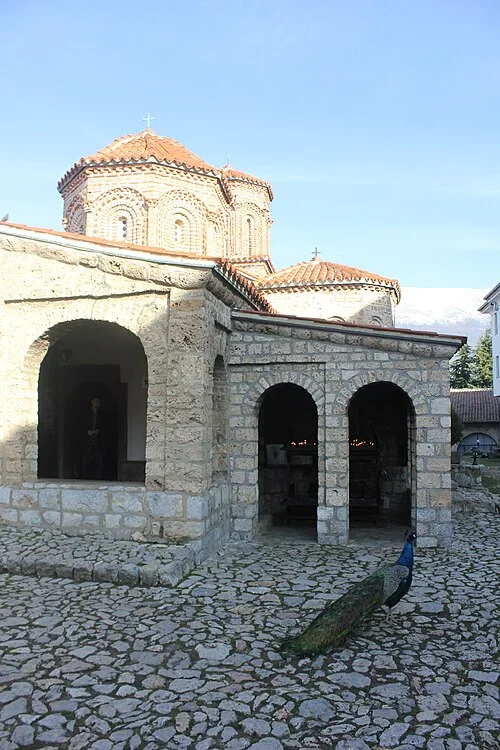 Outer Gate & Walled Courtyard
Courtyard and Peacocks
The walled courtyard, paved in round river stones, belongs largely to the peacocks that have long lived here. Pilgrims have crossed it for well over a thousand years, drawn by the fame of Saint Naum's miracles. His feast day was first kept on the day he died, the twenty-third of December, deep in the winter. In 1720 the archiepiscopal council in Ohrid moved the celebration to the twentieth of June. A letter from Archbishop Josif, written two decades later, explains why: the winter conditions made travel impossible, and the old date clashed with the Christmas season. Even under communist rule the feast went on. In June 1945 the authorities formally allowed the border to open, so that pilgrims from Albania could come to the monastery for the festival. Families on both sides of the lake kept crossing, year after year.
Charlie Marchant from UK · CC BY 2.0
03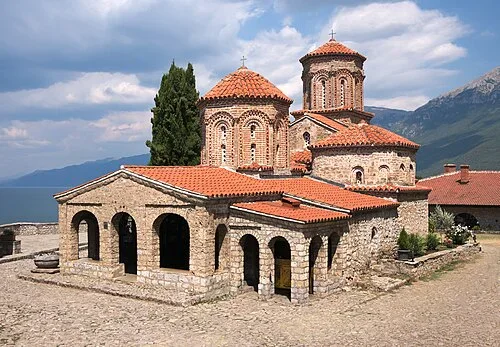 Church Exterior & Twin Domes View
The Church Above the Lake
The church perches on the cliff above Lake Ohrid, and its founding begins with a story the monastery has told for ages. Saint Naum spent a night on the estate of a wealthy man, and healed the man's daughter, who was bald. In gratitude, the father gave the saint the cliffside property, and Naum built his monastery there. What stands on the spot now is not his building. The first church, nearly identical in form to Saint Pantaleimon in Ohrid, was completely destroyed at some point between the tenth and thirteenth centuries. The present church rose on the very same foundations in the sixteenth century, built in two stages. So the mass you see against the water is later fabric on an older story, a sixteenth-century shape holding the memory of a tenth-century one.
Listen in the appPetar Milošević · CC BY-SA 4.0
04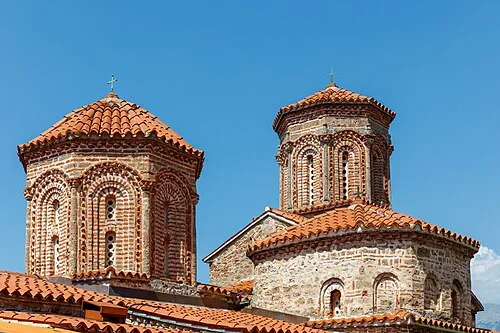 Church Exterior & Twin Domes View
The Twin Domes
Two domes rise over this church, and that is a rare sight hereabouts. The building follows a cross-in-square plan, a Byzantine design fitted inside a square of walls. Four massive stone pillars inside carry the central dome, and the whole weight of the roof settles onto them. One dome crowns the naos, the main hall of worship. The other covers the narthex, the entrance passage at the west end, and both were raised in the second stage of the sixteenth-century rebuild. The walls are dense local fieldstone bound with mortared brick, and the roofs are plain terracotta tiles. The church is modest in height, yet on its cliff-top perch it looks far taller than it is.
Listen in the appMarmontel · CC BY 2.0
05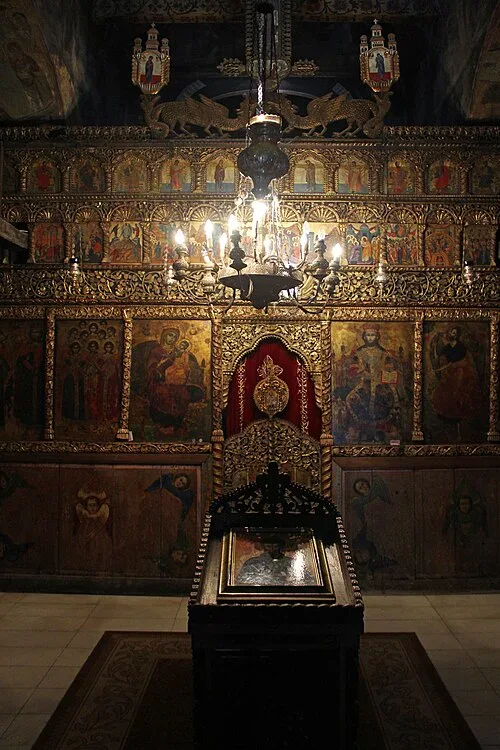 Main Church Interior
Inside the Church
This church has never stopped being what it was built for. Orthodox worship continues here under the painted walls and the dome carried on the great stone pillars, before a carved and gilded wooden iconostasis, the screen that separates the altar from the congregation. But the collection carries a modern wound. In 1985, thirteen so-called kissing icons were stolen from the monastery. They had been painted in 1711 by the hieromonk Konstantin, and were the kind of icons the faithful would press their lips to in prayer. It was the largest icon theft in modern Macedonian history. The icons have never been found.
Listen in the appPhoto: BrankaVV · CC BY-SA 4.0
06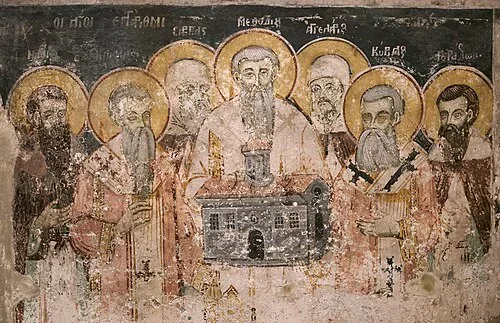 Main Church Interior
The Seven Saints Fresco
On the wall, a row of haloed figures stands holding a small model of a church. These are the Seven Saints, the enlighteners of the Slavs: Cyril and Methodius, their disciples, and among them Naum himself. The painting is the monastery's way of honoring the literary lineage its founder belonged to, the generation that gave the Slavic peoples their letters. The church's frescoes carry a signature, and it was found in an odd place. A plaster fragment discovered under the present church floor records that the work is by the zograf Trpo, son of the zograf Konstantin from Korča, painted in the time of abbot Stefan. A zograf is a painter of icons and walls, and the fragment dates the painting to after the year 1400.
Listen in the appPetar Milošević · CC BY-SA 4.0
07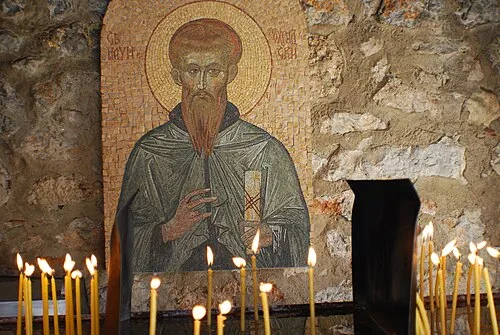 Tomb Chapel of Saint Naum
The Tomb of Saint Naum
Saint Naum died in 910 and was buried in the monastery he had founded near the end of his life. His tomb stands in a separate low building with a broad, low dome, and the doorway is so low that everyone entering must duck. Pilgrims come here above all for one practice. They press their ears to the saint's tomb and listen, because the tradition holds that a heartbeat can be heard beneath it. That listening is what made the monastery famous for Naum's miracles, and it is the reason people have been coming for over a thousand years. Before his image, a mosaic of the bearded saint holding a scroll, votive candles burn in rows.
Listen in the appThis illustration was made by Rašo. An email to Rašo would be appreciated too. · CC BY-SA 3.0
08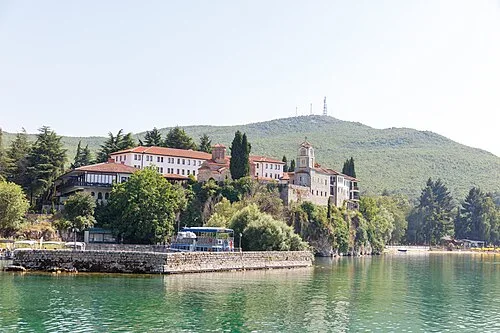 Lakeside Panoramic Cliff Viewpoint
View from the Lake
Seen from the water, the monastery explains its own political strangeness. This holy place spent years on the wrong side of a line. From 1912 until the twenty-eighth of June 1925, it lay inside Albania. On that date, President Ahmed Zogu gifted the monastery and its land to the Kingdom of Yugoslavia, a gesture of goodwill after negotiations between the two countries. That diplomatic gift returned the shrine to the shore where Naum had built it. A legend reaches even further back, across the lake. Naum and Clement, it says, agreed to begin building their monasteries on opposite shores at a bell signal. Seagulls landed on the stretched rope and rang the bell early, so Clement started first. And his monastery, so the story goes, was later turned into a mosque.
Listen in the appMarmontel · CC BY 2.0
09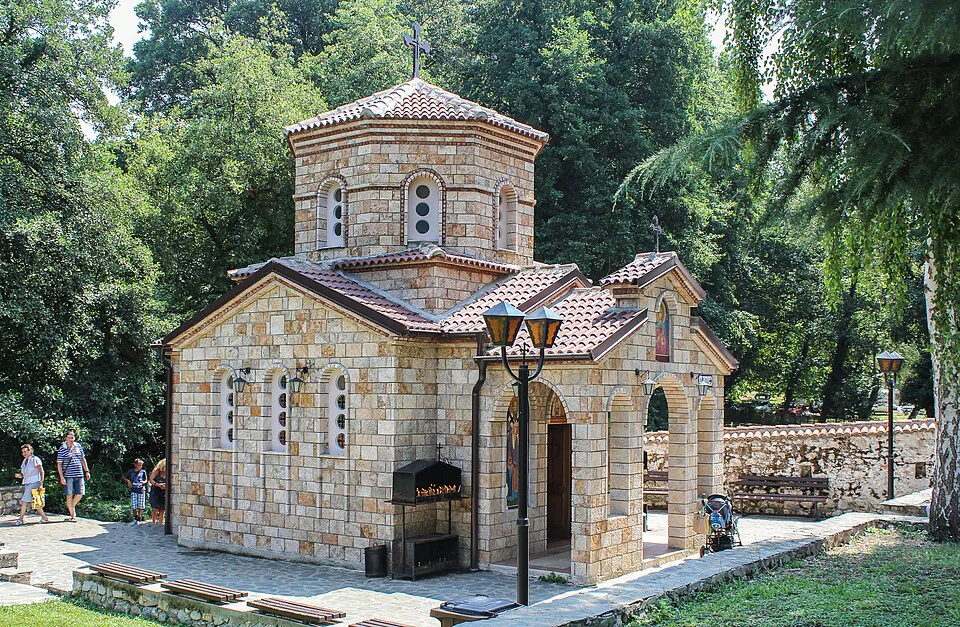 St. Petka Church & Holy Springs
St. Petka and the Springs
Around the great church, smaller sacred buildings grew outward from Naum's foundation. Saint Petka stands nearby, with Saint Athanasius and a chapel at the very springs of the Black Drim, where the river rises cold and clear from the earth. The local legend gives Naum power over these waters. He was said to hold the keys of Lake Ohrid, and he commanded the Black Drim's water to pass through the lake without mingling with it, which is why the two waters stay apart. The monastery was a place of teaching as well. A Greek school functioned here from the sixteenth century, and the brothers kept close ties with the printing house of Moscopole, a prosperous city over the mountains. A place founded to teach and to heal never stopped gathering people.
Listen in the appPhoto: Stolbovsky · CC BY-SA 4.0
Monastery of Saint Naum
Frequently asked questions
How much does the guide cost?
Free app download. Listed guide price: $0.99. Guide price shown in the app. Audio guide only. Venue admission is separate.
Can I listen without internet?
Yes. Download the guide’s audio, images, and maps in the app before your visit. Your downloaded content is then available offline.
Can I listen in my language?
This audio guide is available in 15 languages, including English.
Do I need to follow a schedule?
No. This is a self-guided experience. Choose your stops, pause whenever you like, and return to a story at your own pace.
At your own pace
Explore Monastery of Saint Naum.
Download Stanza, then search for “Monastery of Saint Naum”.
Free app download · Guide price shown in the app
Keep exploring
Nearby audio guides
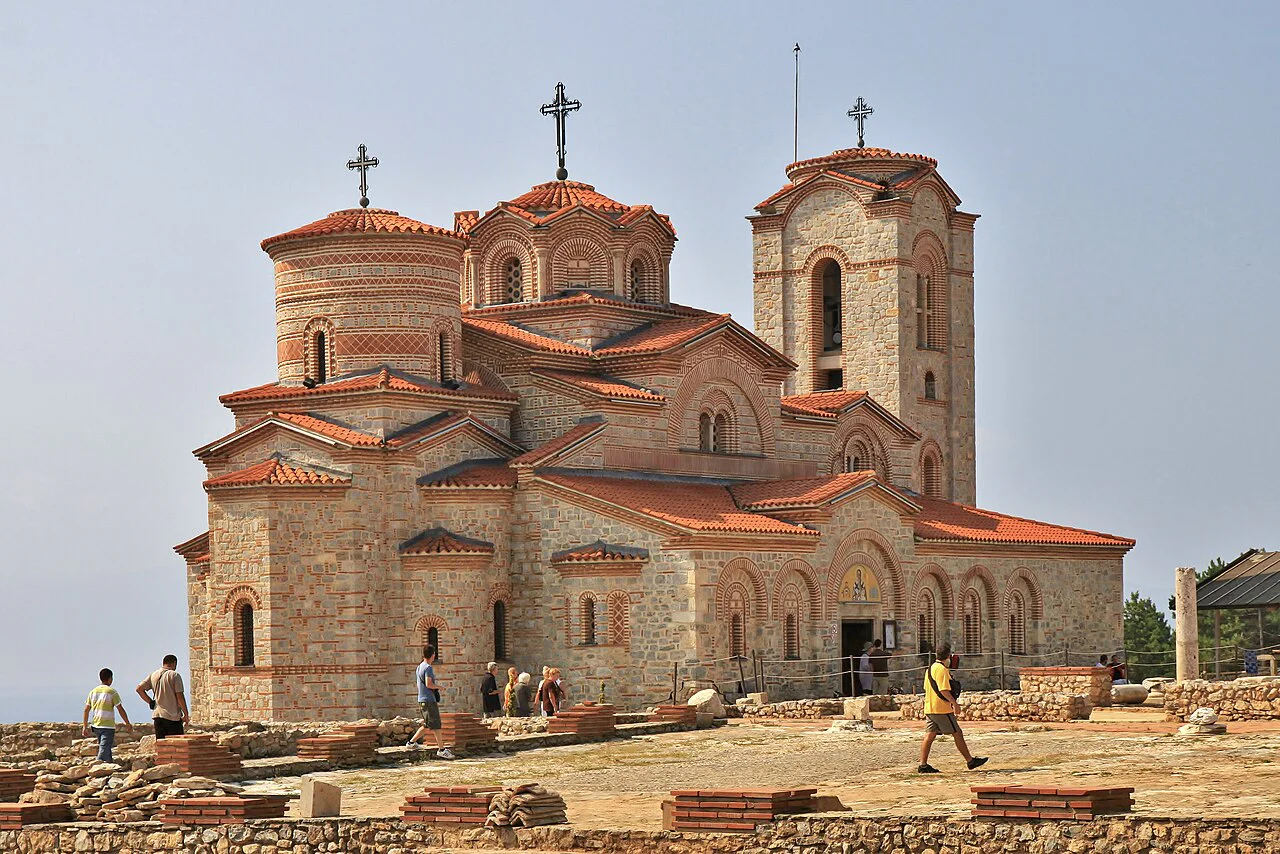
Ohrid · 22 km
Church of Saints Clement and Panteleimon
Content & sources
Marcin Konsek · CC BY-SA 4.0
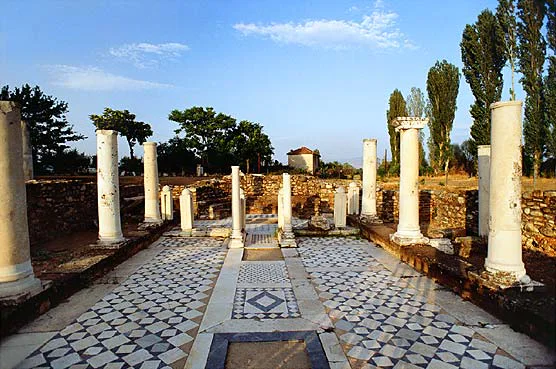
Bitola · 52 km
Heraclea Lyncestis
Content & sources
Revizionist at Macedonian Wikipedia · CC BY-SA 3.0
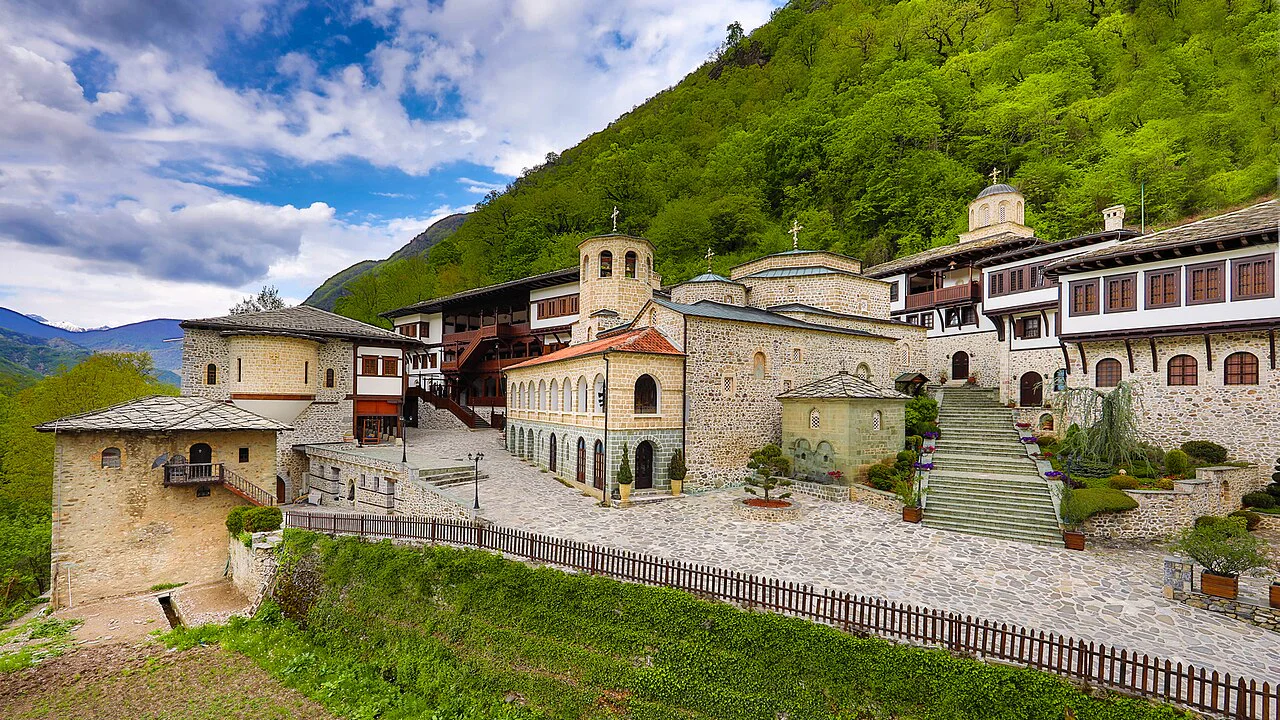
Rostushe · 79 km
Saint Jovan Bigorski Monastery
Content & sources
Photo: BigorskiMonastery · CC BY-SA 4.0
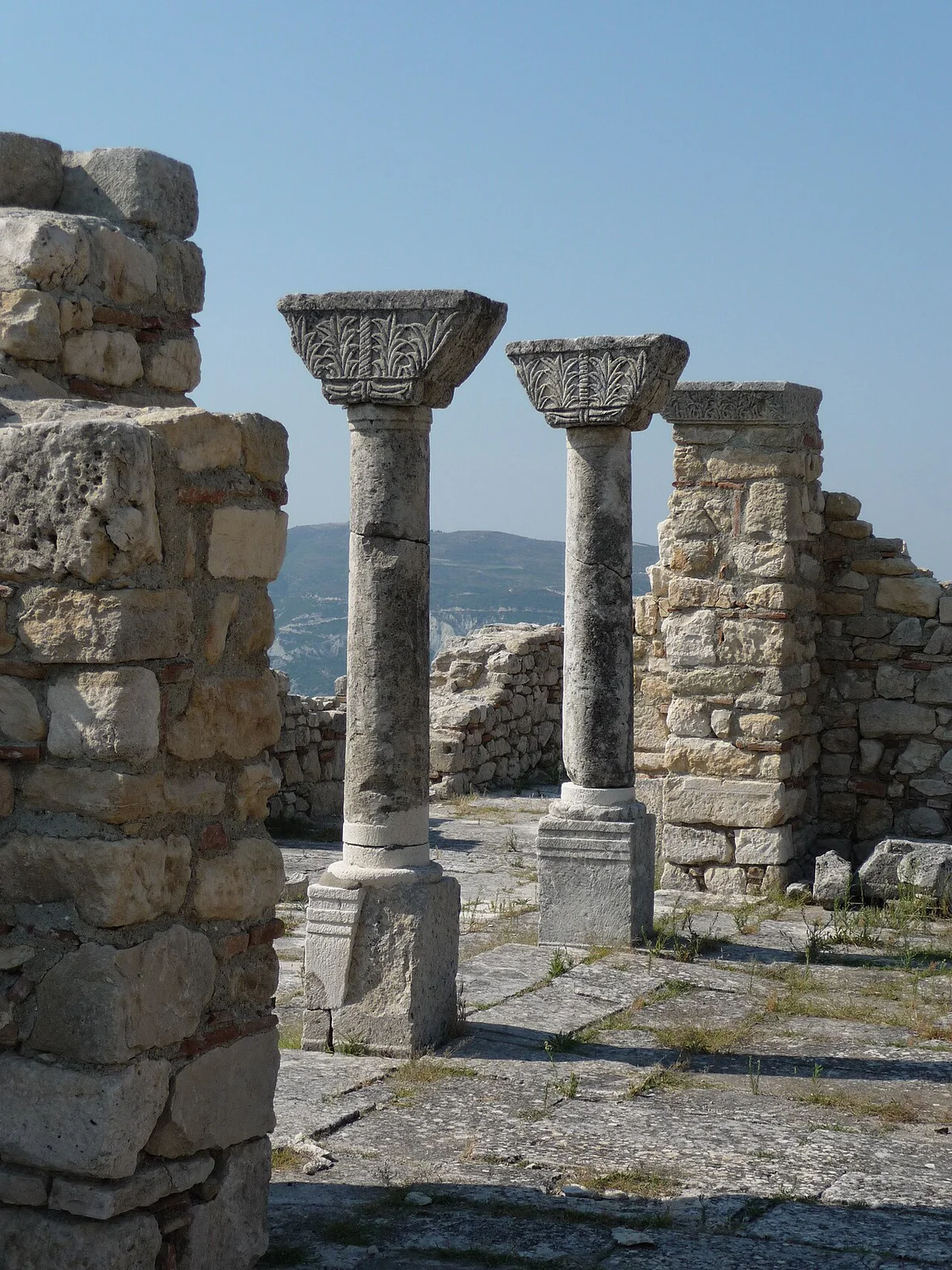
Hekal · 94 km
Byllis
Content & sources
Riet PRINS · CC BY 3.0