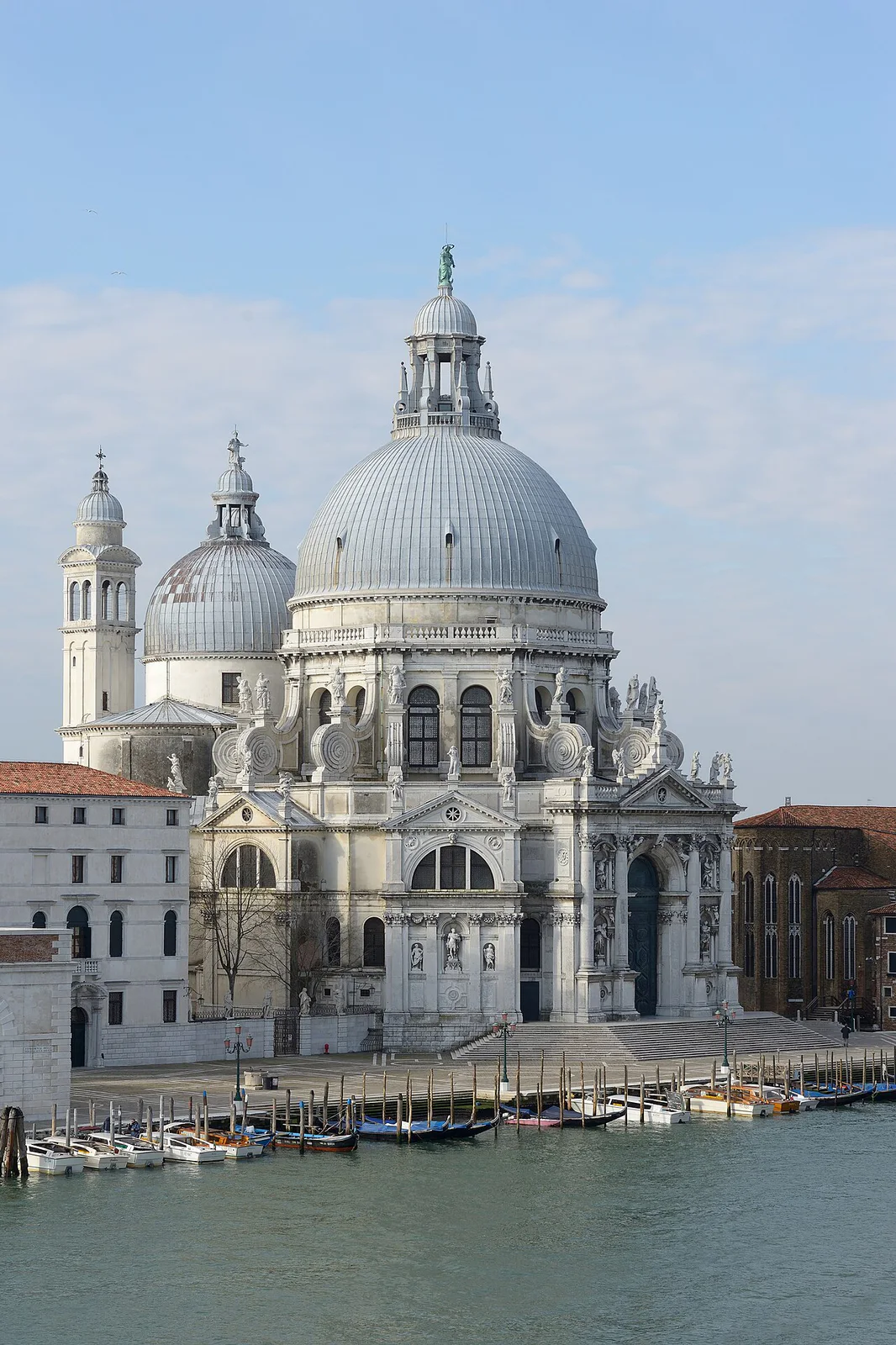
 Stanza / Audio guide
Content & sources
Stanza · Audio guide
Basilica di Santa Maria della Salute Audio Guide
A place to remember. A story to take with you.
Santa Maria della Salute is a Roman Catholic church and minor basilica located at the Punta della Dogana in Venice, Italy. It is commonly known as La Salute and is situated in the Dorsoduro sestiere.
Download Stanza, then search for “Basilica di Santa Maria della Salute”.
About the tour
One guide. Your kind of visit.
Santa Maria della Salute is a Roman Catholic church and minor basilica located at the Punta della Dogana in Venice, Italy. It is commonly known as La Salute and is situated in the Dorsoduro sestiere.
Ready when you are.
- 01Get the free Stanza app.
iOS & Android
- 02Find your guide.
“Basilica di Santa Maria della Salute”
- 03Download before you go.
Works offline
Audio guide / 9 narrated stops
Inside the guide
Get to know a few of the stories before you go. Open a stop to read more.
01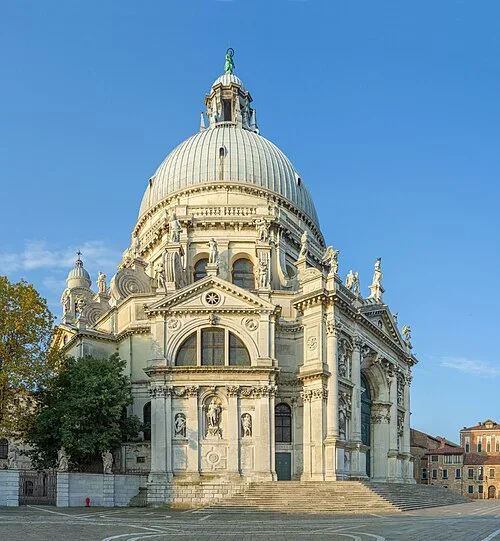 Grand Canal Approach and the Grand Entrance
The Salute from the Grand Canal: A Church Born of a Vow
Welcome to the Salute, where the story is a vow made in the worst year of Venice's history. In the summer of 1630, plague attacked the city. Within a year it had killed nearly a third of the population. Forty-six thousand died inside Venice, and many more out in the lagoons. Prayers and processions to the plague saints had failed to stop it. So on the twenty-second of October 1630, the Senate decreed a new church. It would be dedicated not to a plague saint, but to the Virgin Mary, whom the Republic regarded as its protector. Work began the following year. Senators chose this spot from eight candidates, a narrow finger of land called Punta della Dogana, between the Grand Canal and the Giudecca Canal. From the water, the church faces anyone arriving at Saint Mark's Square. The white facade rises in Istrian stone, straight from the edge of the water. At its very top, a statue of the Virgin presides over the church built in her honour. Below her stand Saint George, Saint Theodore, the Evangelists, the Prophets, and Judith holding the head of Holofernes. Everything about this building is a thank-offering, made of stone.
This Photo was taken by Wolfgang Moroder. Feel free to use my photos, but please mention me as the author and send me a message. This image is not in the public domain. Please respect the copyright protection. It may only be used according to the rules mentioned here. This specifically excludes use in social media, if applicable terms of the licenses listed here not appropriate. Please do not upload an updated image here without consultation with the Author. The author would like to make corrections only at his own source. This ensures that the changes are preserved.Please if you think that any changes should be required, please inform the author.Otherwise you can upload a new image with a new name. Please use one of the templates derivative or extract. · CC BY 3.0
02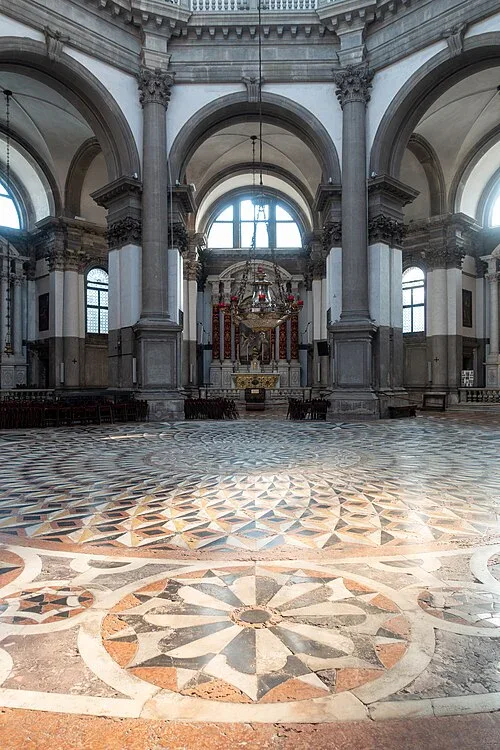 The Rotunda and the Octagonal Crown
Inside the Octagon: Longhena's Church in the Shape of a Crown
A competition decided who would build the votive church. Eleven designs came in, and only two reached the final round. The losers proposed conventional linear churches, much like Palladio's Redentore across the water. The winner was a young architect named Baldassare Longhena, and his plan was different in kind. It was a concrete scheme, worked out in structure and cost. Later he put his thinking in writing. The church, he said, was a virgin work, never before seen, invented neither altogether nor in part in any other church in this city. And because it was dedicated to the Blessed Virgin, he had built it in the shape of a crown. That idea explains the vast octagonal hall, with eight chapels radiating outwards like the points of a crown. Nothing like it stood in Venice before. The floor carries the geometry through, laid in tesserae of coloured marbles that the light brings alive. Longhena lived to see it finished. The church was completed in 1681, the year before he died.
Kent Wang from Barcelona, Spain · CC BY-SA 2.0
03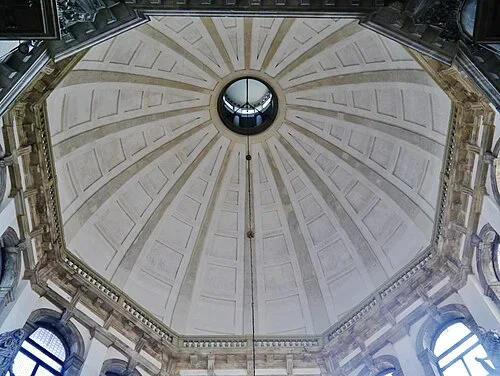 The Rotunda and the Octagonal Crown
The Dome: Mary's Crown Overhead
The dome is the crown Longhena promised, set directly over the octagon. Its span measures almost twenty-two meters. Around its drum, tall windows pour light down into the hall, so the whole space glows rather than glooms. Every part of the symbolism points to the Virgin. The dome itself stands for her crown. The eight sides of the church echo the eight points of her star. Even the cavernous interior was meant to suggest her womb, sheltering the city's piety. The ringed, centralized design also looks back to Byzantine models, such as the church of San Vitale in Ravenna. Light is the finishing touch of the idea. It catches the saints ranged along the balustrade of the nave, and it makes the crown feel weightless overhead.
Listen in the appPhoto: Zairon · CC BY-SA 4.0
04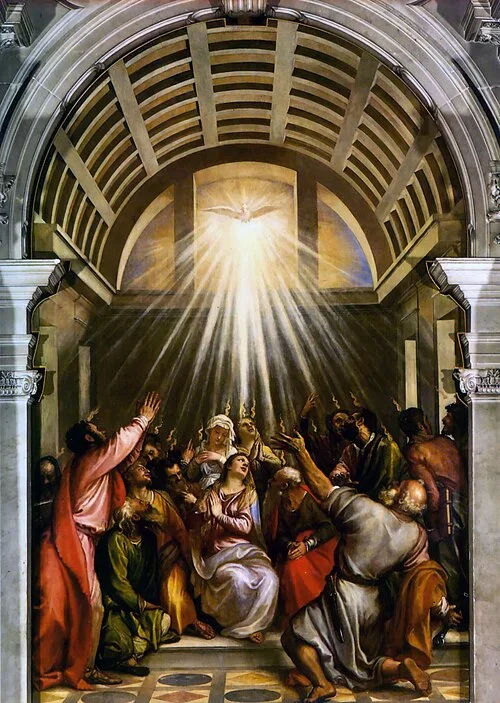 The Ambulatory Chapels: Titian's Pentecost
Titian's Descent of the Holy Spirit
The third altar to the left of the entrance holds a painting by Titian. It shows the Descent of the Holy Spirit. A dove hovers at the top, and rays of light break from it down onto the Virgin and the Apostles gathered below. The figures recoil and raise their hands as the light strikes them. Titian painted it in the fifteen-forties. Around the altar, the sculpted angels are the work of Michele Fabris, an artist known as l'Ongaro. This is one of the altarpieces that furnish the radiating chapels of the octagon. Titian is the most represented artist in the whole basilica, and more of his paintings hang in the great sacristy.
Listen in the appTitian · Public domain
05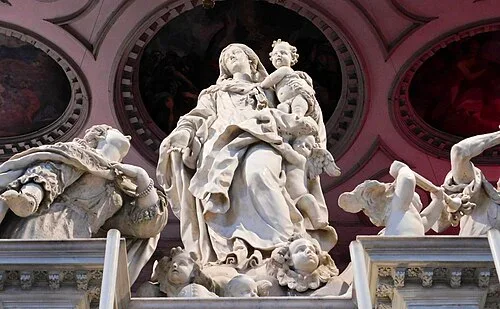 The High Altar: Deliverance and the Cretan Icon
The High Altar: The Queen of Heaven Expelling the Plague
The high altar carries the church's whole meaning in marble. The sculptural group shows the Queen of Heaven expelling the Plague. The Virgin with her Child drives the disease away from Venice, which huddles beneath her protection. It is the work of Josse Le Court, a Flemish sculptor born in Ypres who spent his career in Venice. He was born in 1627 and died in this city in 1679. Longhena designed the altar arrangement himself, the same architect who shaped the crown around it. The marble group took the place of a painting. Alessandro Varotari had submitted a picture of the Virgin holding a church along with his architectural proposal, and it originally stood here. Now the founding vow of the basilica has its visible drama above the main altar.
Listen in the appPhoto: Luca.863996.Paglia · CC BY-SA 4.0
06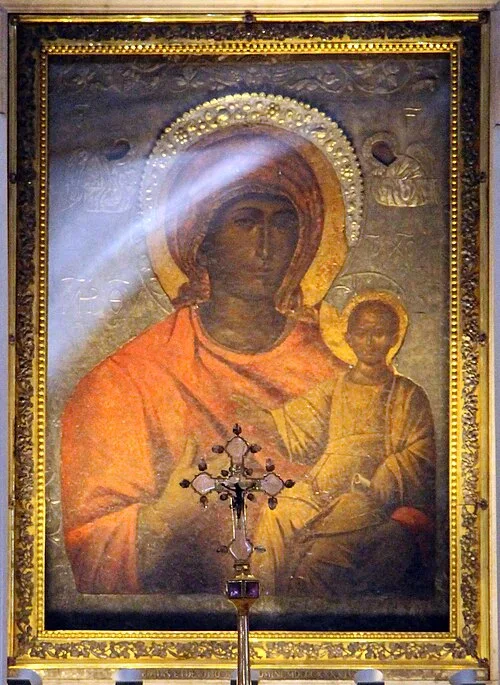 The High Altar: Deliverance and the Cretan Icon
The Panagia Mesopantitissa: An Icon from Crete
Enshrined in the high altar hangs the basilica's most sacred image. It is a Byzantine Madonna and Child, known in Greek as the Panagia Mesopantitissa, the Madonna the Mediator. The icon came a very long way. Its home was Candia, as Crete was then called under Venetian rule. When the island fell to the Ottomans at the end of the war of Candia, the naval commander Francesco Morosini brought the icon to Venice. He carried it off as a trophy of the peace terms. It was set in its present position on the twenty-first of November. That date became the basilica's patronal feast, and it still shapes the city's year. Venetians have long looked to this Madonna as a protector, and the devotion gathered around her is part of the icon's story.
Listen in the appPhoto: Sailko · CC BY 3.0
07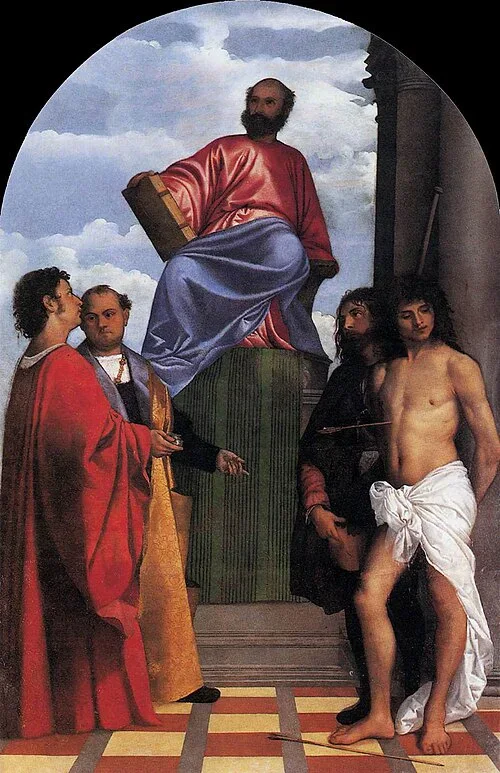 The Great Sacristy and Titian's Masterpieces
The Great Sacristy: Titian's Plague Altarpiece
The great sacristy holds the richest paintings in the basilica, and Titian dominates the room. His altarpiece shows Saint Mark enthroned, flanked by four saints. Their names matter here: Cosmas, Damian, Sebastian and Roch. These are plague saints, invoked against disease, and their presence quietly echoes the vow the whole church was built to keep. Titian painted it when he was still young. His ceiling canvases show David and Goliath, Abraham and Isaac, and Cain and Abel, along with eight tondi of the Doctors of the Church and the Evangelists. David and Goliath was damaged when fire broke out in the neighbouring seminary at the end of August 2010. The sacristy also keeps Tintoretto's great Marriage at Cana, painted in 1561, with the painter's own face among the guests.
Listen in the appTitian · Public domain
08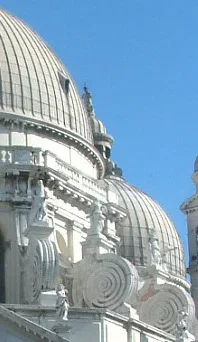 The Spiral Volutes and the Festa della Salute
The Spiral Volutes and the Legend of the Wooden Piles
Outside, the dome's weight has a visible answer. Giant spiral volutes, great stone scrolls, sweep up against the drum of the dome. They work as buttresses, channeling the dome's outward thrust down into the walls. Statues crown them, and the whole device gives the Salute its unmistakable silhouette. Below the waterline, the hidden work is wood. The church stands on a platform of wooden piles driven into the soft ground of the point. A famous figure attaches to them. In 1663, Giustiniano Martinioni wrote that exactly one million one hundred fifty-six thousand six hundred and fifty piles support the building. Modern studies say otherwise. A calculation error ran through the old claim, and a realistic estimate puts the number nearer a hundred thousand. Even so, the piles and the volutes do the same job, one hidden and one on show, holding the church up over the water.
Listen in the appUser:Radomil · CC BY-SA 3.0
09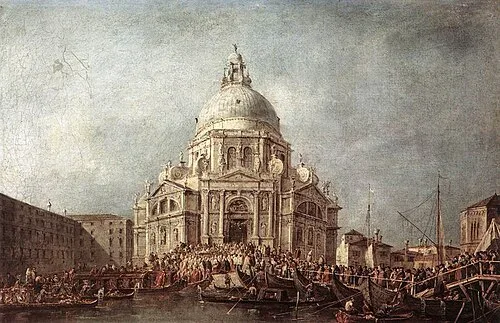 The Spiral Volutes and the Festa della Salute
Guardi's Festa: The Republic Returns Every November
Francesco Guardi painted the ritual that the vow itself created. His canvas shows the Doge at the Salute, with boats crowding the water before the church. Every year on the twenty-first of November, the Feast of the Presentation of the Virgin, the city's officials parade from San Marco to this basilica. A service of gratitude for deliverance from the plague is celebrated there. To make the crossing possible, a pontoon bridge is built over the Grand Canal, and the procession walks across it. The feast remains a major event in Venice. Guardi was only one of many to fix the Salute in the city's image. Canaletto painted it, as did Turner, Monet and John Singer Sargent, and the Serbian poet Laza Kostić wrote a poem that bears its name. The church Venice promised in its worst year is still the church the city thanks every November.
Listen in the appFrancesco Guardi · Public domain
Basilica di Santa Maria della Salute
Frequently asked questions
How much does the guide cost?
Free app download. Listed guide price: $0.99. Guide price shown in the app. Audio guide only. Venue admission is separate.
Can I listen without internet?
Yes. Download the guide’s audio, images, and maps in the app before your visit. Your downloaded content is then available offline.
Can I listen in my language?
This audio guide is available in 15 languages, including English.
Do I need to follow a schedule?
No. This is a self-guided experience. Choose your stops, pause whenever you like, and return to a story at your own pace.
At your own pace
Explore Basilica di Santa Maria della Salute.
Download Stanza, then search for “Basilica di Santa Maria della Salute”.
Free app download · Guide price shown in the app
Keep exploring
Nearby audio guides
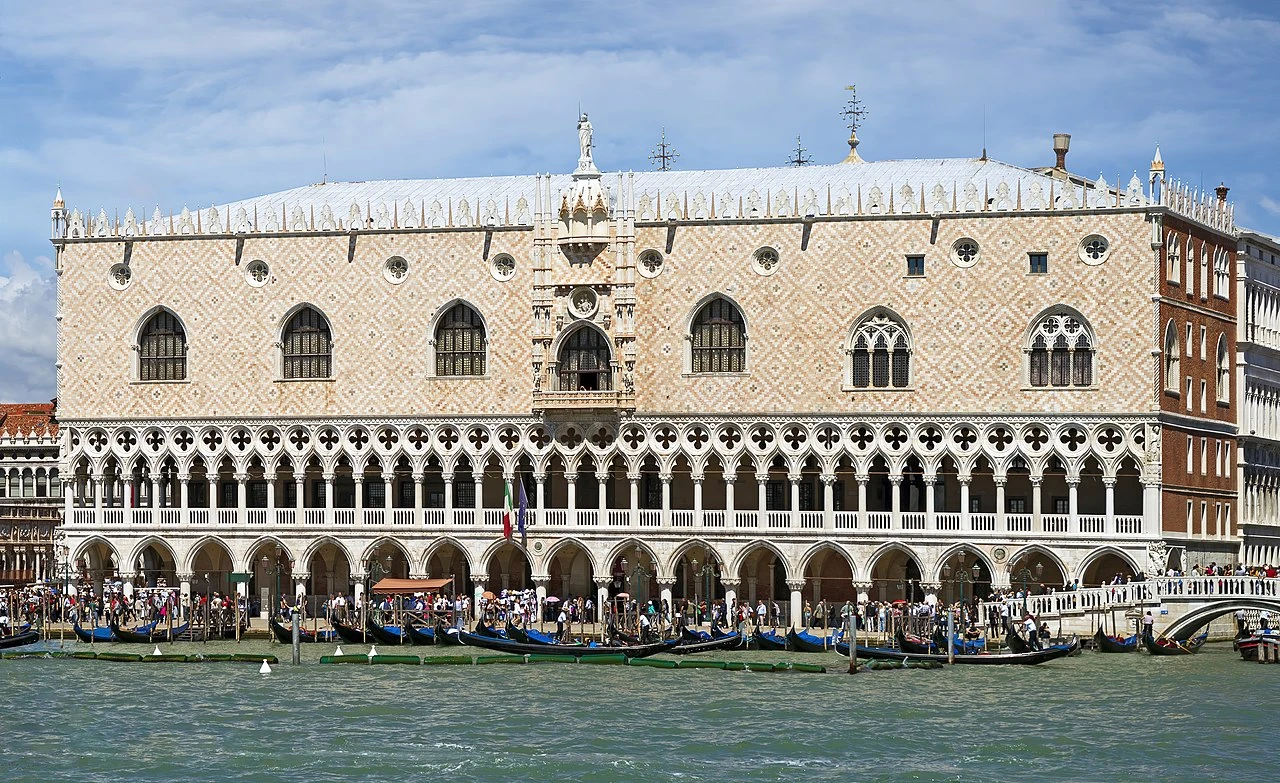
Venice · 1 km
Doge's Palace
Content & sources
Didier Descouens · CC BY-SA 4.0
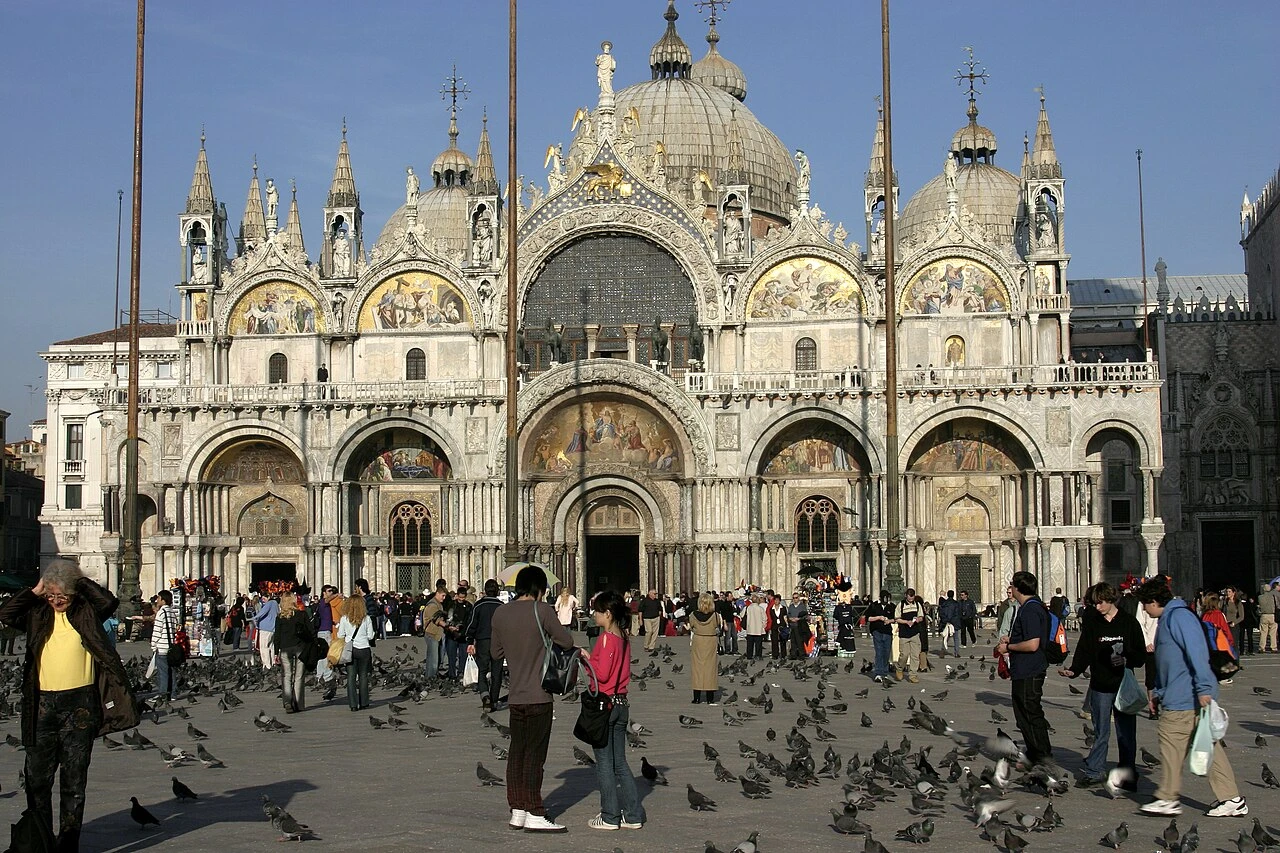
Venice · 1 km
St Mark's Basilica
Content & sources
Photo: Nino Barbieri · CC BY-SA 2.5
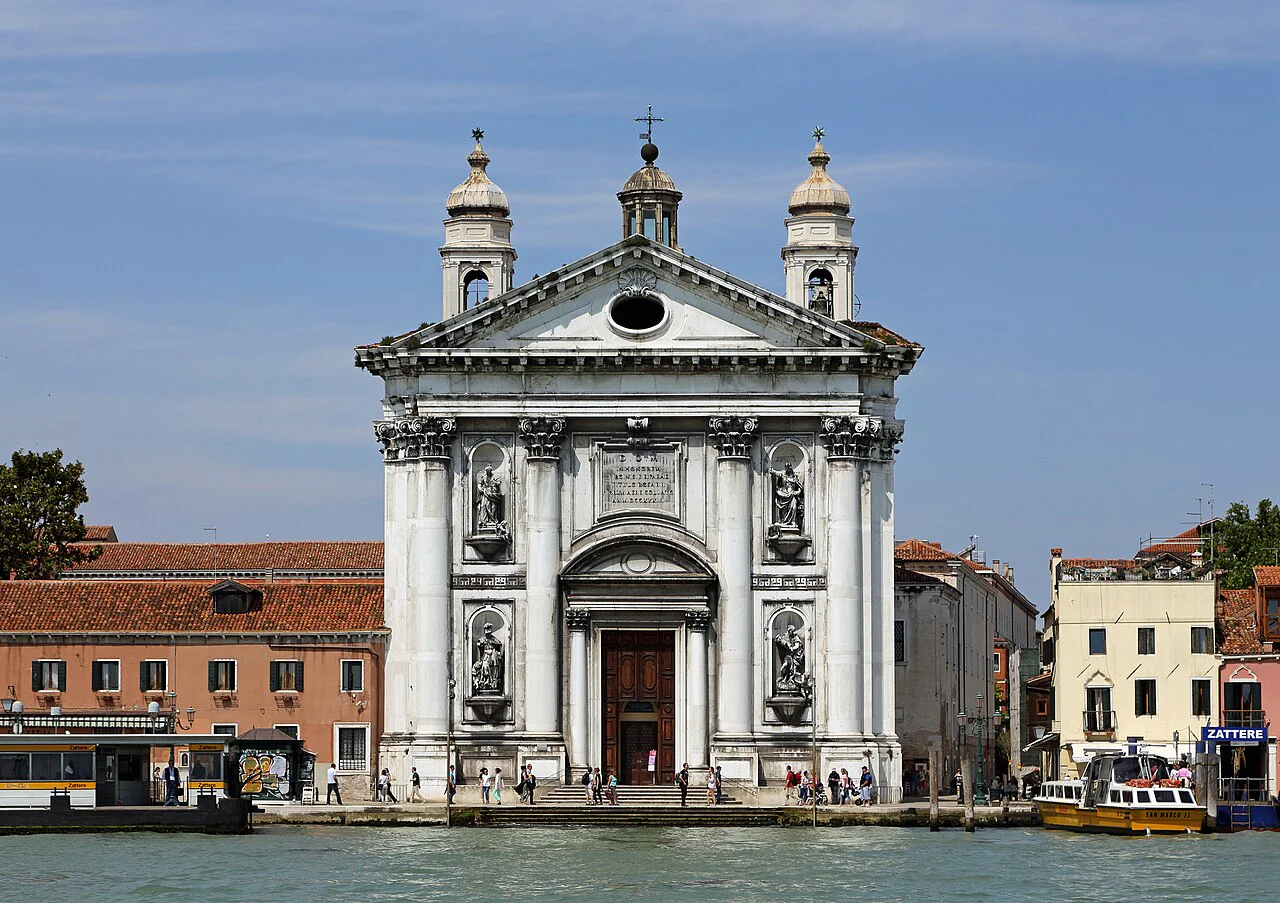
Venice · 1 km
Chiesa dei Gesuati
Content & sources
Marc Ryckaert (MJJR) · CC BY 3.0
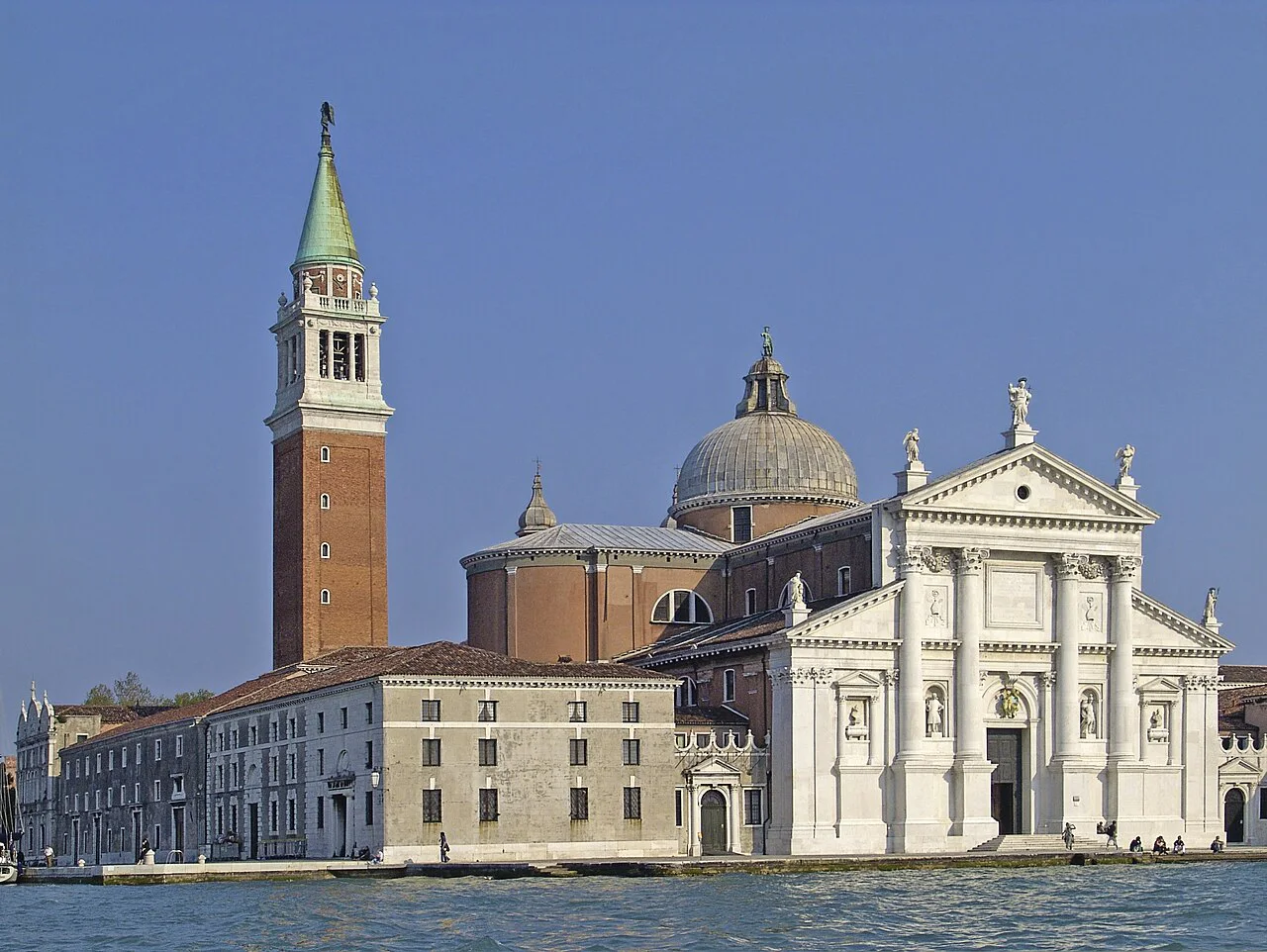
Venice · 1 km
Basilica di San Giorgio Maggiore
Content & sources
Didier Descouens · CC BY-SA 4.0