Stanza · Audio guide
Ca' Vendramin Calergi Audio Guide
A place to remember. A story to take with you.
Ca' Loredan Vendramin Calergi is a 15th-century Renaissance palace located on the Grand Canal in Venice. It is historically significant as the home of many prominent figures and the place where composer…
Download Stanza, then search for “Ca' Vendramin Calergi”.
About the tour
One guide. Your kind of visit.
Ca' Loredan Vendramin Calergi is a 15th-century Renaissance palace located on the Grand Canal in Venice. It is historically significant as the home of many prominent figures and the place where composer Richard Wagner died.
Ready when you are.
- 01Get the free Stanza app.
iOS & Android
- 02Find your guide.
“Ca' Vendramin Calergi”
- 03Download before you go.
Works offline
Audio guide / 8 narrated stops
Inside the guide
Get to know a few of the stories before you go. Open a stop to read more.
01 Grand Canal Facade & Renaissance Architecture
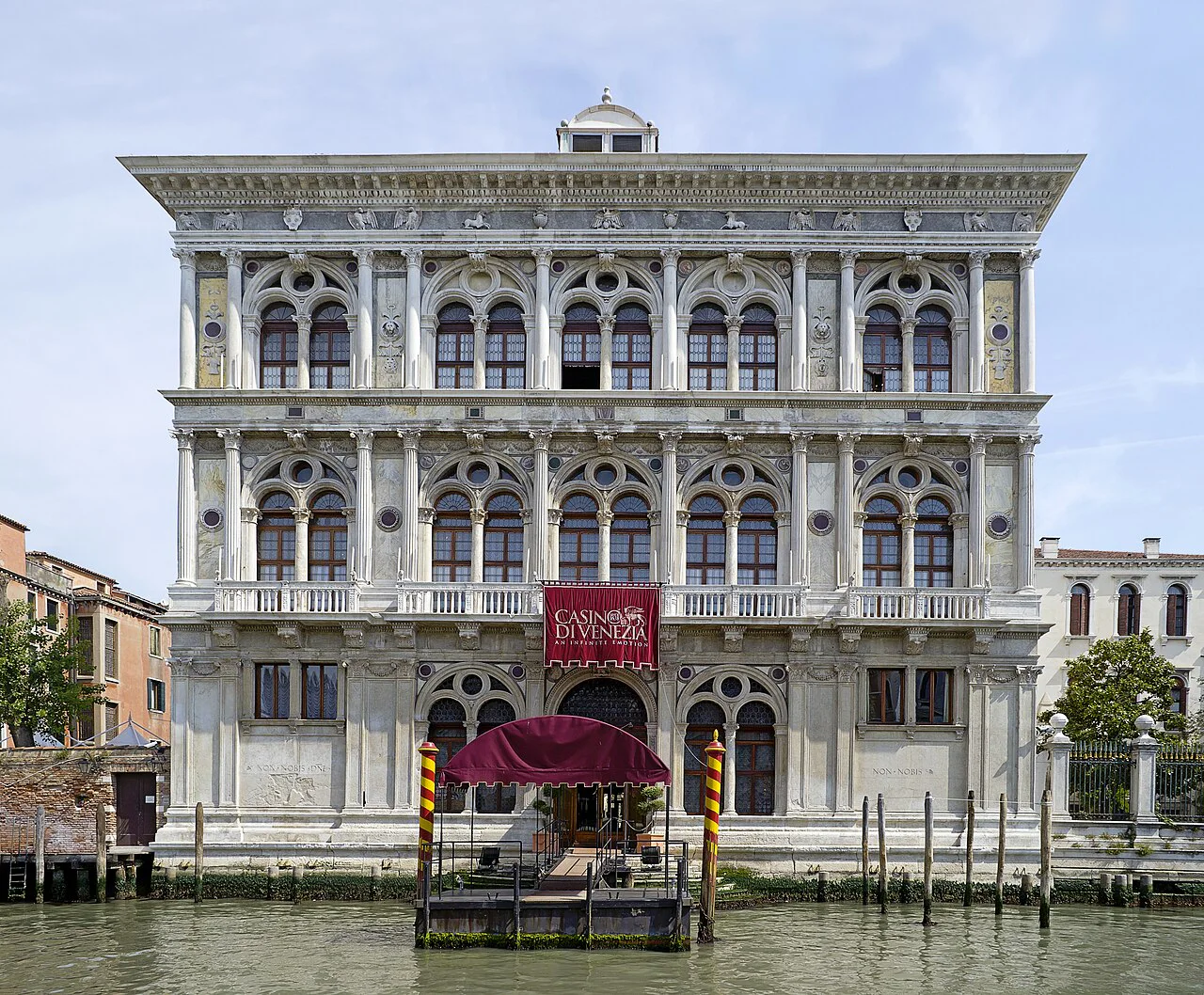
Ca' Vendramin Calergi from the Water
Welcome to Ca' Vendramin Calergi, a palace on the Grand Canal that has belonged to merchants, dukes, exiled royalty and a composer. Its story begins with Andrea Loredan, a Venetian nobleman with a taste for the fine arts, who wanted a residence worthy of his family. The money came from an even higher source: Leonardo Loredan, the doge of Venice himself. Work started in 1481 under the architect Mauro Codussi. When he died, the Lombardo family of architects carried the project through to 1509. Twenty-eight years sounds long, but for the technology of the day it was considered fast. The bill came to more than two hundred thousand ducats, an enormous sum even for Venice. Under one of the ground-floor windows, cut into the stone, runs a Latin motto: Non nobis Domine, not unto us, O Lord. It comes from a psalm and was the motto of the Loredan family, and before them a motto of the Templar knights. Venetians took it up as the palace's nickname, and by that name the building is still known.
Didier Descouens · CC BY-SA 4.0
02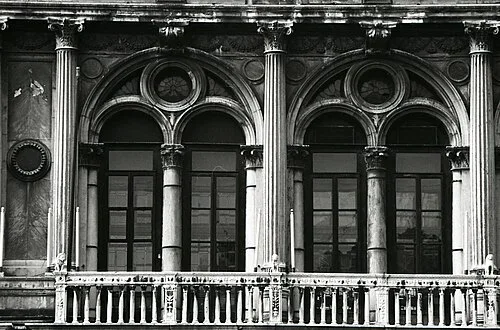 Grand Canal Facade & Renaissance Architecture
The Bifora Windows
The great windows of this facade mark a turning point in how Venetians built their palaces. Each one is what architects call a bifora, a paired window. Two round-headed openings are joined inside a single semicircle, and between them sits a small circular window, like an eye at the centre. That little round light recalls the windows of Palazzo Corner Spinelli, built a generation earlier, and the resemblance is one reason scholars give this palace to Mauro Codussi. Older canal-front palaces, in the Byzantine and Gothic manner, had let ornament run free across their walls. Here the logic is reversed. Columns and arches form a classical frame that governs each floor, and everything else answers to it. The frame comes first; the decoration follows.
Paolo Monti · CC BY-SA 4.0
03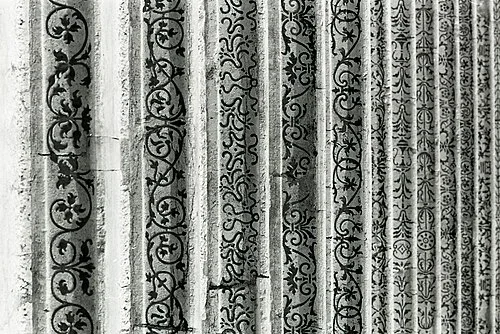 Grand Canal Facade & Renaissance Architecture
Carved Ornament of the Facade
Even the carved surfaces of this facade hold themselves back. Bands of foliage and scrollwork run through the stone, worked with care but never allowed to take over. The design calls for sober inlays in contrasting colours, set into panels beneath the windows. They sit quietly under the arches and columns, subordinated to the architectural frame the way a supporting voice answers a lead singer. Restraint is the point. The stone itself, ordered and calm, does the talking.
Listen in the appPaolo Monti · CC BY-SA 4.0
04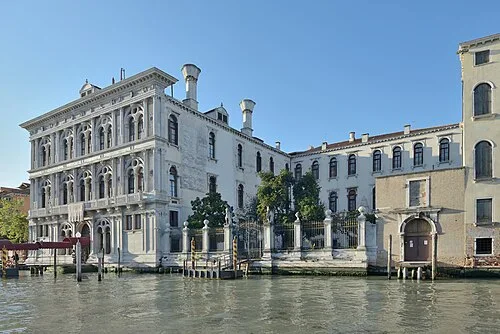 Courtyard Garden & Land Entrance
The Garden and the White Wing
Few palaces on the Grand Canal could afford a garden, and this one still keeps its walled green space at the water's edge. In 1589 the palace passed to Vettor Calergi, a Venetian noble from Crete, who bought it for his marriage to Isabetta Gritti. Their daughter Marina married into the Grimani family, and her sons would change the palace's story. In 1614 the owners extended the right-hand wing over part of the garden, on a design by the architect Vincenzo Scamozzi. That addition gave the building the L-shaped plan it keeps to this day. But the wing also became the stage for a vendetta. Francesco Querini Stampalia was killed there by the three sons of Marina Calergi. The Republic answered with severity: the wing was torn down, and a column of infamy was raised in its place to mark the family's shame. The brothers pulled the column down almost as soon as it stood. The wing itself was demolished in 1659 and rebuilt the very next year.
Listen in the appPhoto: Sailko · CC BY-SA 3.0
05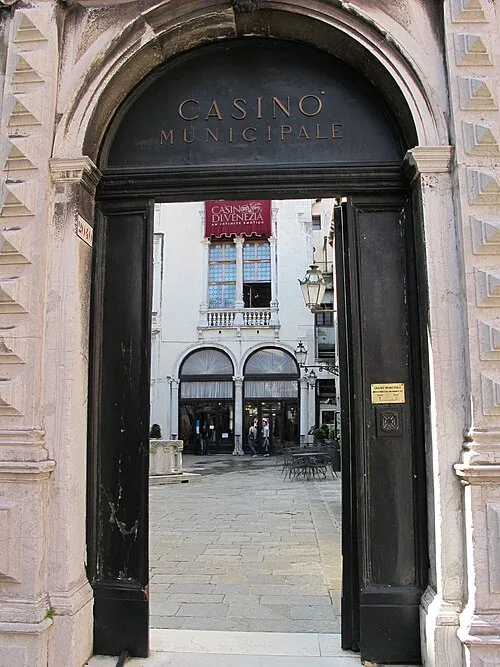 Courtyard Garden & Land Entrance
The Land Gate and the Casino
Through this gateway, under the words Casinò Municipale, the palace opens to the city from the Cannaregio side. For centuries it belonged to noble families; in the twentieth century it changed hands in a different way. In 1946 the City Council of Venice bought the building outright. From 1959 onward it has served as the winter home of the Casinò di Venezia, the city's celebrated gaming house, its halls filling through the colder months while summer play moves elsewhere. Only in the early two-thousands did the city formally transfer ownership to the casino's own company, of which it is the shareholder. A palace built to impress visiting nobility now earns its keep from the public.
Listen in the appPhoto: Sailko · CC BY-SA 3.0
06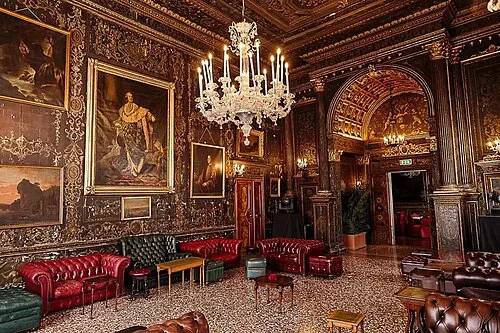 Piano Nobile & Historic Salone
The T-Shaped Salone
Inside, the ground floor carries a long corridor called the portego, from which the staircase rises to the noble floor. At its heart lies the Salone, and its shape is the clever part. The hall is built in the form of a T, narrow toward the back of the palace and opening wide toward the water. That layout pulls the fullest view of the Grand Canal into the room, along with the light and air that come off it. The walls the Loredans first knew here have vanished. Giorgione, one of the great painters of the Venetian Renaissance, was summoned to fresco the interior, and that decoration is now lost, replaced long ago by later stuccoes. Yet some sixteenth-century work survives in the salone by Palma il Giovane. These are the halls the casino uses in winter, as heard at the land gate.
Listen in the appPhoto: San Marco Venice · CC BY-SA 4.0
07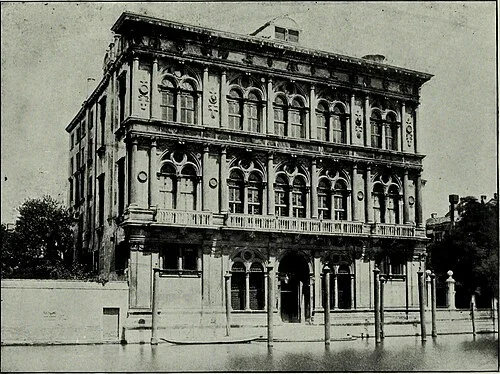 The Wagner Museum & 19th-Century Legacy
Wagner's Final Winter
Richard Wagner loved Venice, and between 1858 and his death he stayed in Venice six times. His final visit began in triumph. Soon after his opera Parsifal premiered at the second Bayreuth Festival, he rented the entire mezzanine level of this palace from Count de' Bardi. He arrived on the sixteenth of September 1882 with his wife Cosima, daughter of Franz Liszt, and four of his five children, along with the household servants. He spent the winter here, and on the afternoon of the thirteenth of February 1883 he died in the palace of a heart attack, at the age of sixty-nine. On the brick wall beside the building, facing the canal, a plaque carries the poet Gabriele d'Annunzio's epitaph: In this palace, the last breath of Richard Wagner endures in the souls, like the tide that laps the marble. Since 1995 a Wagner museum has been open inside the palace, holding the largest private collection devoted to the composer anywhere outside Bayreuth.
Listen in the appInternet Archive Book Images · No restrictions
08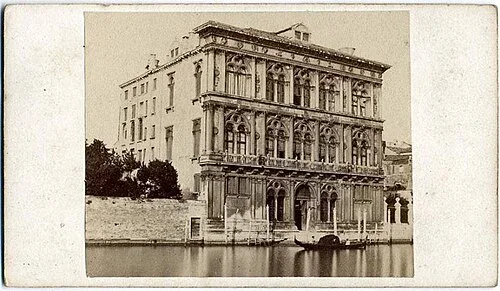 The Wagner Museum & 19th-Century Legacy
A Palace Photographed, a Palace Passed On
In the eighteen-seventies the photographer Carlo Naya set up his camera on the canal and captured this palace in a print he inscribed to one of its owners: Marie-Caroline de Bourbon-Sicile, the Duchess de Berry. She was the widowed daughter-in-law of King Charles the Tenth of France, living out her exile in Venetian comfort. She had bought the place in 1844 with her second husband, the Duke della Grazia. The turmoil of the Risorgimento caught up with her, and she was forced to sell. The buyer was her own grandson, Henry, Count de' Bardi, and many of the palace's fine works of art were auctioned off in Paris. The Count and his wife, the Infanta Adelgundes, kept the house alive and hosted the famous names of their day. In 1937 the last of the Grazia line sold it to Giuseppe Volpi, who remodelled the quarters and turned the palace into a centre for the study of electrical phenomena. From the Loredans' two hundred thousand ducats to a duchess in exile, a composer's last winter and a city casino, this palace has been handed on for five centuries, each owner leaving an ambition behind in its stone.
Listen in the appCarlo Naya · Public domain
Ca' Vendramin Calergi
Frequently asked questions
How much does the guide cost?
Free app download. Listed guide price: $0.99. Guide price shown in the app. Audio guide only. Venue admission is separate.
Can I listen without internet?
Yes. Download the guide’s audio, images, and maps in the app before your visit. Your downloaded content is then available offline.
Can I listen in my language?
This audio guide is available in 15 languages, including English.
Do I need to follow a schedule?
No. This is a self-guided experience. Choose your stops, pause whenever you like, and return to a story at your own pace.
At your own pace
Explore Ca' Vendramin Calergi.
Download Stanza, then search for “Ca' Vendramin Calergi”.
Free app download · Guide price shown in the app
Keep exploring
Nearby audio guides
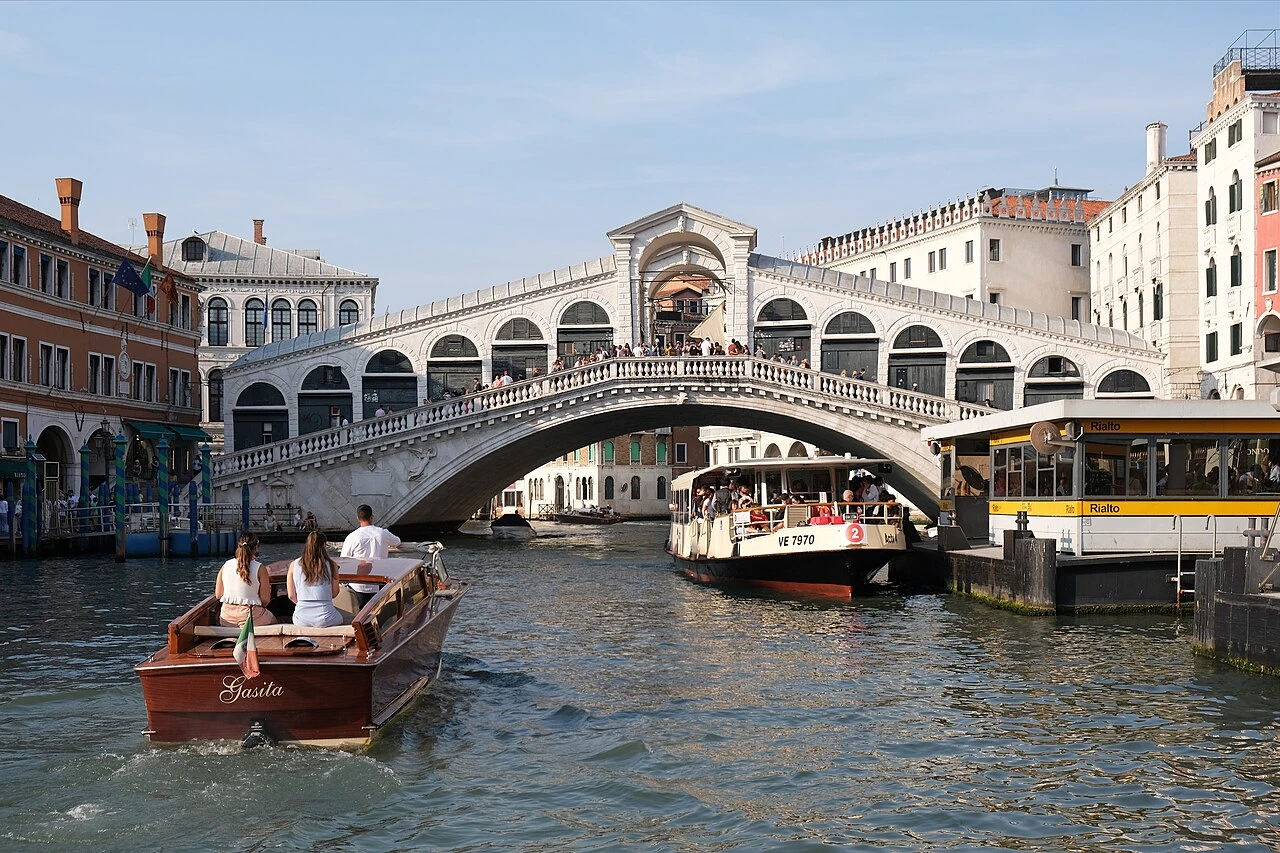
Venice · 1 km
Rialto Bridge
Content & sources
Photo: Kallerna · CC BY-SA 4.0
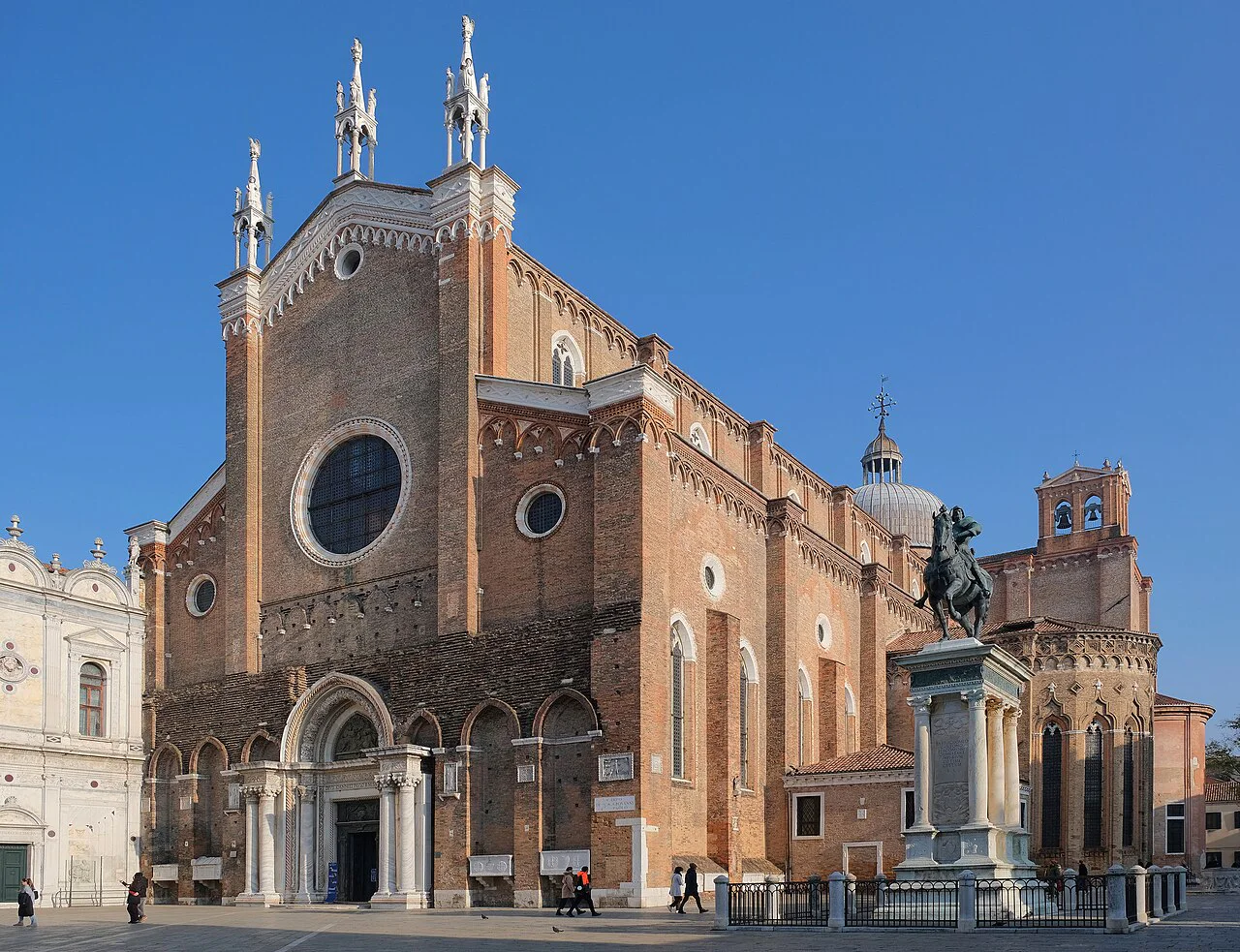
Venice · 1 km
Basilica dei Santi Giovanni e Paolo
Content & sources
kallerna · CC BY-SA 4.0
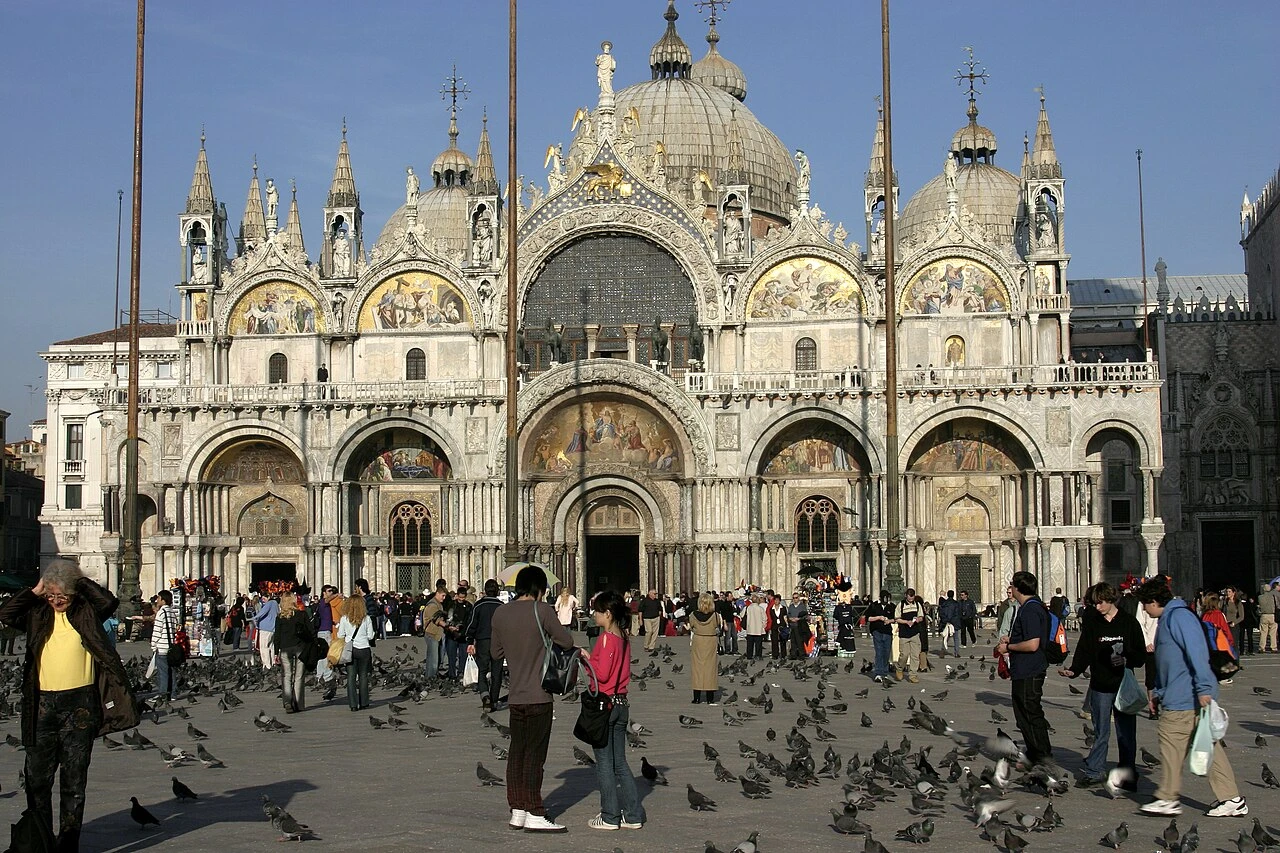
Venice · 1 km
St Mark's Basilica
Content & sources
Photo: Nino Barbieri · CC BY-SA 2.5
Venice · 1 km
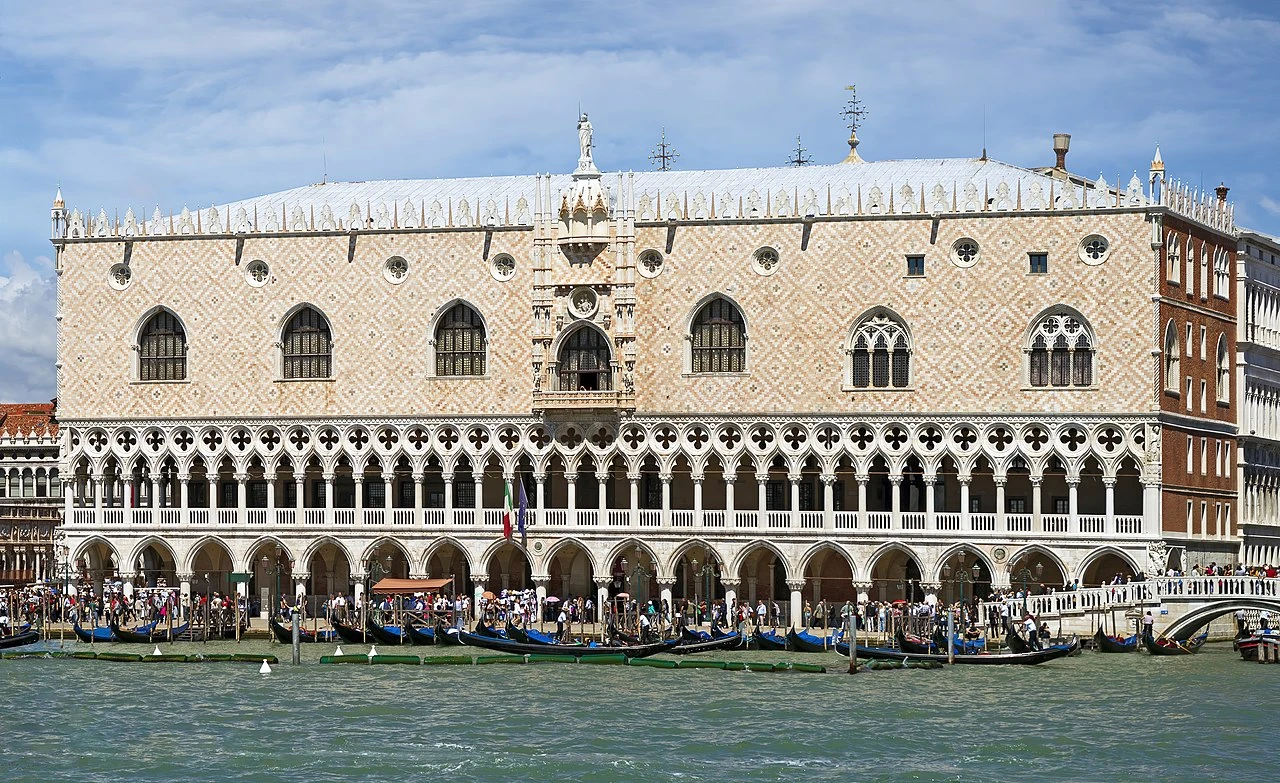
Doge's Palace
Content & sources
Didier Descouens · CC BY-SA 4.0